

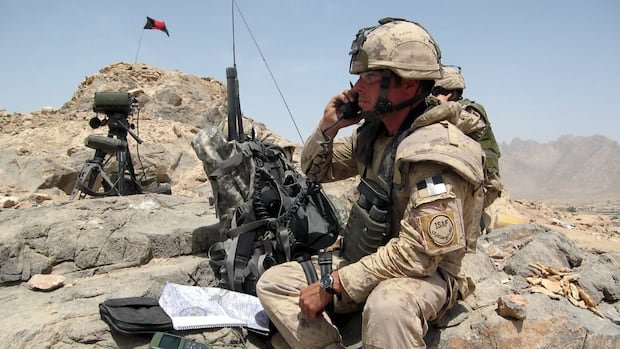

On the crossing of the Arghandab River by Canadian troops, former corporal Bruce Moncur was alerted by the unexpected sight of a green pen flare streaking through the sky, a signal indicating potential trouble as NATO forces typically used red flares, contrasting with the green ones associated with the Taliban.
This marked the beginning of a meticulously planned ambush by the Taliban on Moncur and his troops who had disembarked from their armored vehicles, leaving them exposed. The incident took place during the initial stages of Operation Medusa, a fierce and intense battle fought in the vineyards and dusty villages of Kandahar, exactly two decades ago.
The engagement commenced on September 2, 2006, with an intense barrage of artillery and air strikes. The subsequent day, Moncur’s unit proceeded to cross the river, only to encounter a well-entrenched enemy engaging them with heavy gunfire including machine guns, rocket-propelled grenades, and small arms.
Unlike previous encounters, the Taliban fighters chose to stand their ground and fight rather than retreat. Over 2,000 NATO troops, with more than 1,000 Canadians, participated in the operation alongside Afghan and allied forces from the U.S., U.K., Netherlands, and Denmark, making it the most significant battle for Canadian forces since the Korean War and their largest conventional operation during the Afghan conflict.
Moncur’s unit, known as Charles Company, 1st Battalion Royal Canadian Regiment (1RCR), found themselves ensnared in the insurgent ambush as they pushed towards their target, a schoolhouse occupied by the Taliban. The ensuing five-hour firefight resulted in the tragic loss of four Canadian soldiers and injuries to 16 others before the order to retreat was given.
Following the intense battle, there were discussions among military circles about the unexpected strength and tenacity displayed by the Taliban forces, estimated to be around 1,000 insurgents. The engagement caught the Canadians off guard, as the Taliban fighters demonstrated exceptional resilience and combat skills against the comparatively inexperienced Canadian troops.
In the lead-up to the conflict, insurgents had amassed in the Panjwai and Zhari districts west of Kandahar city, fortifying their positions and challenging the newly established NATO presence in the region. The aggressive move by the Taliban was seen as a test of NATO’s resolve in southern Afghanistan, especially following the transition of command from the U.S.-led coalition.
The battle took a tragic turn when friendly fire from an American A-10 aircraft struck Canadian positions, resulting in the death of one soldier and injuries to many, including Moncur who suffered a severe head injury. The aftermath of the incident left Moncur critically wounded, requiring immediate medical attention and a long road to recovery.
The operation, though marred by casualties and challenges, ultimately proved pivotal in the Afghan conflict. It forced the Taliban to reevaluate their strategy, shifting from direct confrontations to guerrilla tactics, such as ambushes and improvised explosive devices. The resolute stand by Canadian forces during Operation Medusa sent a clear message of commitment to the Afghan people and contributed significantly to the changing dynamics of the conflict.