

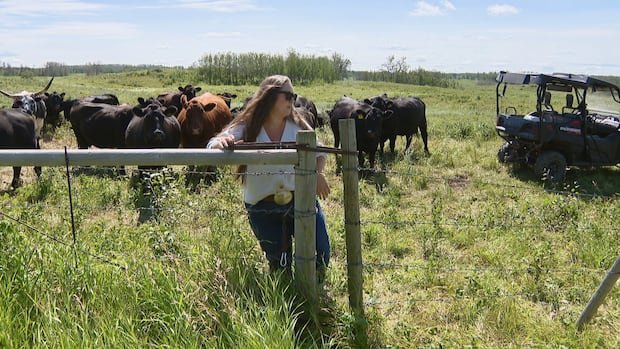

In Red Deer County, a program allowing cattle to graze in ditches for extra feed during dry periods has seen very limited interest from local ranchers. Red Deer County council approved this roadside grazing initiative in July to assist farmers in coping with potential drought conditions. Despite the opportunity for additional feed, the program has not attracted many participants in recent years.
Jordon Smith, the assistant agricultural services manager of Red Deer County, mentioned that the council reintroduced the program due to extremely dry conditions after winter. He explained that the program enables producers to utilize otherwise unused areas for additional feed.
However, to graze cattle in the county’s ditches, producers must meet strict requirements, including holding $5 million in liability insurance, providing temporary fencing, and allowing grazing only during daylight hours, requiring livestock to be brought in nightly.
Smith highlighted that the program has been in place for over a decade, with annual reviews by the council based on weather conditions. He noted that the program has been renewed in four of the past five years due to drier conditions.
Despite recent dry spells in central Alberta, the program’s uptake remains minimal. Only one local producer applied in 2023, and another in 2024. This year, two producers are participating, although the county usually receives up to 10 inquiries annually, most of which do not materialize.
Local rancher John Fuchs expressed that the additional effort needed to utilize the program does not justify the extra feed gained. Similarly, rancher Kevin Ziola considered the program during a past dry period but opted out when rain alleviated the situation.
Nikki Olson, who manages a herd of about 50 cattle east of Red Deer, raised concerns about the program’s logistics, particularly the daily movement of cattle due to the prohibition of overnight stays in ditches. She emphasized the added challenges in terms of labor, manpower, and costs.
Neighboring municipalities, like Lacombe County, have also witnessed low participation in roadside grazing programs. Olson suggested that practical incentives from the county could make the program more appealing to cattle producers.
While roadside haying, where farmers cut ditch grass for cattle feed, is more popular among local producers, Smith highlighted that this practice carries less liability compared to grazing. The county currently has no immediate plans to amend grazing regulations but could consider revisions for the following year based on conditions.
Until the county permits expire on October 15, the roadside ditches will remain available as alternative pasture if needed by local producers.