
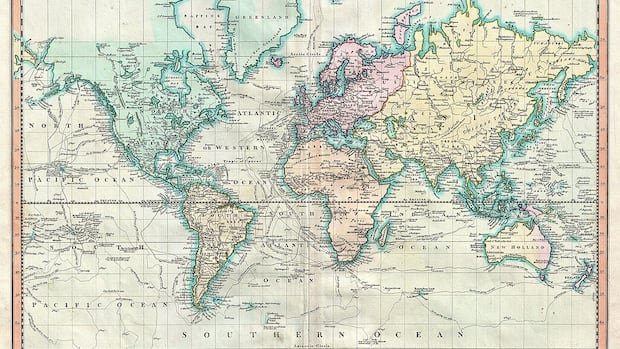

The United Nations made a significant decision on Friday to transition from the outdated Mercator global map, which distorts the true size of countries, to a more accurate representation. This resolution was championed by African nations to challenge the prevailing belief that Africa is marginal in global affairs.
Initiated by Togo, the resolution aligns with the African Union’s efforts to discourage the use of the Mercator map, which exaggerates the size of land masses near the poles. This distortion makes Greenland appear comparable in size to Africa, despite Africa being significantly larger.
Togo’s Foreign Minister, Robert Dussey, emphasized the importance of a fair map, stating, “A fair world begins with a fair map.” The resolution endorses the Equal Earth projection, which provides a more precise depiction of continent sizes.
Although non-binding, the resolution received overwhelming support in the UN General Assembly, with 164 countries in favor, one against (the United States), and six abstentions. The US criticized the resolution as promoting an ideological agenda and diverting attention from pressing international issues.
Togo aims to update its school geography materials by the end of the year, becoming the first country to do so. Dussey emphasized the need for global cooperation in adopting the Equal Earth projection, emphasizing its superiority in conveying an accurate view of the world.
In the coming months, Togo plans to engage with African Union members and international partners to encourage widespread adoption of the Equal Earth projection. Dussey emphasized the need to involve mapping, GPS, and technology companies in this initiative.
While advocating for a more accurate map, Dussey underscored that the campaign is part of broader African efforts to address colonial legacies and is not intended as an affront to any particular region. He highlighted the evolving nature of the world and Africa’s role in shaping its future.