

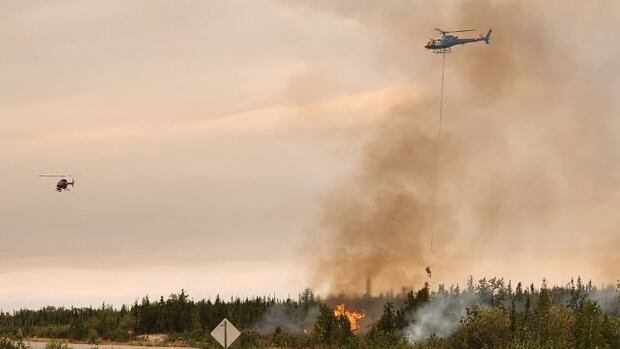

Data released by the N.W.T. government reveals a notable increase in evacuation orders over the past six years compared to the previous three decades combined. According to information obtained by CBC News from the N.W.T. Department of Municipal and Community Affairs (MACA), there were about 32 evacuation mandates between 1990 and 2019, a number matched between 2020 and 2026. The evacuations primarily stemmed from wildfires, floods, and occasional emergencies like the 2019 apartment fire at the Hay River high-rise.
These evacuation orders did not solely target specific communities but also included homes along highway stretches. Additionally, the data encompassed partial evacuations, where neighborhoods relocated to different parts of the town. Mike Flannigan, a wildland fire professor at Thompson Rivers University in Kamloops, British Columbia, expressed surprise at the surge in evacuations and raised concerns about whether historical wildfire evacuations were adequately documented.
Although CBC News sought wildfire evacuation data from the federal government, the available records only date back to 1980 and lack a breakdown by decade. Flannigan emphasized the clear trend depicted in the N.W.T. government’s data, indicating more frequent evacuations due to escalating fire incidents.
The escalating evacuations are predominantly attributed to wildfires, with Flannigan outlining several reasons for the surge in such evacuations. He highlighted the rising prevalence of fires due to human-induced climate change, leading to longer warm seasons and increased lightning occurrences, a common cause of fires in the Northwest Territories. Flannigan also noted changes in fire behavior, citing instances of exceptionally intense fires that pose challenges in containment.
The data illustrated repeated evacuations in numerous communities, with Hay River and Kátł’odeeche First Nation experiencing 12 evacuations collectively since 1990. The evolving emergency management landscape prompted by the surge in evacuations was also emphasized, with insights from Kevin Brezinski, the former N.W.T. director of public safety. Brezinski highlighted the intensification and frequency of fires in recent times, leading to a substantial impact compared to previous years.
The aftermath of floods and fires in the territory has resulted in substantial recovery costs, as detailed in the 2025 after-action review, totaling $363.8 million since 2021. The evolving emergency management landscape has necessitated a sharper focus on emergency measures, reflecting changing priorities in handling emergencies.
Despite the increased frequency of evacuations, the N.W.T. has a history of challenging fire seasons, with significant events like the 1995 fire near Tulita. The community still commemorates this event with annual “fire day” activities, symbolizing the resilience of residents in the face of such crises. Residents like Shelley Melto from Norman Wells recount past evacuations, highlighting the emotional toll and shared experiences of displaced communities.
The data portrays a shifting landscape in emergency management and evacuation practices in the N.W.T., underscoring the need for proactive measures to address the escalating challenges posed by wildfires and other emergencies.