

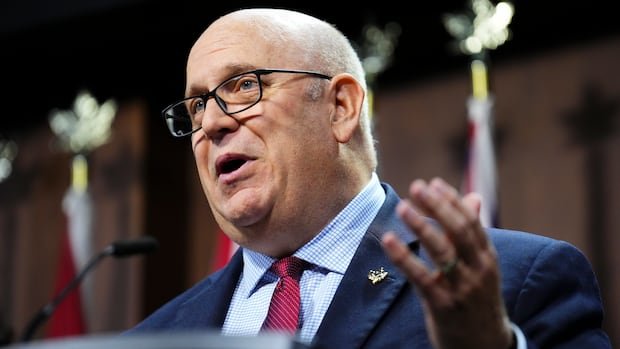

Over a four-day period in Ottawa this week, Conservative Member of Parliament Dean Allison conducted independent hearings on COVID-19 vaccine injuries.
The Allison Inquiry featured testimonies from 50 individuals selected from a pool of over 1,400 applicants, as stated in a press release. Most of the participants were Canadian citizens who traveled to Parliament Hill from various parts of the country to share their personal accounts of vaccine-related injuries.
The inquiry’s mandate was focused on listening to the experiences of Canadians and did not involve making factual determinations or drawing conclusions. Notably, the inquiry did not include input from Health Canada and was not officially endorsed by the federal government.
Representing Niagara West in the House of Commons, Allison expressed that the purpose of the inquiry was to initiate a dialogue that should have commenced much earlier. He emphasized the importance of compassion regardless of differing opinions on COVID-19, vaccines, or public policies.
Throughout the event, witnesses provided diverse testimonies, including that of Drue Taylor, a 36-year-old massage therapist from Alberta. Taylor, who joined virtually due to travel challenges, shared her struggles with postural orthostatic tachycardia syndrome (POTS) following vaccination.
Taylor highlighted her disappointment with the Vaccine Injury Support Program (VISP), citing a prolonged appeals process despite an initial payout of $45,000. Health Canada disclosed that from June 2021 to November 2025, VISP received 3,557 claims and disbursed over $21 million, with 252 claims approved by the Medical Review Board for serious or permanent vaccine-related injuries.
In response to criticisms of the program’s administration, the federal government assumed control in 2026 after initially outsourcing management to a third-party provider, Oxaro, before transitioning to the current Vaccine Impact Assistance Program (VIAP).
The inquiry featured not only Canadian testimonials but also contributions from U.S. Senator Ron Johnson, who utilized his time to denounce Dr. Anthony Fauci and question the origins of the COVID-19 virus.
Dean Allison stressed that his independent investigation aimed to address a gap in Canada’s response to vaccine injuries, which had not been officially explored by the government. The inquiry’s website highlighted that numerous democratic nations, including G7 and Commonwealth countries, had conducted substantial COVID-19 inquiries covering lockdowns, mandates, vaccines, and governmental decision-making.
Calls from medical experts for a national inquiry into Canada’s pandemic response have surfaced, though no formal government-led inquiry has been initiated. In 2023, public hearings, dubbed the National Citizens Inquiry into Canada’s Response to COVID-19, were organized across multiple provinces.
Recent statements by Canada’s chief science advisor, Mona Nemer, underscored the importance of reflecting on the country’s pandemic response to enhance preparedness for future health crises. Nemer emphasized the significance of listening to public sentiments and understanding the current landscape.
Between December 2020 and December 2023, Canada administered a total of 105 million COVID-19 vaccine doses, with Health Canada reporting 58,712 adverse event reports, representing a small percentage of all vaccinations given, including 11,702 considered serious incidents.
The inquiry conducted by Dean Allison marked a significant undertaking in Canada, shedding light on vaccine injuries and prompting discussions on public health policies and responses to the ongoing pandemic.