

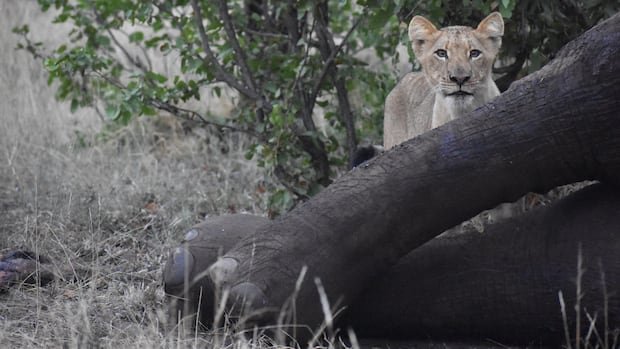

In the vast African savannah, elephants are playing a crucial role even after their death, as revealed by a recent study conducted by an international team of scientists in South Africa’s Kruger National Park.
These majestic creatures, often known as “ecosystem engineers,” have long been recognized for their significant impact on the environment while alive, including creating waterholes, altering landscapes, and consuming vast amounts of vegetation. However, the study sought to investigate if their influence persists posthumously.
Lead author Courtney Reed, an ecologist, explained that the nutrients present in elephant carcasses, such as carbon, nitrogen, and phosphorus, continue to contribute to the ecosystem even after the elephants have died. The study’s findings were published in the Proceedings of the National Academy of Sciences of the United States of America.
Through analyzing soil chemistry, biodiversity, and animal behavior around elephant carcasses, researchers discovered that decomposition releases substantial amounts of nutrients into the soil, stimulating microbial activity and promoting the growth of nutrient-rich plants. This attracts herbivores to the area for several years, despite the initial depletion of vegetation caused by the high nutrient concentration.
While the immediate impact of the carcasses results in bare patches devoid of vegetation, the ecosystem gradually recovers as excess nutrients dissipate and plants rich in nitrogen reemerge. This renewed vegetation serves as a vital protein source for herbivores like zebras, buffaloes, and rhinos, leading to sustained herbivore activity at the sites.
Moreover, the study highlighted the continued enrichment of the soil by grazing animals and scavengers visiting the carcass sites over time. However, it is noted that the ecological legacy of elephant carcasses may not always have a positive effect on every landscape, particularly in regions where human activities have disrupted the natural balance of biodiversity.
Chase LaDue, an elephant ecologist not involved in the study, emphasized the delicate equilibrium required in ecosystems. While elephant carcasses can support biodiversity in the African savannah, excessive concentrations of carcasses due to human impact can disrupt the ecosystem’s balance, ultimately affecting the landscape’s long-term health.