

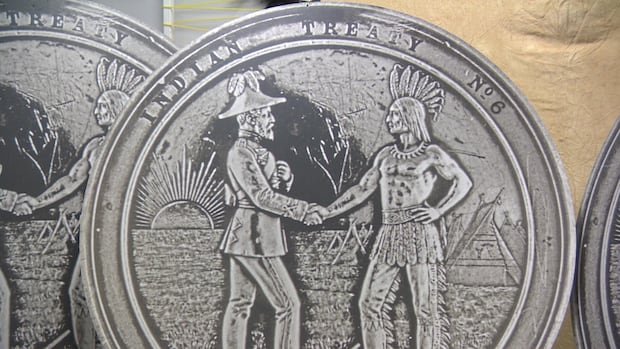

First Nations from various parts of Treaty 6 land have been commemorating the 150th anniversary of the 1876 treaty signing with the Crown this month. However, the upcoming referendum on Alberta independence has sparked concerns among some, overshadowing the festivities.
Alberta’s fall referendum includes a crucial question on whether the province should stay within Canada or initiate the process for a binding referendum on separation. This question is causing unease among many First Nations individuals who fear it jeopardizes their treaty rights and other entitlements.
Grand Chief Joey Pete of the Confederacy of Treaty 6 First Nations, representing Alberta’s nations, expressed concerns about the impact of the separatist movement on their community. He emphasized that the treaty was not about Alberta but about the Crown, with his ancestors signing it to share the land with settlers, not give it up.
The treaty secures various rights for First Nations, such as health, education, and the freedom to hunt and live off the land, rights they still possess today. Janice Makokis, an assistant law professor at the University of Windsor from Saddle Lake Cree Nation, highlighted Canada’s legal obligation to act in the best interests of First Nations, warning that leaving Alberta could directly affect funding tied to education and health.
Despite ongoing legal battles between First Nations and the province, Pete affirmed their readiness to defend their rights against the provincial government’s actions that they deem contradictory to their laws. A judge recently overturned the approval of a separatist petition, leading to an appeal by the province, which argues against the necessity of consultation and criticizes the judge’s decision as “anti-democratic.”
The week-long events organized by the Confederacy of Treaty 6 First Nations to mark the treaty’s anniversary saw no representation from Alberta’s UCP government, signaling a lack of reconciliation efforts according to Pete’s interpretation. The government’s office assured commitment to maintaining strong relationships despite the absence.
Treaty 6, signed in 1876 at Fort Carlton in present-day Saskatchewan, covers a vast area across central Alberta and Saskatchewan, with additional signatories in Manitoba. Dwayne Donald, a Canada Research Chair and education professor at the University of Alberta, emphasized the treaty’s historical significance in Alberta’s integration into Canada.
As discussions on separatism unfold, various separatist groups propose different scenarios for First Nations in an independent Alberta. While promises of upholding rights are made, Chief Vernon Watchmaker of Kehewin Cree Nation remains against division, advocating for unity and emphasizing the sacredness and international nature of the treaties.
Donald sheds light on the overlooked history of Edmonton’s North Saskatchewan River valley, underscoring the region’s Indigenous heritage and the impact of federal decisions on Indigenous communities. He criticizes the separatism movement for disregarding sovereignty and Indigenous presence in the region’s history, likening it to the notion of manifest destiny.
Overall, the ongoing dialogue surrounding Alberta’s independence referendum carries significant implications for First Nations and their treaty rights, raising important questions about the future relationship between Indigenous communities and the province.