

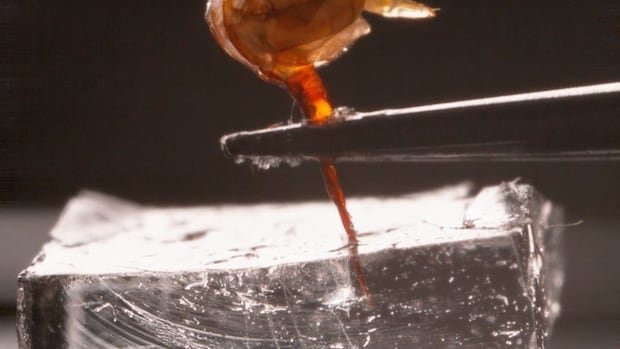

Recent research published in the Proceedings of the National Academy of Sciences has shed new light on the effectiveness of the western honey bee’s stinger as a defense mechanism. Lead author Fiorella Ramirez Esquivel, a postdoctoral researcher at Macquarie University, utilized high-speed cameras to capture the stinger in action, a feat made possible by modern camera technology.
The study revealed the intricate design of the bee’s stinger, showcasing how two specialized valves work simultaneously to drive the stinger deeper into the target while continuously delivering venom from the sac. This mechanism, described as a “double piston design,” involves a complex interplay between the valves to ensure a continuous flow of venom.
The experiments involved using live honey bees, with researchers removing their stingers and observing the intricate movements of the valves. The findings provide valuable insights into the unique design of the bee’s stinging apparatus, highlighting its efficiency in delivering venom while ensuring the stinger remains embedded in the target.
Juliana Rangel, a professor of apiculture at Texas A&M University, expressed fascination with the study’s findings, noting that the videos offer a deeper understanding of the bee’s defense mechanism beyond traditional microscopic images. The research also points to potential medical applications of understanding such complex biological systems.
The study underscores the remarkable adaptation of the western honey bee as a social species whose defense mechanism serves the larger colony’s protection. The intricate design of the stinger, with its barbs and continuous pumping of venom, showcases the evolutionary trade-off between individual sacrifice and collective defense in bee colonies.