

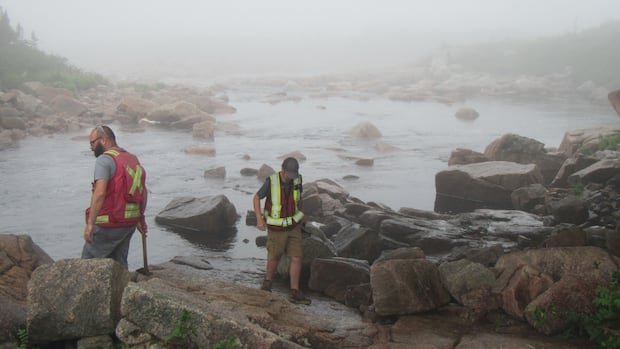

Severe wildfire seasons are increasingly becoming a concern for public safety in Newfoundland and Labrador, impacting routine operations in rural and remote areas, including vital geoscience activities for the mining industry.
The wildfires often render work areas inaccessible due to safety concerns, leading to the redirection of aircraft meant for transporting scientists to assist in wildfire response efforts. This situation poses challenges for scientific program directors in planning and scheduling their activities. However, according to the responsible minister, the essential work is still progressing despite these hurdles.
In the previous year, the actual expenditure by the Government of Newfoundland and Labrador on transportation for geophysical surveys conducted by the Geological Survey of Newfoundland and Labrador fell $321,800 below the budgeted amount. Minister Lloyd Parrott attributed this difference to lower-than-expected helicopter usage, mainly due to unavailability caused by wildfires.
While scientists occasionally utilize drones for field work, the nature of their tasks often necessitates physical sample collection and activities beyond drone capabilities. In regions like Labrador, helicopters play a crucial role in accessing remote areas. Disruptions in helicopter travel can occur due to adverse weather conditions or the ongoing wildfires.
Minister Parrott acknowledged the reassignment of some helicopter resources to aid in wildfire suppression efforts this summer, albeit with less impact compared to the challenges faced during the 2025 wildfire season. Despite these disruptions, the Geological Survey’s work continues to progress.
Amanda McCallum, executive director of Mining Industry N.L., emphasized the significance of public geoscience work, highlighting its invaluable role in driving investment, de-risking projects, informing land use decisions, and accelerating potential discoveries. She stressed the importance of further support for these efforts.
Although the industry is adapting to wildfire disruptions by adjusting field seasons, private spending on exploration work in Newfoundland and Labrador has reached record highs. McCallum noted a forecasted expenditure of $283.3 million for the year, reflecting continued growth in the sector.
She highlighted the sector’s resilience in managing through challenges, with projects proceeding despite adjustments to field operations. Mining, a key contributor to the province’s GDP, supports thousands of direct jobs and ongoing exploration activities.
As of the latest update, the wildfire risk level across reported areas in the province was low, with a reduced number of fires compared to the previous year. While there are still active fires in certain regions of Labrador, the overall fire count is lower in 2026, although the total area burned has increased.
Download the free CBC News app for push alerts on Newfoundland and Labrador news and subscribe to the daily headlines newsletter for updates. Visit the CBC Newfoundland and Labrador landing page for more information.