

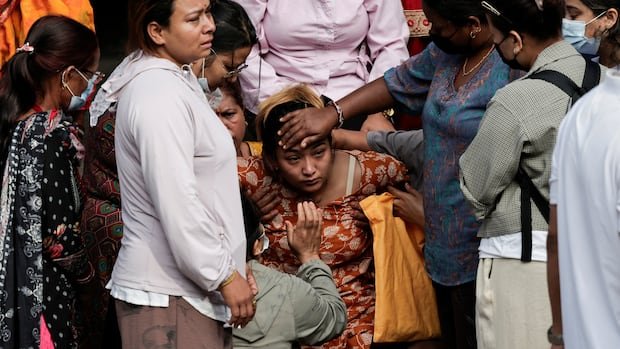

Rescue teams in Nepal are in a race against time to access numerous workers believed to be trapped inside hydropower tunnels in the country’s mountains. This effort offers a glimmer of hope in the aftermath of a devastating Himalayan flood that has claimed the lives of over 1,200 individuals.
The catastrophic flood was triggered by a glacier collapse near the Nepal-China border, wreaking havoc on towns and valleys in the mountainous region. With at least 1,204 confirmed fatalities and over 4,200 people still missing, the focus of rescue operations has shifted towards hydroelectric project tunnels where workers are thought to have survived despite being isolated by floodwaters and debris.
Some of these tunnels feature chambers stocked with air supplies, raising optimism about the possibility of rescuing around 900 missing workers. Amshu Kiran Shahi, a Nepal Electricity Authority board member, expressed confidence in finding survivors due to the presence of food and water within the structures designed for communication and shelter.
While hopes of locating survivors in other areas dwindle, rescue operations persist as teams scour the border region with China, which bore the brunt of the devastating floods. Prime Minister Balendra Shah affirmed the government’s commitment to continuing search and rescue efforts to locate missing individuals and support affected communities.
Significant rescue operations are underway at four project tunnels, with two projects holding the highest promise of finding survivors due to the presence of air inside. Specialized rescue teams from India, China, and the United States have been mobilized to aid in the tunnel rescue missions.
In Tibet, the official toll of casualties has risen, with at least 21 reported dead and 541 individuals missing. Following the reopening of the road to the Gyirong border crossing, heavy machinery has been able to access the core disaster zone for the first time, facilitating rescue efforts in the rugged terrain.
Chinese authorities are intensifying search efforts in the disaster zone, focusing on key structures like inspection buildings, parking lots, and dormitories as they conduct thorough searches for survivors. Beijing has pledged to dispatch additional DNA identification experts and emergency supplies to support relief operations in Nepal.
Residents in the affected areas of Nepal are grappling with the aftermath, salvaging what remains of their belongings in the devastated villages and towns. Efforts are being made to address the psychological distress experienced by children who witnessed the catastrophic flood, with international charity Save the Children highlighting the need for mental health and educational support.
Nepal’s Prime Minister Balendra Shah noted progress in restoring essential services such as telecommunication and power supply, aided by foreign assistance. Despite the significant electricity generation capacity disruptions caused by the disaster, efforts are underway to restore services and rebuild infrastructure in the affected regions.