

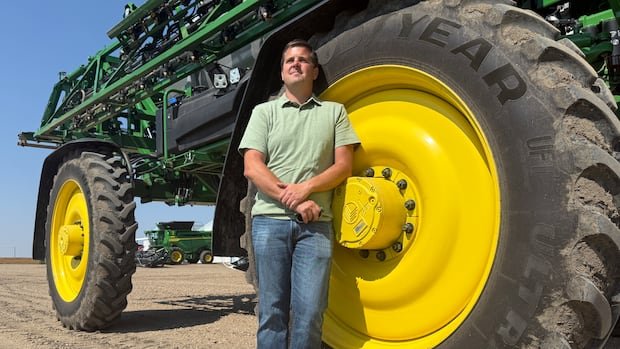

In Coleville, Sask., Dean Roberts observed a sizable grey drone taking flight over his 4,000-hectare farm, where he cultivates various crops like canola, wheat, barley, and lentils. The drone, a DJI T100, is the largest spray drone in Canada, equipped with a 100-liter tank approved by the federal government for pesticide spraying. During a demonstration, Roberts explained how this technology could benefit his farm, especially during wet conditions that hinder ground rig operations.
Roberts emphasized that Prairie farmers, like himself, continually adopt new technologies to enhance crop yields. However, he noted that Canada lags behind countries like the U.S., China, Brazil, Japan, and Australia in allowing drone spraying due to regulatory obstacles. Experts attribute Canada’s slow adoption of agricultural technology to bureaucratic hurdles, infrastructure limitations, and labor shortages that impede the country’s food export growth.
According to Evan Fraser, from the Arrell Food Institute, Canada’s food exports are not keeping pace with global trends, leading to a decline in market share. He highlighted the need for streamlined regulations and improved infrastructure to boost Canada’s agri-food exports. Roberts echoed these sentiments, mentioning positive steps like Canada’s efforts to revamp its pesticide regulatory framework to expedite crop protection approvals.
Infrastructure challenges, such as limited rail access to export markets, pose additional hurdles for farmers like Roberts. Delays in rail transportation can disrupt crop deliveries, impacting the timely export of agricultural products. Evan Shout, a farm business consultant, emphasized the importance of addressing infrastructure issues and labor shortages to improve the efficiency of agricultural operations.
The federal government’s focus on boosting agri-food exports as part of the national food security strategy has garnered mixed reactions. While some experts advocate for enhancing export capacity, others stress the importance of sustainable agricultural practices that benefit both domestic production and global food security. Jennifer Clapp suggested that Canada should prioritize eco-friendly agriculture and promote self-sufficiency in food production to avoid undermining other countries’ agricultural sectors.
Evan Fraser emphasized the need for Canada to position itself as a key agricultural player in light of climate change impacts on global food production. He highlighted Canada’s potential to increase agricultural output while supporting other countries in improving their agricultural sustainability. Fraser suggested that Canada should embrace its role as a significant food producer and exporter, given the changing global landscape.
Dean Roberts expressed confidence in Canada’s agricultural capabilities, citing the country’s vast arable land and favorable climate for farming. He believes that Canada has the potential to contribute significantly to global food production, emphasizing the need for continued innovation and adaptation in the agricultural sector.