

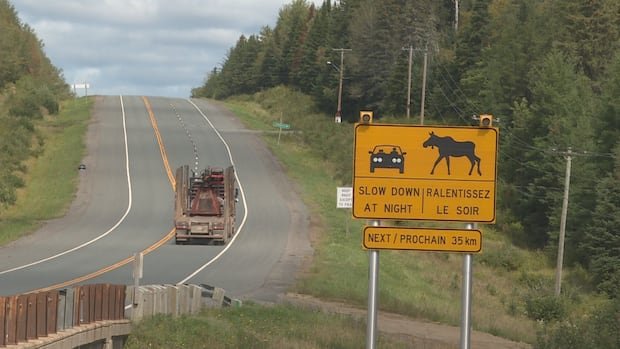

It was a late August Saturday night when the Chaleur Lightning hockey team, after an exhibition game with the Miramichi Timberwolves, boarded their bus back to Bathurst. Assistant coach Alex Ouellet recalled the moment the driver gasped just minutes into the journey, leading to a collision with a moose on the highway. Fortunately, everyone on the team escaped unharmed, except for a few scratches on the driver.
The encounter left a lasting impression on Ouellet and the team, much like many others in New Brunswick who have faced similar situations with large animals. Reflecting on the incident, Ouellet expressed how it would stay with him whenever he travels those roads, especially during evening and night hours.
Coincidentally, that same week, the province announced the installation of two new wildlife crossings on the highway section where the mishap occurred. These crossings, known as wildlife tunnels, are part of the province’s efforts to prevent animals like moose from straying onto roadways. Transportation Minister Chuck Chiasson highlighted that the placement of these measures is determined by analyzing collision data to identify high-risk areas.
Currently, over 331 kilometers of New Brunswick highways are equipped with wildlife fencing on both sides. Despite the fencing, the province has constructed 82 wildlife crossings, including the recent addition of two tunnels on Route 8 between Miramichi and Bathurst. These tunnels, towering over four meters in height and width, are designed to facilitate safe passage for various wildlife species.
Wildlife ecologist Graham Forbes, who conducted research on wildlife tunnels in the past, emphasized the importance of making these structures intuitive for animals to use. He found that a variety of animals, not just large mammals, utilize the tunnels, showcasing their effectiveness in promoting safe wildlife passage.
While the Department of Transportation has not observed a significant decrease in collisions due to the tunnels, the primary goal remains ensuring traveler safety. Chiasson mentioned that additional measures, such as clearing brush for better visibility, are also considered to enhance road safety in collision-prone areas.
Looking ahead, Ouellet expressed hope for more fencing in the region to mitigate future incidents, acknowledging the challenges of completely preventing collisions. Despite the risks, he emphasized the importance of implementing preventive measures to safeguard against such encounters on the highways.