

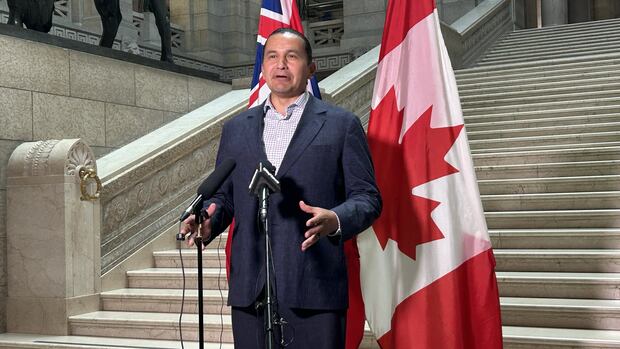

Manitoba’s Premier Wab Kinew has stated that the province fully endorses the Canadian government’s choice to withdraw from trade discussions with the U.S. late Friday night.
“Everyone is backing Prime Minister [Mark] Carney today,” Kinew remarked following a meeting with Canadian premiers to discuss the collapse of negotiations with the U.S.
“I am pleased that the prime minister has stepped away from what would have been an unfavorable agreement.”
On Saturday morning, tariffs of 50 percent on nearly $30 billion worth of Canadian products took effect. These tariffs will impact a variety of items, including honey, sports gear, furniture, appliances, wine, and others.
“The tariffs he is imposing on us, driven by a need to appear tough or whatever, are entirely unjustified, and we Canadians must never accept it — we should always resist,” Kinew stated, referring to U.S. President Donald Trump.
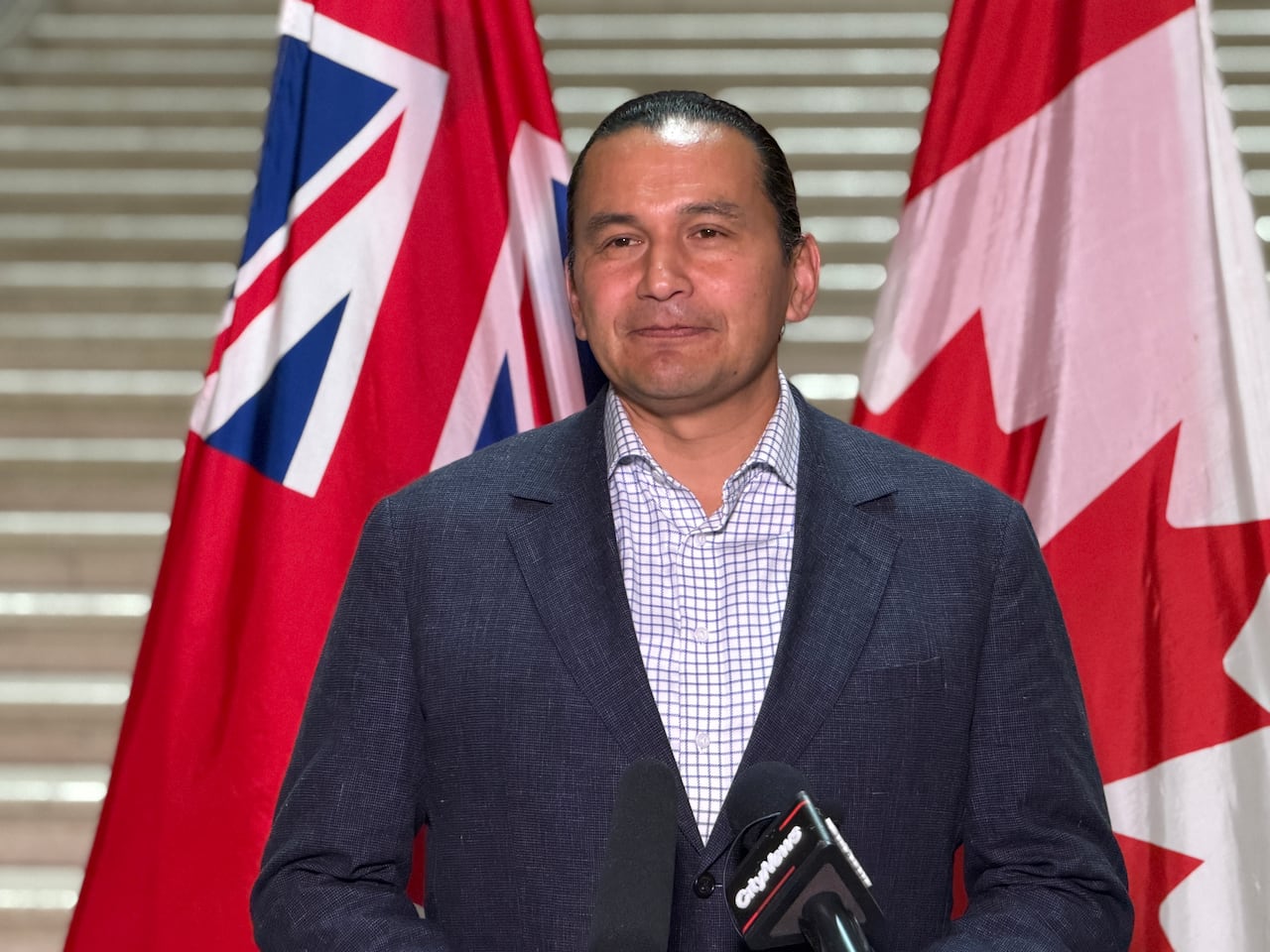
Kinew asserts that the nation should be ready to ‘duke it out’ with the current U.S. administration for the duration of Trump’s presidency. (Randall McKenzie/CBC)
During a press briefing on Saturday morning, Prime Minister Carney announced that Canada would implement dollar-for-dollar tariffs, anticipated to take effect shortly after Labour Day.
“This is a targeted response,” the prime minister declared.
“A targeted response to safeguard our industries and enable them to compete against U.S. products in the Canadian market.”
The prime minister indicated in a statement released Friday night that he had directed his negotiating team to return to Canada after the U.S. suggested last-minute alterations to the potential deal that were deemed “unfair, uneconomic, and raised doubts about the dependability of any agreement.”
This past week, Kinew mentioned he was open to bringing U.S. alcohol back to Manitoban stores — though reluctantly — as part of a possible agreement between the U.S. and Canada.
However, Kinew stated that American alcohol will not be returning to shelves in Manitoba “anytime soon.”
The premier also mentioned he will convene with the provincial U.S. trade council on Monday to discuss how they can coordinate with the federal government in response to the tariffs.
Kinew expects to announce support measures for Manitoban businesses in the upcoming week.
When questioned about the possibility of returning to the negotiation table, Kinew expressed skepticism about the reliability of any agreement with the current U.S. administration.
“We must acknowledge that the Trump administration and the president have significant flaws,” he noted.
“He has two additional years in office. We should be ready to engage in a battle for two years — and then hopefully, rationality will return to the U.S.”
-
Maritime provinces voice solidarity in response to new U.S. tariffs
-
U.S. trade demands aimed to reduce Canada to ’51st state,’ B.C. premier says
Obby Khan, leader of the Progressive Conservatives, took to social media calling on the provincial government to “act swiftly, effectively, and professionally with the federal government to ensure supports are available promptly for affected workers, families, and businesses.”
The Opposition leader also emphasized the need for the province to seek new market opportunities for Manitoban enterprises and to secure a better agreement with the U.S. in the future.
Winnipeg Mayor Scott Gillingham issued a statement attributing the crisis in the U.S.-Canada trade relationship to the U.S. president and his advisors “continuing to follow through on [Trump’s] arrogant threat to try to control our country using ‘economic force.'”
Gillingham affirmed that the City of Winnipeg “will enhance its support for federal and provincial initiatives to combat this bullying.”
Internal trade could help
Chuck Davidson, president of the Manitoba Chambers of Commerce, expressed that the failure of a trade agreement between Canada and the U.S. is “extremely disappointing.”
“There was considerable optimism over the past week based on indications that we were receiving from both sides of the border that a deal was close and that we could move past these tariffs,” Davidson commented.
“However, it appears the situation is only going to worsen in the near term.”
Davidson noted that it may be a difficult period for Manitoban businesses, who may struggle to find buyers in the U.S. due to the added costs; nevertheless, one beneficial factor is continuing to dismantle provincial trade barriers.
“Internal trade barriers are another obstacle we face when trading even within our own country,” Davidson explained.
“Progress has been made in that regard, but maintaining a focus on this issue will only benefit businesses during these challenging times.”
Kinew stated that Manitoba is “leading the way” in addressing interprovincial trade barriers.
“I believe other provinces will likely increase their efforts in this area, which is promising,” Kinew noted.
“Manitoba will be prepared to collaborate with them to enhance the volume of trade among ourselves.”
Kinew was not alone in voicing support for the prime minister’s choice to halt trade negotiations with the U.S. on Saturday.
Premiers from Newfoundland and Labrador, British Columbia, New Brunswick, Nova Scotia, Prince Edward Island, Saskatchewan, and Ontario have all expressed their backing for the prime minister’s decision to withdraw from the talks.
In a post on X, Alberta Premier Danielle Smith expressed her “deep disappointment” over the lack of a trade agreement and will continue to push for a “tariff-free relationship” between Canada and the U.S. Smith added that she intends to urge the Canadian government to restart negotiations “as soon as possible.”
Quebec Premier Christine Fréchette remarked that the repercussions of these tariffs on the Quebec economy would be “colossal,” and she plans to discuss support measures with the federal government.
The federal government is anticipated to unveil additional initiatives to assist Canadians and Canadian businesses in the upcoming week.