

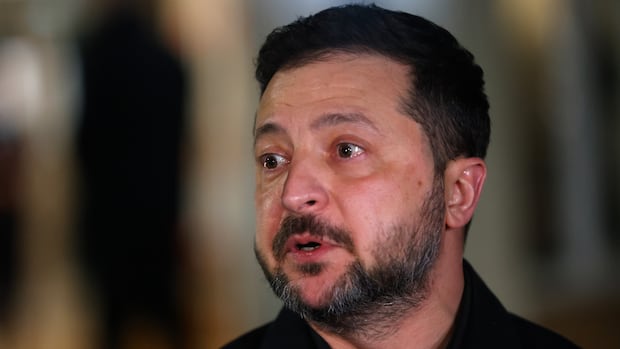

President Volodymyr Zelenskyy stated on Sunday that constraints on Ukraine’s Starshield satellite communication system are impairing its capacity to detect Russian drones.
He cautioned that the restrictions on this system, managed by Elon Musk’s SpaceX, might compromise defenses surrounding Ukraine’s energy infrastructure as winter approaches, a period when Moscow has frequently assaulted the power grid.
Zelenskyy noted that Ukraine’s interceptor drones are losing communication with their operators when traveling faster than 161 km/h along the front lines and over areas occupied by Russia, preventing them from intercepting Russian Shahed drones.
“We are relying on these limitations to be removed,” he expressed on social media. “The safeguarding of lives and Ukrainian energy infrastructure prior to winter hinges on this. The Ministry of Foreign Affairs, the Ministry of Defence, and the President’s Office have been directed to collaborate closely with the American authorities and SpaceX.
“It is crucial to align ourselves with the right side of history. We must assist Ukraine.”
On Saturday, Zelenskyy posed the question of whether the issue was technical, suggesting that the restrictions seemed to be enforced by SpaceX, despite previous statements from U.S. Secretary of State Marco Rubio indicating that Starshield was primarily under U.S. governmental oversight.
Power outages following Russian attack on energy facility
In the meantime, a Russian assault on Chornomorsk, a port city in Ukraine’s Odesa region, resulted in injuries to six individuals and damage to energy infrastructure, as reported by regional head Oleh Kiper via Telegram on Sunday.
The explosion and falling debris also caused harm to a gas pipeline and nearby residential structures, while two parked vehicles were engulfed in flames.
The attack targeted a site run by DTEK Odesa Electric Networks, leaving approximately 41,000 customers without electricity temporarily, according to Kiper.
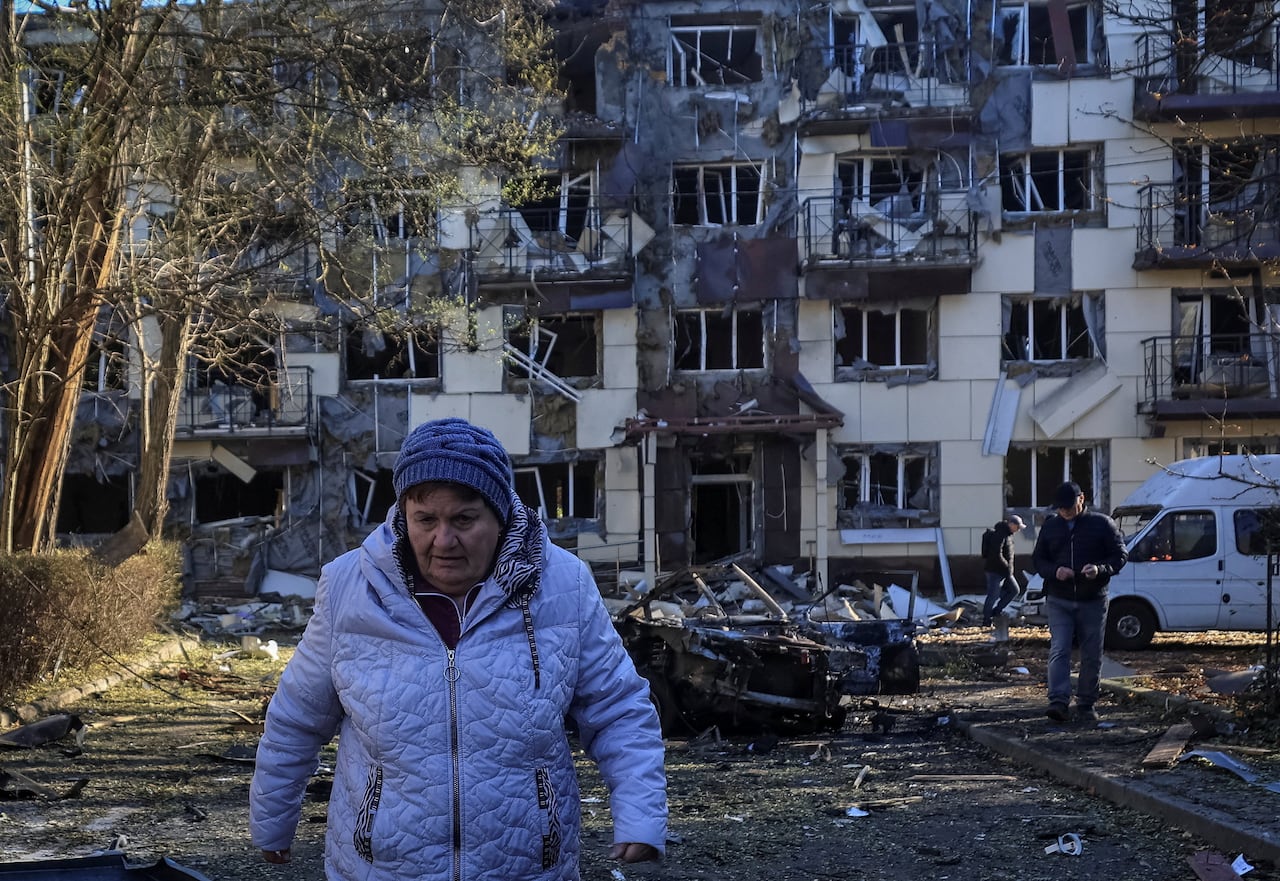
A woman surveys a building affected by a Russian drone strike in Chornomorsk, located in Ukraine’s Odesa region, on Sunday. (Nina Liashonok/Reuters)
Additional Russian airstrikes on the southeastern city of Zaporizhzhia resulted in six more injuries, including a two-year-old child, according to Ukraine’s State Emergency Service on Sunday.
Over the past week, Russia has conducted over 2,300 drone strikes, 1,590 guided aerial bombs, and 15 missiles of various types against Ukraine, as stated by Zelenskyy.
Ukrainian drone strike kills one in Rostov, Russia
Ukrainian drone attacks damaged two electrical substations in Russia’s Rostov region, resulting in the death of a chief engineer, Governor Yuri Slyusar reported on Sunday.
Four individuals sustained injuries when drone debris landed on their vehicles, Slyusar announced on social media. A fifth person was hurt when debris hit a “production facility” in the village of Troitskoye, he added.
Additionally, Ukrainian forces struck targets in Russia’s Tatarstan region, according to officials. Radmir Belyaev, the mayor of Nizhnekamsk, the region’s third-largest city, mentioned that a “large-scale and prolonged attack” had caused damage to its industrial area.
Six people were injured, and heating and hot water services were disrupted in parts of the city, he reported.
Ukraine’s General Staff indicated that it had hit two locations in Nizhnekamsk: Nizhnekamskneftekhim, one of Europe’s largest petrochemical complexes, and a production facility operated by petrochemical firm Sibur. An oil refinery in the vicinity was also reportedly impacted.
Russia’s Defence Ministry claimed that its forces shot down 533 Ukrainian drones overnight across 13 Russian regions, including the Russian-annexed Ukrainian peninsula of Crimea and the Black and Azov seas.
Drones strike ships in the Black Sea, Romania reports
Romanian Prime Minister Luca Niculescu reported on Sunday that three commercial vessels were hit by drones in the Black Sea overnight, marking the latest in a series of attacks that have heightened concerns about the conflict extending into NATO territories.
“Once again, maritime safety in the Black Sea has been jeopardized,” Niculescu stated on X.
Romania’s Ministry of National Defence stated that a Greek-flagged oil tanker was struck by a drone, igniting a fire that the crew managed to extinguish. Two additional ships were subsequently hit by drones, and their crews also quelled onboard fires, the ministry confirmed. No casualties were reported, and the ministry did not disclose the drones’ origin.
“These incidents are intolerable and represent a breach of international law,” Niculescu remarked, adding that they “reflect the worsening security situation resulting from Russia’s ongoing war against Ukraine.”
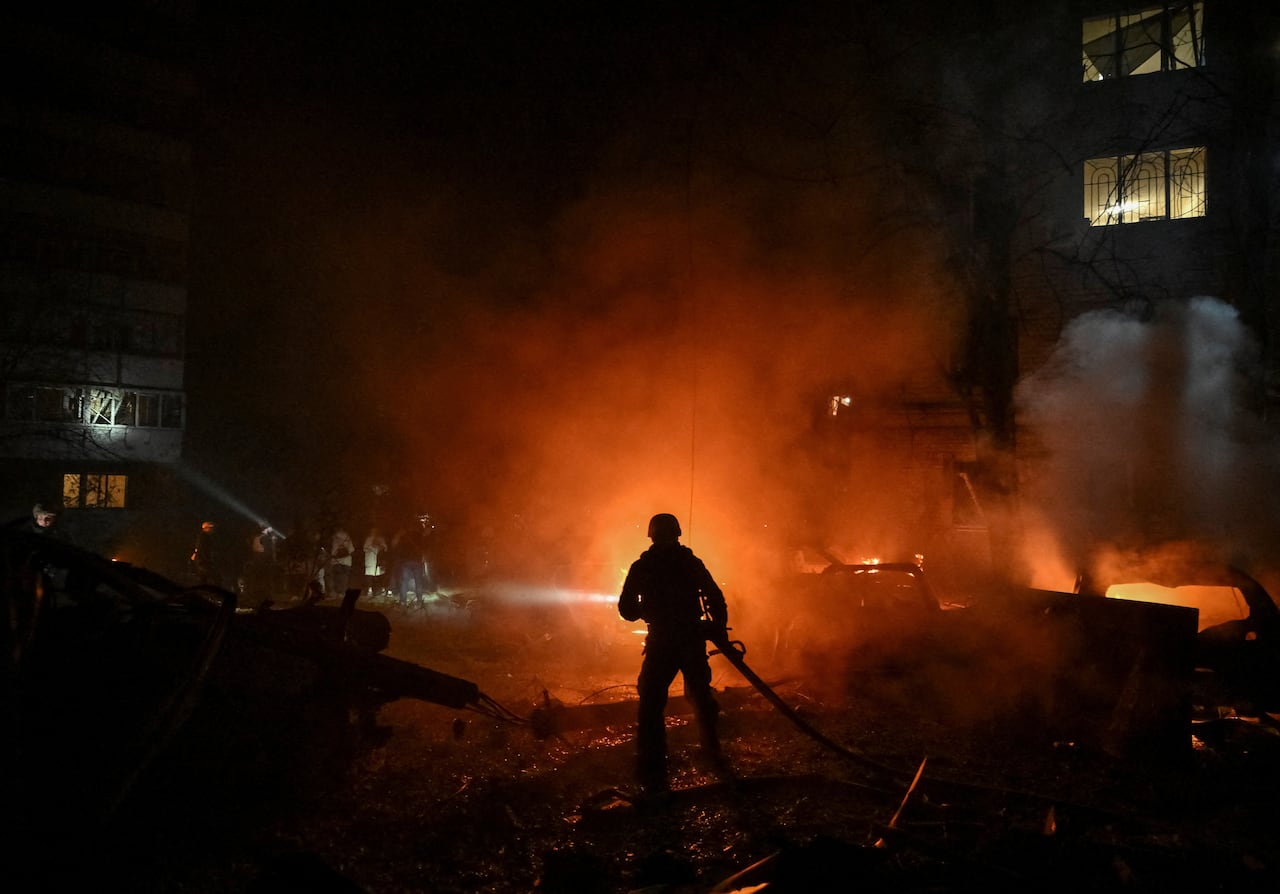
A rescuer operates at the scene of an apartment building damaged by a Russian airstrike in Zaporizhzhia, Ukraine, on Nov. 14. (Reuters)
Last month, several cargo ships and tankers were attacked by aerial or naval drones close to the Bulgarian and Romanian coastlines, leading to at least 30 sailors on commercial vessels confirmed dead or reported missing.
“We will persist in implementing all necessary measures, in collaboration with our Allies, to bolster security in the Black Sea,” Niculescu added. “This remains a top priority for the Government, in close cooperation with our regional partners and NATO.”
Estonia plans to close border with Russia
On Sunday, Estonia’s government announced plans to close all border crossings with Russia starting December 1, following accusations from the Baltic nation’s prime minister that Moscow attempted to undermine an Estonian drone firm the previous day.
The government revealed that an attack was attempted early Saturday against Threod Systems in Viimsi, located north of the capital, Tallinn, “with the intention of causing an explosion and igniting the building.”
“If Russia continues its hybrid operations in Estonia, and we are aware that Russian intelligence services utilize border crossings to influence individuals, we must be ready to mitigate the risks we encounter,” Prime Minister Kristen Michal stated in a press release.
“Closing the border would lessen the danger to individuals in Estonia and convey a clear message that assaults on Estonia’s defense industry and capabilities are unacceptable,” Michal added.
National broadcaster ERR reported on Sunday that eight Latvian nationals have been apprehended following the attempted break-in.