

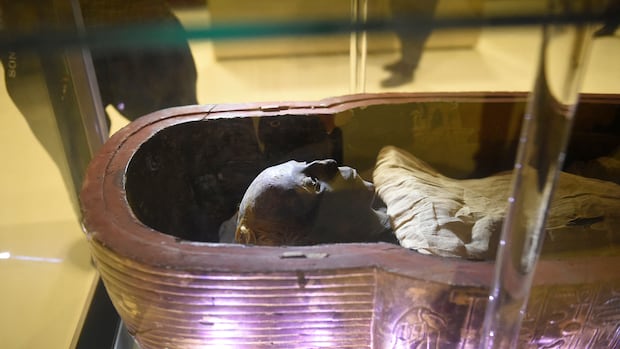

While it may not be the first thing that comes to mind when thinking of typical delivery packages, researchers have identified a global online market for preserved human remains, a niche interest that they warn could pose health risks.
In a research paper published in the International Journal of Cultural Property, lead researcher Kirsty Squires and her colleagues examined 128 online posts from 2015 to 2025 that showcased or promoted the sale of both human and animal remains.
“Commonly found were mummified heads, hands, and feet,” noted Squires, who teaches bioarchaeology at the University of Staffordshire in Stoke-on-Trent, England.
These mummified remains can contain dormant microorganisms such as bacteria, fungi, and yeast. The researchers caution that improper handling could lead to health complications for certain individuals, although some experts argue that knowledgeable collectors can manage the risks effectively.
Safe handling of mummified remains
Squires observed that many of the online images displayed “evident signs of decay in the remains, mainly due to inadequate storage conditions.”
In contrast, museums ensure that mummies are preserved in environments where both temperature and humidity are meticulously regulated.
“However, if remains are stored in homes, garages, or similar locations, they won’t be exposed to controlled environmental settings,” she explained.
Handling these remains could potentially release dormant fungal spores or bacteria into the air, which can persist in mummified human tissue for centuries, according to the researchers.
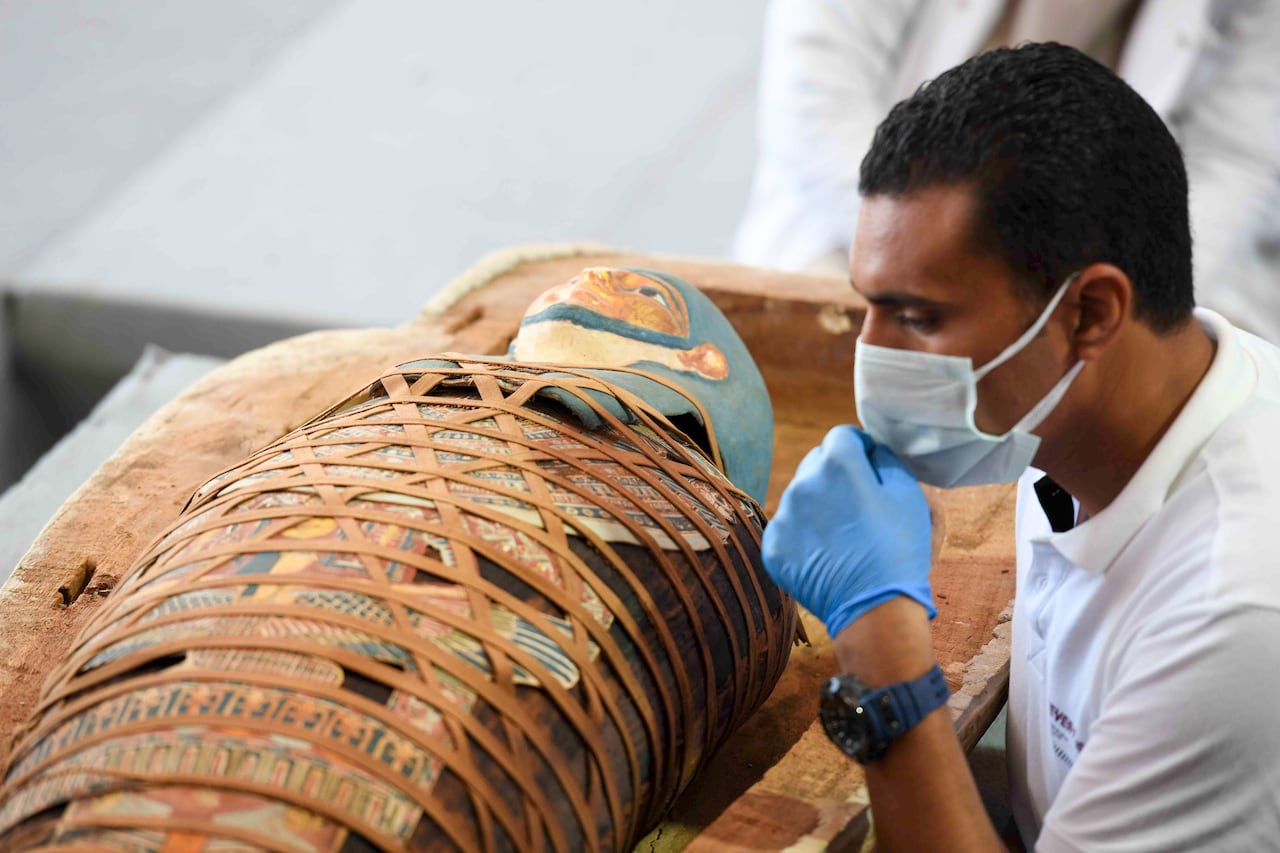
An archaeologist examines a mummy at the Saqqara necropolis located south of Cairo. In museums, mummies are stored securely with strict control over temperature and humidity. (Ahmed Hasan/AFP/Getty Images)
In her research, Squires uses protective gear when handling human remains.
She noted that in some cases, sellers were not wearing gloves.
Squires pointed out that individuals with compromised immune systems may be vulnerable to airborne microorganisms, which could cause respiratory problems and irritate skin and eyes.
Additionally, certain mummified remains may contain hazardous chemicals like arsenic and mercury, remnants of embalming fluids from the 19th and early 20th centuries, as highlighted in the study.
The true mummy’s curse
The research does not specify how many individuals, if any, have fallen ill from handling human remains available online, but historical encounters with such remains have resulted in fatalities.
For instance, in 1973, 10 out of 12 conservation scientists died after inhaling Aspergillus spores, a common mold, when they opened the tomb of King Casimir IV of Poland, which dates back to the 15th century.
Some have speculated that airborne fungal spores contributed to the death of Lord Carnarvon, a British archaeological patron, in 1923, who may have been exposed within Tutankhamun’s burial chamber. His death six weeks after entering the site fueled rumors of a “curse” for disturbing the resting place of the Egyptian pharaoh.
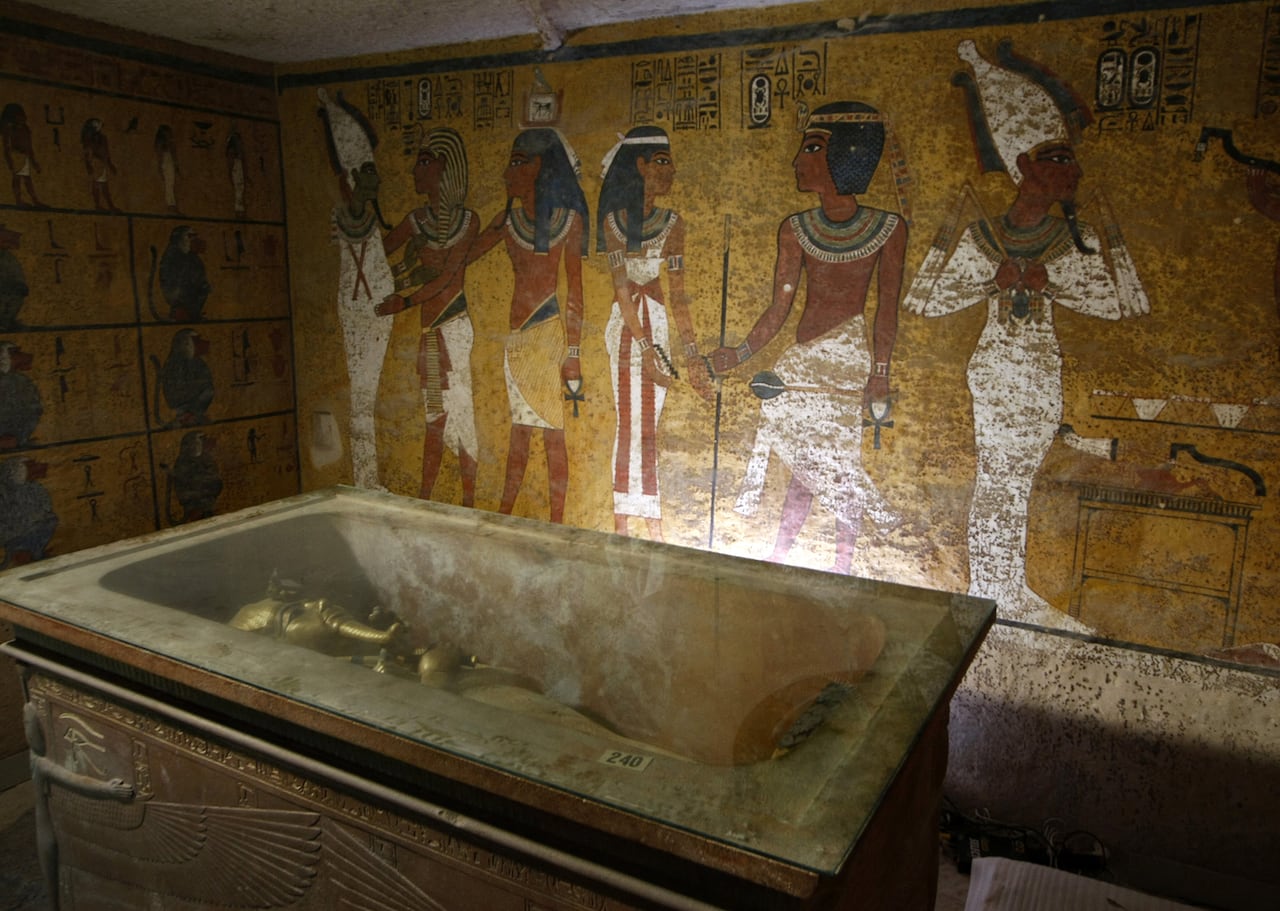
King Tutankhamun’s sarcophagus is displayed in its burial chamber. Lord Carnarvon, who financed the expedition to Tutankhamun’s tomb in 1922-23, passed away just over six weeks after his visit, leading to speculation regarding exposure to airborne fungal spores at the site. (Cris Bouroncle/AFP/Getty Images)
However, James Scott, a professor at the Dalla Lana School of Public Health in Toronto focusing on biological hazards, expresses greater concern regarding the ethical implications of this trade than the potential health risks.
“I believe the worries presented in this paper might be somewhat misplaced,” he conveyed to CBC News via email.
“While no mold is ideal, a minimal amount corresponds to a low risk. For a collector likely to store such items in a protective casing rather than frequently handle them (and likely with gloves), I don’t foresee any significant issues.”
An insight into the market for mummified human remains in Canada
Among the posts reviewed by the researchers, 11 originated from individuals in Canada.
Shawn Graham, a professor of digital archaeology at Carleton University in Ottawa who has researched the online market for human remains, finds this unsurprising. He notes that Canadian dealers are relatively easy to locate and that the sale and purchase of these items are not effectively regulated.
The Canadian Border Services Agency informed CBC News that when shipping across the Canadian border, officers “may determine admissibility and may refer remains to a [Public Health Agency of Canada] quarantine officer for further inspection.”
According to a statement from Canada Post, they do not allow the mailing of mummified human remains. Only cremated remains are permitted, under specific shipping requirements.
Private shipping companies like Purolator and UPS explicitly prohibit the transportation of human remains.
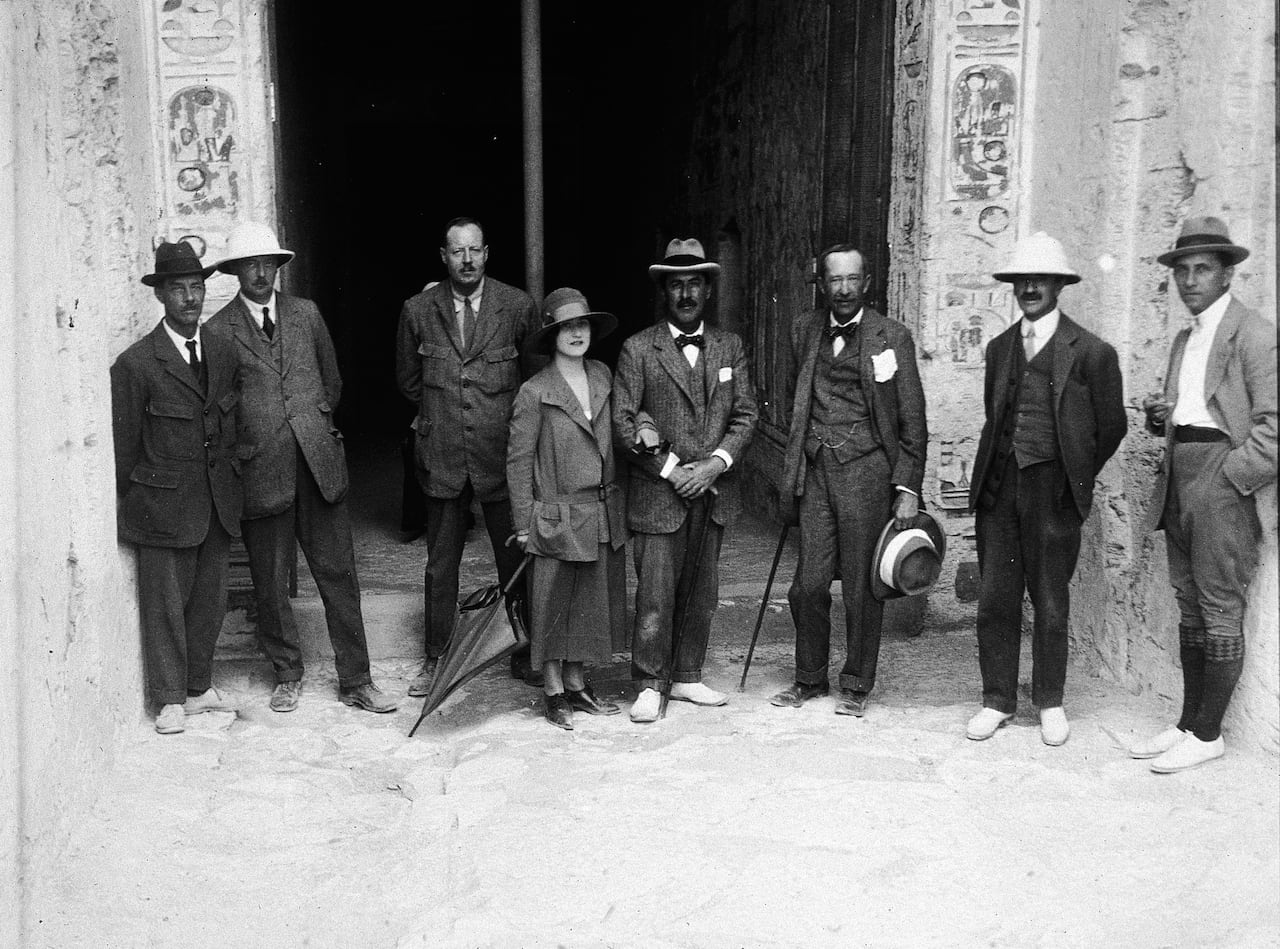
Lord Carnarvon, third from the right, stands at the entrance of a tomb in the Valley of Kings, Thebes, Egypt, around 1922. He is surrounded by other members of the British team that opened King Tutankhamun’s tomb. (Hulton Archive/Getty Images)
Nonetheless, Squires notes that sellers can often evade scrutiny.
“Individuals can easily claim they are sending archaeological samples when they are actually sending mummified heads,” she remarked. “They are vague, and there is no thorough checking. This creates a significant problem that is simple to circumvent.”
Consequently, postal workers may be unaware of the contents they are handling.
“If packages are damaged, anyone who comes into contact with those remains is at risk,” Squires warned.
Should the online market for human remains be prohibited?
Graham indicates that mummified remains are especially desired by collectors, and social media has facilitated connections between buyers and sellers.
Only some dealers specified the geographical origins of the remains, with most claiming they were sourced from Egypt and South America.
“Typically, it is not the remains of white European populations that are being traded and commodified,” Graham stated.
“This represents a form of colonialism, appropriating the bodies of others as commodities to be bought and sold.”
In February, a bill was proposed in the U.K. House of Commons that aimed to ban the online trading of human remains.
Graham advocates for Canada to explore similar legislation.
“I would like to see trading in human remains explicitly prohibited,” he emphasized.
“Reducing humans to mere objects is indicative of more troubling ideologies.”
Tag: rewrite-pending