

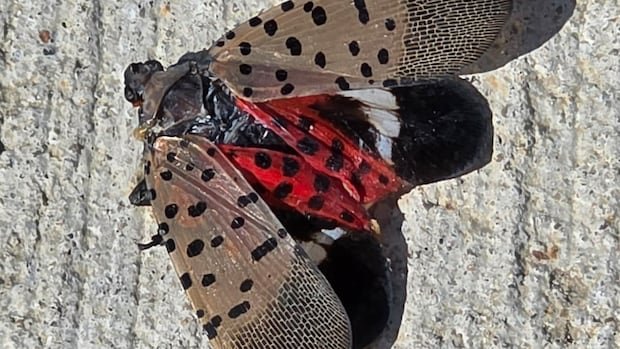

An invasive insect that is known to harm grapevines and affect various crops and trees has been found in Canada for the first time by the Canadian Food Inspection Agency (CFIA). The initial detection took place in Windsor, where residents had previously reported sightings of the spotted lanternfly, according to a non-profit organization dedicated to preventing the spread of invasive species. However, this marks the first time the insect has been officially identified through an agency survey, as stated by the Invasive Species Centre.
The spotted lanternfly is notorious for causing damage to grapevines, which can have significant repercussions on the grape and wine industry. Furthermore, it poses a threat to other agricultural sectors, horticulture, forestry, residential areas, and community parks. If left unchecked, the spread of the spotted lanternfly could lead to far-reaching economic, ecological, and social consequences. Originating from southeast Asia, this insect was first discovered in North America in Pennsylvania in 2014. It has a wide-ranging diet and can feed on the sap of more than 100 different plant species.
The Invasive Species Centre urges the public to familiarize themselves with the appearance of the insect. If individuals encounter a spotted lanternfly or its eggs, they are advised to take photographs, place the insect or eggs in a sealed plastic bag or container, and promptly report the finding to the CFIA. Timely reporting is essential, and the CFIA will respond to reports of the spotted lanternfly by conducting necessary actions such as site surveys and insect collection.
To help identify the spotted lanternfly, both the Invasive Species Centre and the CFIA have provided guidelines. Adult lanternflies are approximately 25mm long and 12mm wide, with distinctive markings on their wings and abdomen. They are known to gather in large groups on trees and plants, particularly during September and October when they are mating and laying eggs. Nymphs, in their early and late stages, exhibit varying color patterns and behaviors, while the eggs are typically visible from September through the winter until they hatch in the spring.
The presence of the spotted lanternfly may result in the accumulation of a sticky liquid excrement called honeydew at the base of host trees, promoting the growth of sooty mold and attracting other insects like bees and wasps. To mitigate the spread of this pest, the Invasive Species Centre recommends taking precautions when visiting areas with known infestations, thoroughly inspecting vehicles and outdoor items for the insect at-risk stages, and refraining from transporting firewood to prevent the movement of potential infestations.