

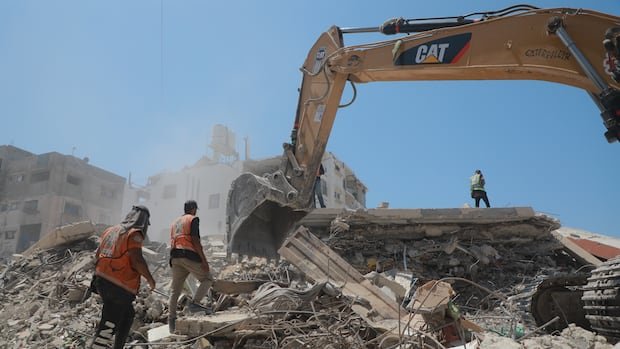

In Gaza City, members of the Al-Drimli family are engaged in a painstaking search for the remains of a friend and neighbor amid the debris of their demolished home. Armed with shovels, buckets, a wheelbarrow, and sheer determination, they work under the scorching sun, their heads shielded with orange towels or hooded sweatshirts. The rhythmic clanging of shovels on rubble and the whir of an electric saw punctuate the air as they labor to clear the remnants of a six-story residential building struck by an airstrike in November 2023.
Having already recovered the remains of their own family members, the Al-Drimli family now seeks to locate a missing neighbor who was seeking shelter with them during the fateful strike. The Gaza Health Ministry estimates that thousands of bodies, between 8,000 and 10,000, still lie beneath the rubble nearly three years after the conflict between Israel and Hamas began.
Due to the scarcity of excavators in Gaza, many Palestinians, like the Al-Drimli family, rely on manual tools and sheer manpower to sift through the rubble in search of their loved ones. Ayman Al-Drimli cited the high cost and limited availability of equipment as reasons for resorting to manual labor during an interview with CBC News freelance videographer Mohamed El Saife.
With only a handful of barely operational excavators in Gaza, heavy equipment operators like Samir Sabra and his son, Uday Sabra, face significant challenges in maintaining and operating their machinery. Samir highlighted the exorbitant cost of running an excavator, emphasizing the financial strain it imposes. The dire shortage of maintenance supplies, spare parts, oil, and fuel further compound the difficulties faced by operators in Gaza.
The continuous demand for excavation services to uncover bodies trapped under the rubble overwhelms operators like Uday Sabra, who expressed the inability to keep pace with the volume of work due to limited equipment availability. Despite their relentless efforts, the extensive destruction in Gaza necessitates a more substantial fleet of machinery to effectively address the crisis.
Mahmoud Basal, a spokesperson for the Palestinian Civil Defence, underscored the deliberate targeting of heavy machinery during the conflict, resulting in a severe shortage of operational excavators in Gaza. He stressed the urgent need for increased access to heavy equipment to expedite recovery efforts and alleviate the protracted agony of families awaiting closure.
Border restrictions imposed by Israeli authorities further impede relief efforts, hindering the timely maintenance and operation of critical machinery essential for recovery operations. Humanitarian aid organizations and the United Nations have raised concerns over the detrimental impact of these restrictions on essential services in Gaza, urging international intervention to facilitate the entry of vital supplies and equipment.
In response to inquiries, the Israeli Defence Forces (IDF) emphasized adherence to international law in regulating the entry of heavy equipment into Gaza, citing security considerations as a primary determining factor. The IDF’s statement highlighted the daily provision of fuel via international organizations, underscoring ongoing efforts to mitigate logistical challenges in the region.
Amid the arduous task of excavating debris in Gaza City, Uday Sabra persists in his mission, dedicated to retrieving the remains of the deceased and offering them a semblance of peace. His unwavering commitment symbolizes the resilience and resolve of individuals grappling with the aftermath of conflict and devastation in Gaza.