


A remarkable discovery of a vast undersea nursery housing billions of juvenile sea cucumbers near Sanikiluaq, Nunavut, is shedding new light on the species and potentially opening up economic opportunities for the Arctic community.
Lucassie Arragutainaq, the manager of the Sanikiluaq Hunters and Trappers Association, mentioned that his community frequently consumes small, young sea cucumbers. However, the larger adult sea cucumbers could potentially be sold to markets in China and Japan.
With an interest in integrating the species into plans for a commercial scallop fishery, the association enlisted the help of scientists from Memorial University in Newfoundland to study the Orange-footed sea cucumber, also known as Cucumaria frondosa, in 2018. Annie Mercier, a professor at the university’s department of ocean sciences, and her team, accompanied by local residents, stumbled upon the nursery the following year, much to their excitement.
Mercier highlighted that there are approximately 1,800 sea cucumber species globally, with their nursery habitats largely unexplored due to the elusive nature of these creatures. The team’s findings were documented in a 2023 article published in the journal Polar Science, marking the first discovery of a Cucumaria frondosa nursery.
The tiny baby sea cucumbers, measuring less than two millimeters and appearing as pink specks on rocks and mussel shells, are distinct from their adult counterparts found deeper in the ocean. Mercier described the expansive nursery as likely stretching across the Belcher Islands archipelago coastline, situated between one to three meters below the ocean surface.
The newfound nursery has opened up avenues for further research, enabling scientists to investigate growth rates, migration patterns, and behaviors of the young sea cucumbers, vital information for species management.
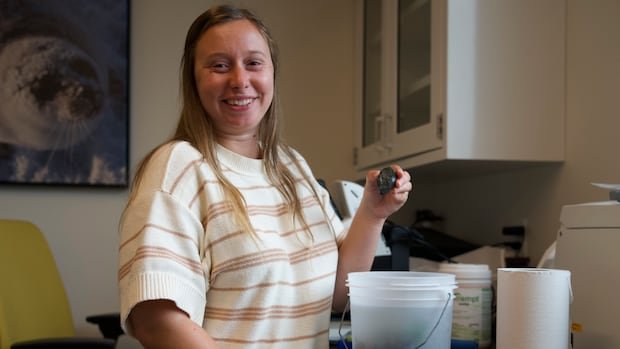
During a research trip to Sanikiluaq, Joséphine Pierrat, a postdoctoral researcher, pointed out the abundance of baby sea cucumbers in a bucket filled with water, mussels, and rocks. Mercier, although not present on this specific trip, emphasized the collaborative effort between the research team and the local community in gathering data and studying the sea cucumbers.
The Sanikiluaq Hunters and Trappers Association is collecting data to support their case for a commercial fishery, considering the addition of sea cucumbers to their existing scallop fishery plans. Arragutainaq mentioned the lengthy regulatory process involved in establishing a new fishery but expressed optimism for the economic benefits it could bring to the community.
Mercier stressed the importance of cautious management to ensure sustainability, citing past depletions in sea cucumber fisheries globally. Arragutainaq highlighted the potential for job creation within the community through a sea cucumber fishery, noting the versatility of sea cucumbers as both a local food source and export commodity.
Pierrat mentioned the possibility of a dual market strategy, where adult sea cucumbers can be processed and dried for export while younger sea cucumbers can be locally consumed. Arragutainaq described sea cucumbers as a versatile food item, suitable for raw consumption or roasting, offering a crunchy and savory taste experience.