

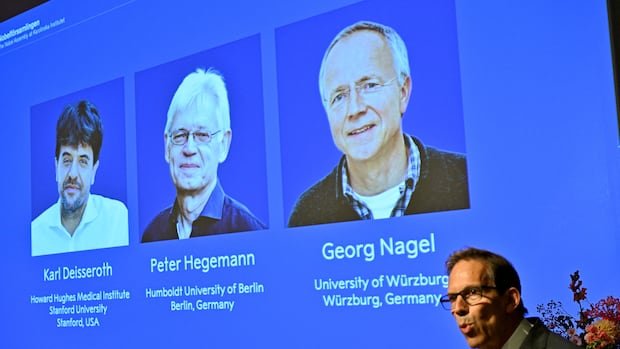

Scientists Karl Deisseroth, Peter Hegemann, and Georg Nagel have been awarded the 2026 Nobel Prize in Physiology or Medicine for their contributions to light-gated ion channels and optogenetics, as announced by the Nobel Assembly at Karolinska Institutet in Stockholm. Optogenetics allows for the control of individual nerve cell activity in the brain, shedding light on the brain’s inner workings and mysteries.
The trio, consisting of American Deisseroth, German Hegemann, and Nagel, expressed their mutual delight in receiving the prestigious award together, emphasizing their camaraderie and shared accomplishments. The Nobel Prize carries a prize amount of 12 million Swedish crowns ($1.7 million Cdn), to be divided among the three scientists.
This groundbreaking research has paved the way for new possibilities in neuroscience, enabling a deeper understanding of how the brain processes information and the interactions among different neurons. Clinical trials have shown promising results in restoring vision to individuals with retinitis pigmentosa by introducing light-sensitive proteins into the retina. Furthermore, optogenetics holds potential for enhancing cochlear implants by providing more precise stimulation of the auditory nerve.
Hegemann’s early investigations in the 1990s on light reactions in the alga Chlamydomonas led to the discovery of channelrhodopsin-2, an ion channel activated by light. Deisseroth later demonstrated the application of this protein in generating electrical impulses in nerve cells, leading to the development of optogenetics. The collaborative efforts of the laureates have resulted in numerous breakthroughs in the field over the years.
The Nobel Prize, established by Alfred Nobel in his will, honors individuals who have made significant contributions to humanity. The laureates will receive their awards on December 10, the anniversary of Nobel’s passing.