


In several Alberta separatists’ arguments, the focus is not solely on breaking away from Canada but on strengthening trade ties with the province’s southern neighbor.
Keith Wilson, a prominent figure in the independence movement, highlighted Alberta’s strategic position next to the largest global economy in a recent social media post. He emphasized the importance of enhancing trade relations with the United States, attributing the primary issue to excessive control from Ottawa rather than geographical constraints.
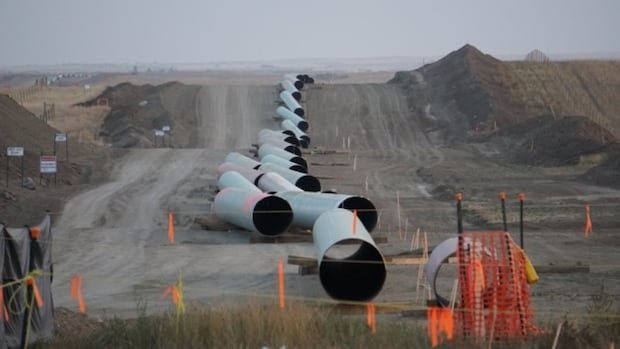
Alberta, a significant oil producer with a daily output of five million barrels, predominantly exports its oil to the United States. While visuals like the graphic shared by Wilson suggest a direct southward flow of products from Alberta, the reality is more complex. The majority of Alberta’s oil is transported to the U.S. via pipelines passing through other western provinces.
Although some transborder oil pipelines connect Alberta directly to the United States, they represent a small fraction of Canada’s total export pipeline capacity. The bulk of oil and natural gas shipments from Alberta traverse through British Columbia and Manitoba before reaching American markets.
The prospect of an independent Alberta focusing on U.S. trade raises various logistical and negotiation challenges. Establishing agreements for product transit through neighboring provinces would be essential, considering the intricate nature of cross-border trade relationships.
Experts believe that a post-secession negotiation process between an independent Alberta and Canada could lead to mutually beneficial trade agreements. However, the complexities of forging new trade deals and ensuring smooth transshipment routes underscore the intricate nature of such arrangements.
The interdependence of trade routes and the reliance on Alberta’s oil and gas production by Canadian refineries are key factors that could influence post-secession negotiations. Both sides would have leverage in discussions concerning trade partnerships and transit agreements.
As discussions around Alberta’s potential secession continue, considerations regarding trade routes, energy exports, and interprovincial trade agreements will play a pivotal role in shaping future economic relationships. The intricacies of negotiating trade deals and ensuring seamless transshipment routes highlight the challenges that lie ahead for an independent Alberta.