

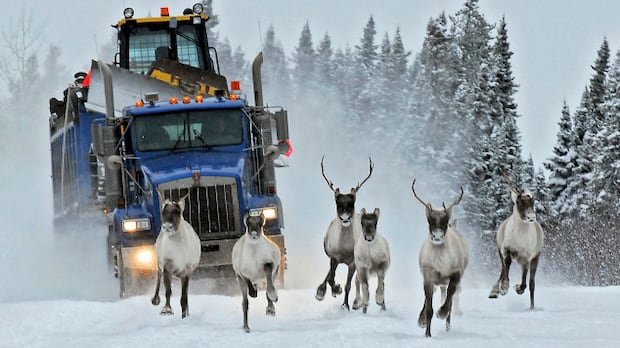

Even when a species in Canada is classified as endangered, it can face lengthy delays before receiving protection decisions from Ottawa, all the while dealing with changing habitat conditions.
According to a recent research report, out of 288 species identified as at risk since 2017, only 17 have been presented to the Governor in Council within the recommended timeframe. As of January 25, 2025, over half, or 153 species, were past the due date and awaiting a decision.
Various populations, including caribou, beluga whales, and lake sturgeon, have been designated as endangered or threatened, awaiting listing decisions that could trigger protective measures for their habitats and recovery programs.
The study highlights a bottleneck in the Species at Risk Act (SARA), where although Ottawa has suggested timelines for advancing assessments, there is no statutory deadline for a critical stage in the process.
Researchers have not pinpointed the reasons behind these delays, but critics argue that this gap enables governments to delay decisions involving conservation versus economic interests.
Peter Thompson, the lead author of the study and a postdoctoral researcher at Simon Fraser University, noted that the government consistently fails to meet the timelines it has set for itself, typically ranging from one to two years.
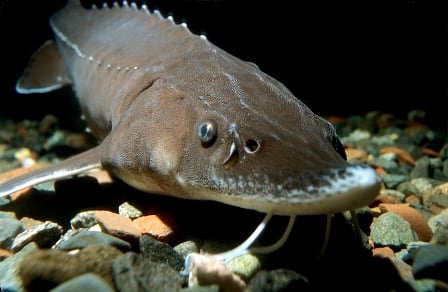
A lake sturgeon rests along the riverbed. The Saskatchewan-Nelson River population was assessed as endangered in 2017 and has spent years awaiting a federal listing decision. (Eric Engbretson Underwater Photography/WWF-Canada)
For instance, the Saskatchewan-Nelson River population of lake sturgeon, an ancient-looking fish capable of living over a century and growing up to three meters long, was deemed endangered by COSEWIC in 2017. However, it missed the federal deadline for advancing its assessment on January 18, 2020, and was still in limbo five years later.
Thompson emphasized the critical impact of delays, particularly due to infrastructure projects like dams impeding the fish’s movement and access to essential areas.
Under the Species at Risk Act, a scientific evaluation by COSEWIC does not automatically alter a species’ legal status; it requires formal listing by the federal government. Listing a species as endangered or threatened triggers protections against various activities like harming or capturing it, along with the development of a recovery plan and identification of critical habitat.
These protections are vital for aquatic species, as they are broadly applicable across Canada compared to terrestrial species, which are typically protected only on federal lands.

Drew Yewchuk, a lawyer and doctoral researcher at UBC’s Peter A. Allard School of Law, says a gap in the Species at Risk Act can allow governments to postpone difficult decisions about protecting species. (Submitted by Drew Yewchuk)
Drew Yewchuk, a lawyer and doctoral researcher at the University of British Columbia’s Peter A. Allard School of Law, highlighted the significance of habitat protection under SARA, emphasizing its impact on species survival.
The study revealed that the lack of a specific timeline for moving assessments to the Governor in Council results in prolonged delays, particularly affecting aquatic