

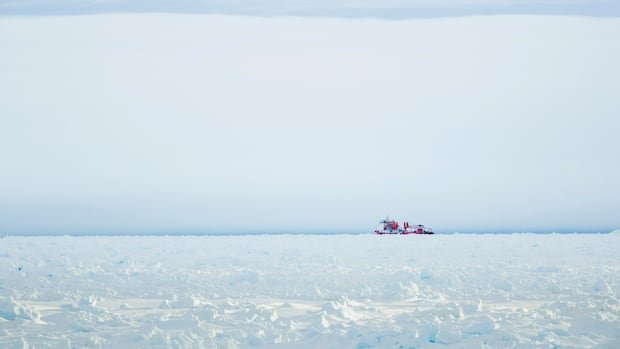

Canada and the United States have been discreetly monitoring two Chinese icebreaking research vessels in Arctic waters off Alaska in recent weeks. The U.S. Coast Guard reported that both the Xue Long (Snow Dragon) and Xue Long 2 sailed through the U.S. exclusive economic zone in the Bering Sea in July.
The presence of Chinese research ships in the Arctic Ocean during summers has raised concerns among security and defense officials. Independent research consultant and ship tracker, Steffan Watkins, revealed that a Royal Canadian Air Force CP-140 surveillance plane has been active in Alaska since early July.
The Department of National Defence confirmed that the Canadian Joint Operations Command is overseeing the activities of the Chinese vessels in collaboration with the U.S. military. Defense spokesperson Cheryl Forrest stated that both ships are currently operating outside Canada’s exclusive economic zone, the oceanic area where the country holds rights to resources and jurisdiction over activities like research and marine environment protection.
Last year, the Canadian military initiated Operation Latitude to enhance monitoring of northern waters and coordinate with Pacific allies, including in the Bering Sea. The Royal Canadian Navy has deployed several vessels, including frigate HMCS Ottawa and Arctic offshore ships HMCS Max Bernays and HMCS Robert Hampton Gray, along with surveillance aircraft and other personnel.
When asked about the Chinese ships, Defence Minister David McGuinty emphasized that the Canadian military actively surveils national waters. China, asserting itself as a near-Arctic state, maintains that its icebreakers are deployed for peaceful scientific research, environmental monitoring, and climate change studies. Despite these claims, the research ships have been known to deploy advanced buoys capable of tracking environmental changes and submarine activity.
Richard Shimooka, a defense researcher, highlighted the multifunctionality of the Chinese research ships and the potential use of sonar and telemetry buoys for tracking submarine movements. Shimooka also emphasized Canada’s growing role in the western Pacific, especially amid U.S. Navy commitments elsewhere. However, he noted limitations due to the aging fleet, including Halifax-class patrol frigates.
Members of the House of Commons defense committee, including Conservative critic James Bezan, stressed the need for increased surveillance in the Arctic due to heightened Chinese activities in the region. Bezan underlined the importance of bolstering Canadian capabilities to protect sovereignty, especially regarding disputed maritime claims in the Far North.
The federal government has initiated investments in new destroyers, Arctic-capable submarines, and an undersea sensor network to strengthen Arctic defense. Bezan emphasized the urgency of enhancing Arctic capabilities to safeguard Canadian sovereignty in the face of challenges from Russia and China.