

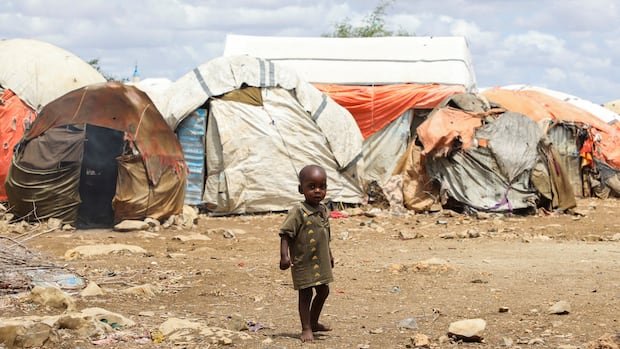

Funding for addressing severe malnutrition in certain regions of Somalia has decreased by over 80% this year, as reported by Doctors Without Borders. Despite one in every four children screened in displacement camps in the southwest of Somalia being severely malnourished, support from the United States to aid agencies in the country has been reduced significantly, from $70 million last year to zero funding this year, causing challenges for aid organizations. Alongside the U.S., other Western donors have also reduced their financial aid.
Mitchell Sangma, a health consultant at Doctors Without Borders, highlighted the increasing need for intervention measures, mentioning that this year has seen a significant rise in nutrition cases, with a 22,000 admission rate, which is over 80% higher than the previous year. A recent survey conducted by MSF in Baidoa, southwest Somalia, revealed alarming statistics, with one in four children identified as severely malnourished and one-third of families surviving on just one meal per day, while only a small minority can afford three meals daily.
The deteriorating hunger crisis in Somalia is attributed to consecutive failed rainy seasons, resulting in damaged crops, livestock losses, and diminished water resources. Conflict and insecurity exacerbate the situation, disrupting livelihoods and hindering access to essential resources like food, healthcare, and aid. In February, the Somali government and the United Nations estimated that about 6.5 million people in the country were facing acute hunger due to drought conditions.
Doctors Without Borders has been actively screening children under five in Baidoa, with over 21,000 screenings conducted this year, revealing acute malnutrition rates of approximately 50%. Although not as severe as severe malnutrition, acute malnutrition poses life-threatening risks due to sudden weight loss.
The United Nations reported that over half a million people were displaced in Somalia in the first quarter of 2026, primarily driven by drought conditions, with women and children constituting about 85% of the displaced population. The looming crisis evokes memories of Somalia’s near-famine in 2022, with aid agencies expressing concerns about limited funding hindering an effective response.
Doctors Without Borders emphasized the insufficient financial support for Somalia, with only around $300 million available from donors, significantly lower than the $2.2 billion provided during the 2022 drought crisis. Allara Ali, the project coordinator for Doctors Without Borders in Somalia, stressed the urgency of immediate action to prevent loss of life, stating that waiting for a famine declaration before responding is not an option.