


A rejuvenated forest can display an impressive appearance of height, lushness, and greenery. Similarly, revitalized wetlands can become vibrant with insects buzzing around and birds fluttering about. Yet, upon closer inspection, scientists have observed that some of the tiniest residents of these habitats, such as specific mosses, lichens, algae, and fungi, are frequently absent.
The restoration of ecosystems like forests and wetlands can aid in the preservation of declining animal and plant species and support their population recovery. However, recent studies indicate that the return of all species is not uniform. Some of the smallest and least conspicuous inhabitants may remain scarce or missing for extended periods, potentially impacting other species.
Ellen Macdonald, a botanist at the University of Alberta, has dedicated her career to studying forests, focusing not on the trees themselves but on the minute flowers, mosses, liverworts, and lichens that thrive in their shadows, among their roots, or on the textured surfaces of their bark.
According to Macdonald, the biodiversity of these smaller species surpasses that of tree species. While to the average observer, a reforested area several decades post-logging may resemble an untouched forest with tall trees, birds, and insects, Macdonald noted a subtle sense of imbalance while walking through regrown coniferous boreal forests.
To discern the missing elements, detailed data collection is required, as Macdonald emphasized. Her research combines local studies with global data to analyze the recovery timelines of plants and animals in boreal forests following clearcutting activities.
A recent study published in the journal Nature Sustainability revealed that birch and aspen forests and their inhabitants tend to recover within 25 years, whereas conifer forests exhibit a lengthier recovery period. In conifer forests, understory plants, particularly lichens, mosses, and liverworts, took 85 years or more to re-establish, with some species remaining unrecovered over a century of available data.
The delay in species recovery is not exclusive to boreal forests but also extends to wetlands and other restored habitats, where certain less visible species may remain absent despite the overall appearance of health.
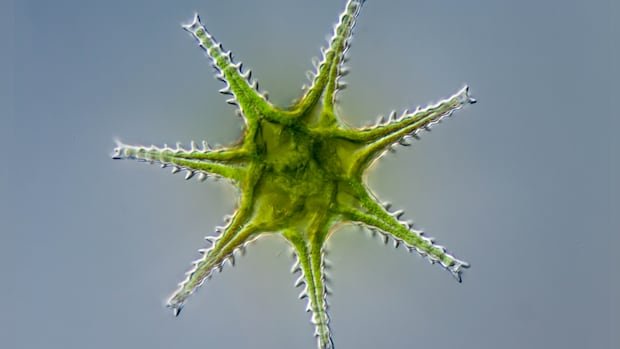
German botanist Michael Melkonian shared his observations on the restoration of wetlands near his village, noting the absence of several desmid algae species he had expected to find. This decline in species, referred to as “dark diversity,” signifies a silent loss that reduces the number of species present at individual sites.
The absence of certain species can impede the recovery process and have far-reaching ecological implications. Algae, despite their small size, play a significant role in global photosynthesis and ecosystem functioning. The decline in species diversity can disrupt ecological balance and negatively impact other organisms.
Understanding these recovery patterns can guide landscape management practices to preserve a higher number of species. Macdonald suggests that selective or partial harvesting of conifer forests, rather than clearcutting, could aid in maintaining biodiversity.
The threat to algal habitats and their inhabitants is a global concern, prompting efforts to collect and preserve these species. Michael Melkonian and his colleagues have established an “algal zoo” with over 5,000 strains to ensure the conservation of these vital organisms.
In conclusion, the loss of species highlights the continuous need for active interventions to preserve biodiversity and restore habitats across the landscape. Protecting isolated pockets of habitat is insufficient; instead, a holistic approach is essential to ensure the persistence of species and maintain ecosystem health.