

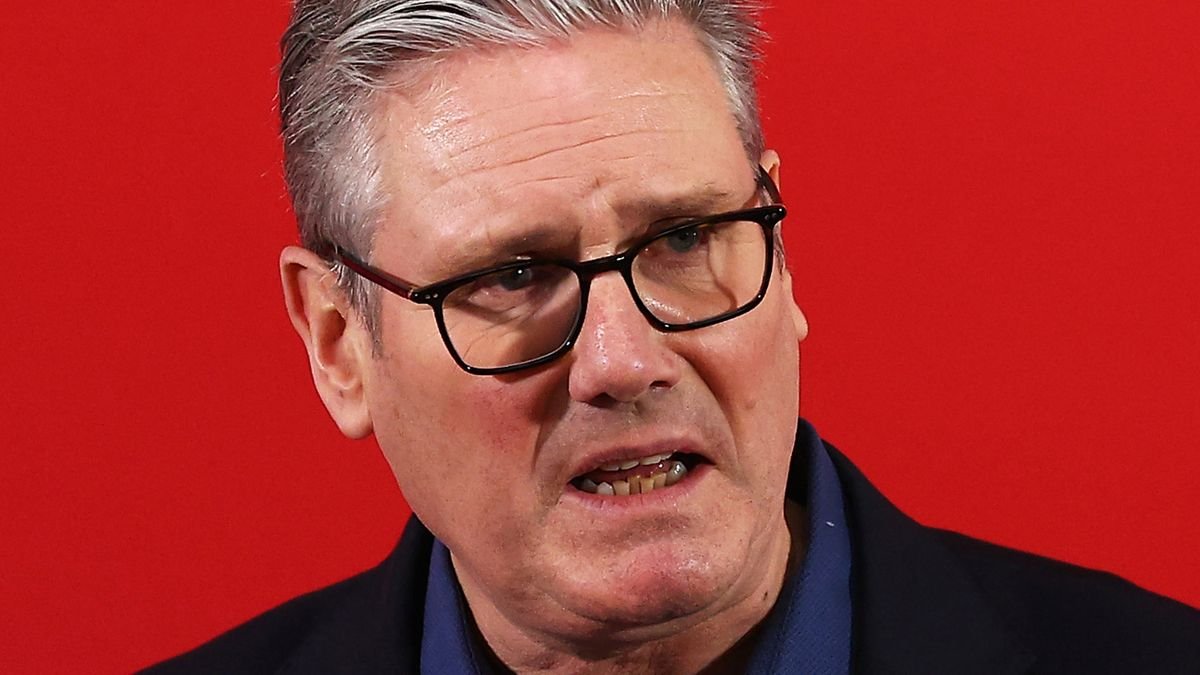

It seems like a distant memory when Keir Starmer triumphantly walked through Downing Street after a decisive election win. Back in 2024, during the campaign, I had the opportunity to observe him engaging with journalists energetically. However, as we fast forward to February 2026, the situation has turned grim.
Amid growing concerns over the appointment of Peter Mandelson and vocal doubts from fellow party members, Starmer finds himself in a precarious position akin to a vulnerable seal in a den of polar bears. It’s astonishing that just 18 months following a significant electoral victory, the Prime Minister is now under intense scrutiny about his leadership continuation.
Starmer addressed a crowd at a sports center in Hastings, focusing on unity, investment, and notably, taking a swipe at Reform ahead of an upcoming by-election. Nevertheless, his leadership fate hinges on the outcome of his decision to involve the controversial figure known as the “Prince of Darkness.”
Having covered many of Starmer’s speeches over the years, this particular event stood out as the most visibly enraged moment witnessed. His outburst against Mandelson hinted at the gravity of the situation he faces.
Following a recent confrontation during PMQs, Starmer is aware that his political future relies heavily on disassociating himself from Mandelson, who resigned amidst escalating backlash. Nevertheless, the scrutiny around Starmer’s judgment in appointing someone with ties to Epstein remains a pressing issue.
During a tumultuous speech, Starmer publicly acknowledged his regret for trusting Mandelson’s deceitful accounts, acknowledging the intricate nature of their relationship. The ongoing scandal poses a critical juncture for his leadership, with talks of no-confidence motions and internal dissent within Labour ranks.
Despite facing challenging polls and a series of missteps, Starmer’s speech exuded an unusual tension, indicating the severity of the Mandelson controversy as a potential turning point in his tenure. The pressure on his leadership hasn’t been this intense since Labour’s return to power.
Critics question whether Starmer has taken sufficient action. One MP, expressing skepticism, suggests that Starmer may be oblivious or in denial, pointing to a culture of corruption linked to Mandelson that has tainted his leadership.
Another parliamentarian notes that while Starmer may have bought himself some time, he underestimates the frustration and anger brewing within the Labour Party ranks.
Overall, Starmer faces a critical juncture in his leadership as he navigates the fallout from the Mandelson scandal, with the stakes higher than ever before.
This article was written by Dave, a political correspondent based in The Mirror’s Westminster office, who has been closely following the developments surrounding Keir Starmer’s leadership.