

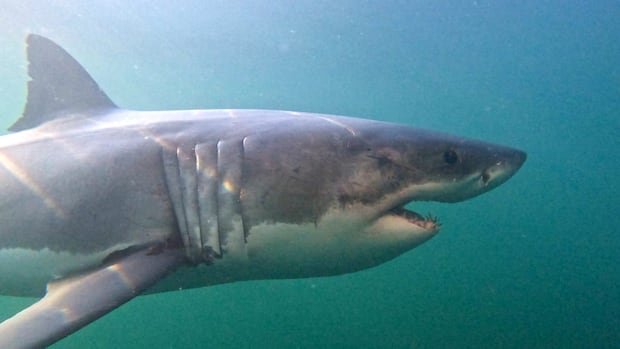

Countries worldwide that are known for shark activity are utilizing drones as a tool to identify when sharks are in close proximity to public beaches. However, officials in Nova Scotia have indicated that they currently have no plans to implement drone technology for shark surveillance.
Paul D’Eon, who has been overseeing the Nova Scotia Lifeguard Service for a significant period, acknowledged that drones are being used by lifeguards in countries like Australia and the United States. Nevertheless, the service in Nova Scotia is not actively considering adopting this technology at present.
The Department of Natural Resources, responsible for managing the province’s public beaches, has not disclosed any intentions to invest in aerial shark monitoring using drones. A representative from the department, Lynette Macleod, confirmed that drones are not currently utilized in the province.
During the summer months, the lifeguard service monitors 24 public beaches across the province for eight hours a day, seven days a week. It is noted that great white sharks migrate to Nova Scotia’s warm waters annually during these months.
D’Eon mentioned that in his 52 years of safeguarding Nova Scotian beaches, there have been no shark attacks. However, there has been a slight uptick in shark sightings over the years. Previously, beach closures resulting from shark sightings occurred infrequently, but now they happen around twice a year.
While the lifeguard service constantly evaluates factors affecting public safety, D’Eon currently does not advocate for the province to invest in drone technology. However, he emphasized that they would reconsider this decision if circumstances evolve.
In contrast, other regions have been proactive in using drones for shark surveillance. For instance, New South Wales in Australia has been utilizing drones to monitor its beaches since 2015. The state recently boosted funding for drone patrols by $34 million following a series of shark attacks.
Furthermore, New York State and the New York City Police Department have incorporated a fleet of shark detection drones, with the state investing an additional $322,000 in this technology earlier this year.
In Nova Scotia, a recent shark sighting at Martinique Beach led to a standard procedure where the beach was temporarily closed for two hours. Beachgoers expressed their support for the idea of lifeguard-operated drones for enhanced safety measures.
Philip Skinder, the head coach of the Vancouver-based Pacific Lifesaving Club, emphasized the importance of investing in drone technology for ocean safety. Recent shark sightings have increased concerns among beach visitors, prompting discussions about potential safety measures.
D’Eon advises beachgoers to stay cautious by avoiding swimming during dawn and dusk, as well as refraining from swimming near seals or active fishing areas to ensure their safety.