

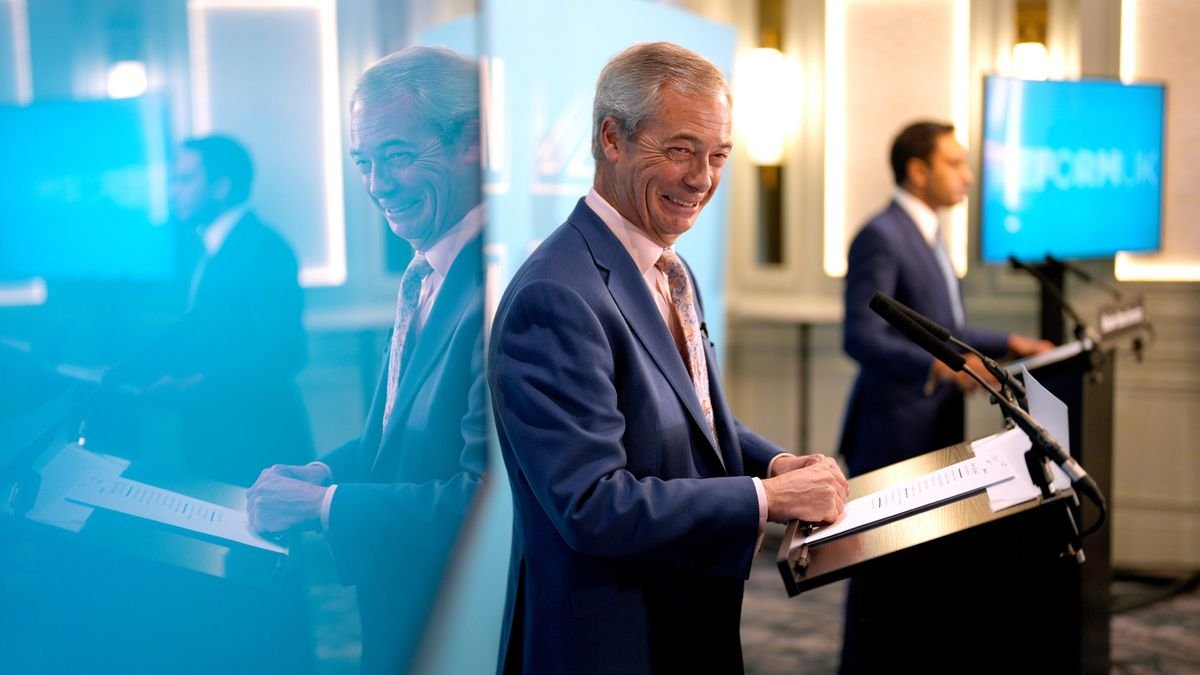

Reform’s success in the upcoming general election hinges on maintaining public outrage over immigration issues. Zia Yusuf, a prominent figure in Nigel Farage’s camp, carries a significant responsibility in shaping the direction of the party’s stance on this crucial matter.
Yusuf recently made a bold declaration during a speech at a scenic venue in Dover, a hotspot for small boat migrant arrivals. He proposed a stringent approach, suggesting the mass deportation of thousands of migrants, including those who entered the UK legally. Additionally, he mentioned plans to utilize an RAF Voyager aircraft for potential assistance, drawing parallels to similar strategies employed by the Trump administration’s ICE force in the United States.
Reform’s agenda includes abolishing the concept of Indefinite Leave to Remain (ILR), putting even long-term residents at risk of expulsion. While Yusuf justified these proposals by citing Christian values as the foundation, critics swiftly condemned the measures as authoritarian and heartless.
Despite invoking Christian principles to support their policies, Reform faces resistance from religious leaders, notably the Archbishop of York and the Bishop of Oxford. These leaders have criticized Reform’s deportation plans as morally objectionable and lacking compassion, highlighting a disconnect between the party’s rhetoric and the values upheld by the Christian community.
Moreover, tensions have arisen over Reform’s stance on social welfare, particularly regarding the two-child benefit cap. While bishops advocate for lifting the cap to alleviate child poverty, Reform has indicated intentions to reinstate it if elected, potentially affecting around 1.6 million children negatively.
When questioned about the contradiction between Reform’s claims of aligning with Christian values and the opposition from church leaders, Farage dismissively suggested that the Church of England has deviated from its traditional role. This dismissive attitude garnered support from Reform followers but underscored the growing divide between the party’s policies and the views of religious authorities.
The clash between Reform’s hard-right agenda, inspired by figures like Donald Trump, and the values espoused by Christian leaders could lead to further discord. If Reform continues down this path, a potential Farage-led government may find itself at odds with religious institutions despite its professed commitment to Christian ideals.