

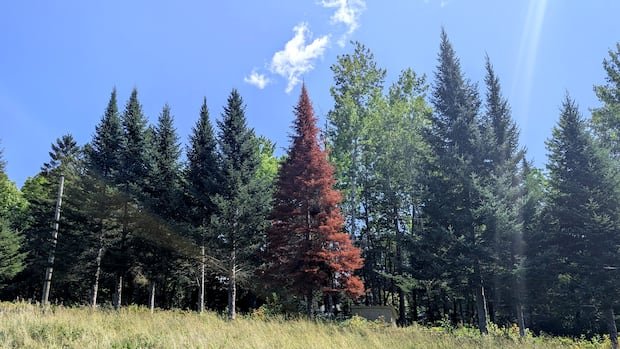

Balsam fir trees in New Brunswick are undergoing a distressing transformation, with many turning red and perishing following the unprecedented drought experienced last summer. Concerns have been raised about the fate of this iconic provincial tree. Professor Anthony Taylor, a forestry researcher at the University of New Brunswick, has been closely monitoring the situation. He has received reports from woodlot owners and witnessed firsthand the alarming sight of the once vibrant evergreen balsam firs, commonly used as Christmas trees, gradually changing color, drying out, and succumbing to death.
According to Taylor, the current scenario aligns with his observations from previous hot and dry summers. He emphasized that the warm and dry conditions, like those of the recent drought, have a detrimental effect on the growth capacity of balsam fir trees. Taylor, who has been studying the impact of climate change on New Brunswick’s forests for an extended period, cited similar instances of balsam fir die-offs following exceptionally hot and dry summers in 1986 and 2018.
The adverse impact of drought conditions triggers an early halt to the photosynthesis process in the trees, hindering their growth. Taylor explained that this disruption prevents the trees from generating the necessary energy reserves for essential metabolic functions and the production of defense compounds. Consequently, the trees become vulnerable, especially when already stressed by insects or pathogens, increasing the likelihood of widespread die-off.
Another factor exacerbating the situation is the shallow root system of balsam fir trees, making it challenging for them to access adequate water during dry periods. Woodlot owner Peter McKeil noticed the initial signs of damage to balsam firs on his property as early as June. He observed the trees gradually turning red, starting from the lower branches and progressing upward. McKeil estimates that around 100 trees have already perished on his land, prompting him to adjust his harvesting practices to salvage value from the remaining fir before further losses occur.
Despite processing some of the deceased trees into lumber, McKeil expressed concerns about the future of the species, particularly in southern New Brunswick, attributing the ongoing decline to the worsening effects of climate change. He emphasized the urgent need for climate action, highlighting the visible impact of a changing climate on the provincial tree and calling for a shift away from fossil fuels and unsustainable forestry practices.
In conclusion, the current plight of the balsam fir trees serves as a poignant reminder of the urgent need to address climate change and its repercussions on New Brunswick’s iconic flora. Professor Taylor hopes that his research will raise awareness and drive meaningful change to mitigate the adverse effects of climate change on the region’s forests.