

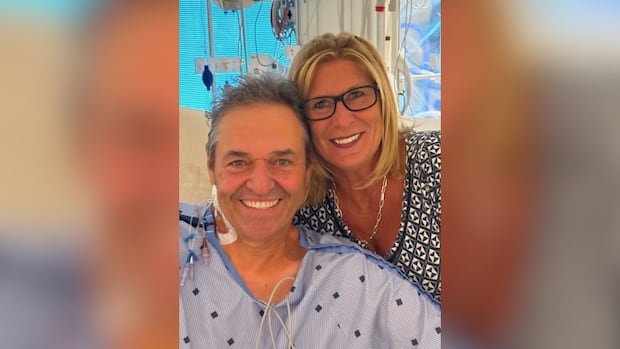

A 64-year-old man from Quebec has made history in North America by being the first patient to undergo a liver transplant involving a regenerated liver. This groundbreaking technology has the potential to significantly increase the number of livers available for transplantation within its initial year of implementation.
Gérard Landry, a resident of Nouvelle in Quebec, had been grappling with liver issues for approximately 15 years, which eventually led to cirrhosis and liver cancer. Just before his liver transplant surgery at the Centre hospitalier de l’Université de Montréal (CHUM), his doctor surprised him with the news that his new liver had been regenerated using a novel machine.
Referred to as Liver Assist, this innovative technology enables medical professionals to treat and evaluate donated livers externally before transplantation. For Landry, this meant receiving a liver that might have been considered too risky without this technology.
Dr. David Hénault, the lead surgeon at CHUM who oversaw Landry’s procedure, mentioned that the team had been preparing for utilizing this technology for about three years. The Liver Assist system functions by connecting a donated liver to a machine that circulates an oxygen-rich fluid through the organ, potentially reversing damage caused by oxygen deprivation.
By simulating human body conditions, the machine allows doctors to assess liver functionality using a blood-based solution. Hénault stated that if the liver performs well on the machine, it is likely to function effectively in the recipient’s body.
The introduction of Liver Assist at CHUM is anticipated to increase the availability of livers for transplantation. A collaboration with Transplant Québec indicated that approximately 20 to 24 additional livers could become viable for transplantation in the first year of utilizing this technology, with the potential for further growth in the future.
Moreover, studies have shown that this technology can lead to reduced complications, reoperations, and hospitalization durations for suitable patients. Landry’s post-transplant progress has been notably positive, indicating the effectiveness of the regenerated liver and the innovative technology employed in his case.
As Landry continues his recovery in Montreal, he eagerly looks forward to returning to his home in Gaspésie. His experience highlights the importance of organ donation discussions within families, emphasizing that advanced technology alone cannot address organ shortage issues. Landry’s story serves as a testament to the life-saving impact of organ donation and innovative medical advancements.