

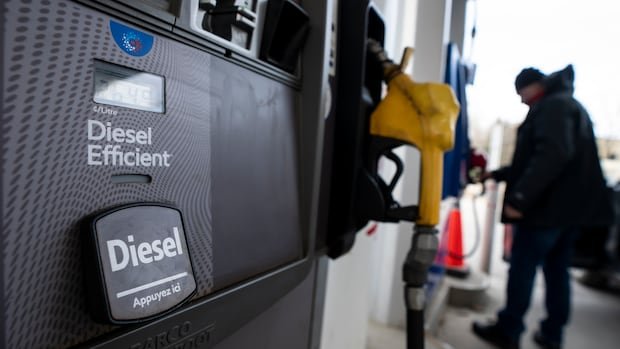

The surge in diesel prices, attributed to global conflicts, is significantly impacting the cost of fueling trucks that transport essential goods across Canada, according to industry experts. Tej Dulat, from the Canadian Truck Operators Association, expressed concern over the substantial increase in prices, emphasizing the significant impact on trucking companies’ expenses. With commercial trucks consuming large quantities of fuel weekly, the rising costs have become a major financial burden for the industry.
Since the spike in prices following the Russia-Ukraine conflict in 2022, the margins for trucking companies have been under pressure. The current diesel prices in Canada have soared to $2.62 per litre, surpassing last year’s rates by over a dollar. In regions like Vancouver, prices have reached $2.92 per litre. The situation is even more severe in the United States, where the average diesel price hit a record high of over $6 per gallon.
Experts highlight that while attention has been focused on the impact of tariffs on Canadian goods, the surge in oil prices due to geopolitical tensions is having a more immediate effect. The ongoing conflicts, particularly the U.S.-Israel war with Iran, are driving the high gas prices, with potential repercussions on various sectors and consumer goods.
The shortage of diesel supply is a critical issue, exacerbated by geopolitical factors affecting major producers like Russia. The closure of Canada’s largest refinery in New Brunswick and limited exports from the Persian Gulf region have further constrained diesel availability. The federal government’s decision to extend the suspension of the fuel excise tax aims to alleviate some of the financial strain, but experts warn that more substantial measures are needed to address the escalating costs.
Looking ahead, energy analysts predict that diesel prices typically rise during winter months, suggesting that consumers and industries should brace for a costly season. The impact of high diesel prices extends throughout the food supply chain, affecting transportation, storage, and production. With multiple factors influencing prices, including extreme weather conditions disrupting harvests, the pressure on food prices is expected to persist.
Evan Fraser from the University of Guelph’s Arrell Food Institute warns of a potential long-term shift towards elevated food prices, challenging previous assumptions about global food production and trade. The current situation poses difficulties for low-income individuals, with concerns about sustained economic strain on consumers in the foreseeable future.