

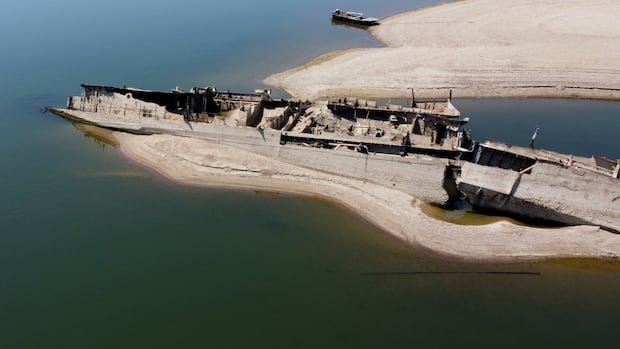

Nazi German warships that were deliberately sunk in the Danube River during World War II are resurfacing due to the plummeting water levels, highlighting the severe heat and drought conditions engulfing Europe this summer. The upcoming fifth heatwave since May is expected to scorch western Europe, with temperatures nearing 40 degrees Celsius in parts of Spain, France, and Italy. The Copernicus climate monitoring service of the European Union confirmed that June and July marked the hottest months on record in western Europe, leading to an estimated 25,000 heat-related deaths.
The ongoing heatwave has fueled devastating wildfires and caused water levels in crucial waterways like the Danube to reach record lows. Climate scientists emphasize that these resurfacing wrecks serve as a stark reminder of the escalating impact of fossil fuel-induced climate change, exacerbating heatwaves, droughts, wildfires, agricultural challenges, and disruptions to transportation and energy systems across Europe.
Experts warn that the current situation is just the beginning of the repercussions of global warming if greenhouse gas emissions continue unabated. Historians estimate that up to 200 Nazi warships were scuttled near the Serbian city of Prahovo in September 1944 to impede Soviet forces. Recent observations reveal multiple wrecks emerging from the Danube River due to the receding water levels, including a German military motorcycle in Hungary, an unexploded British bomb in Slovakia, and ancient mammoth remains in Bulgaria.
The dwindling water levels in the Danube have raised immediate concerns for countries along its course, with some implementing water usage restrictions and taking emergency measures to ensure vital operations like nuclear power generation. The situation underscores the urgent need for better environmental stewardship and resource management, as highlighted by Hungarian Prime Minister Péter Magyar.
The extreme weather conditions in Europe this summer are attributed to climate change, with significantly higher temperatures recorded compared to historical averages. Experts stress that the current challenges are compounded by climate change, and future years could bring even greater impacts if emissions continue at the current pace. The unfolding events serve as a clear indication of the intensifying effects of climate change on heat extremes, droughts, and associated environmental disruptions.