



WARNING: This article contains details of abuse.
Craig Fox shot Lee Bearsears in the back of the head before disposing of his body in a field located on the Poundmaker Cree Nation.
Fox is now awaiting the court’s decision on the length of his prison sentence before he may become eligible for parole.
At 29 years old, he was found guilty of second-degree murder following a trial earlier this year at the Battleford Court of King’s Bench.
During the sentencing hearing last week, family members of Bearsears shared their profound grief, sorrow, and void in their lives after his murder on October 15, 2023. Bearsears was just 31 years old.
His younger siblings expressed how pivotal he was in their upbringing and mentioned they cannot imagine where they would be without him.
“He supported many of us, perhaps even you. I was angry with you, but now I’m just trying to get by, trying to cope with this,” Bearsears’s mother told Fox.
One of his grandmothers mentioned in her victim impact statement that Bearsears “looked after us all.”
“We had faith in you and never thought for a second that you would or could harm him in such a way,” she wrote. “Do you understand what you have taken from us? Do you grasp that you had no right to act as you did?”
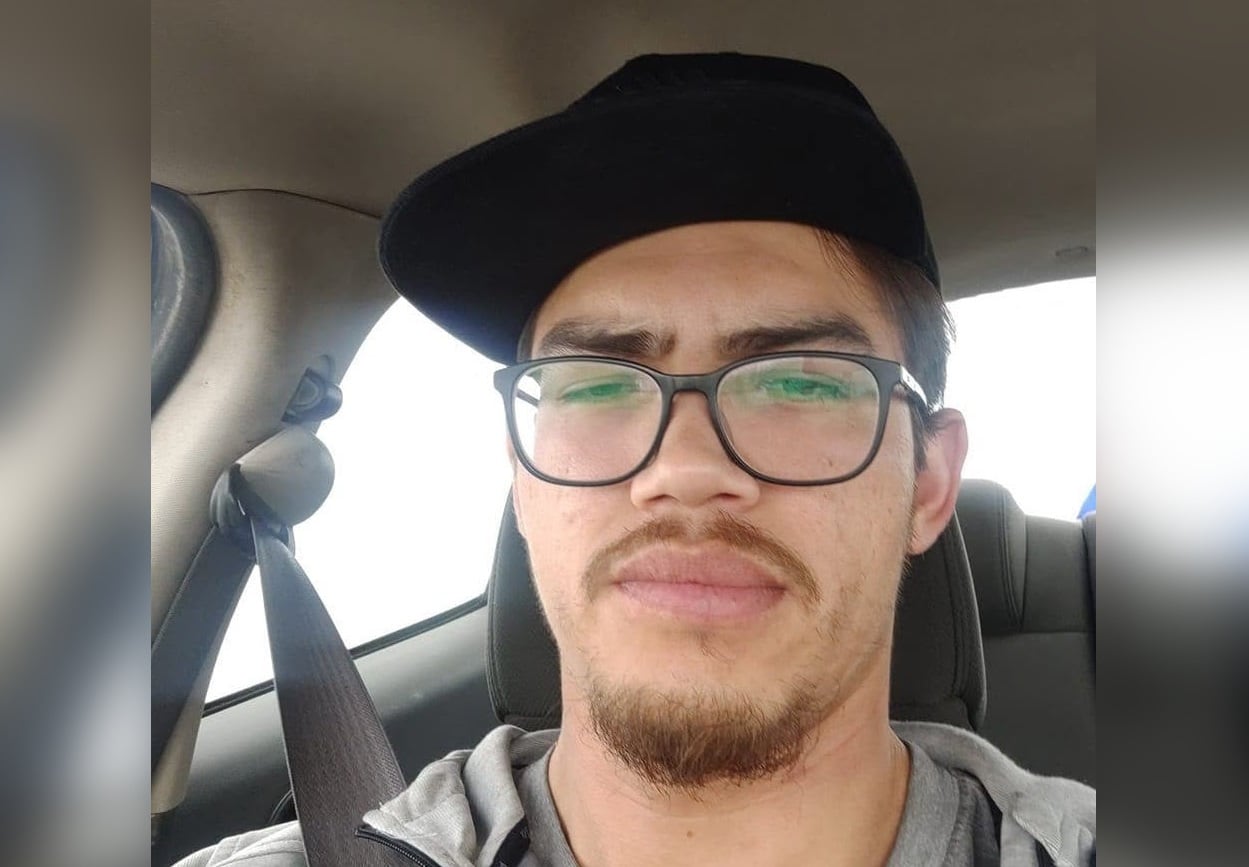
Lee Bearsears passed away on October 15, 2023. Currently, Craig Fox, the individual convicted of his murder, awaits sentencing. (Lee Bearsears/Facebook)
The murder
Justice Rochelle Wempe’s ruling, delivered in May, outlines the events that took place on October 15, 2023.
Fox was under the influence of crystal meth and alcohol when he and others spent the day driving around in Bearsears’s borrowed vehicle. They returned to Poundmaker Cree Nation at around 8 or 9 p.m., where Bearsears was present.
Fox and a companion, Preston Checkosis, picked up Bearsears. Checkosis was driving, Bearsears occupied the front passenger seat, while Fox sat in the back, directly behind Bearsears.
Fox aimed a sawed-off rifle at the back of Bearsears’s head and fired a single shot, which was determined to be an intentional act of murder, as per Wempe’s findings.
Afterward, Bearsears’s body was left in a field, and his truck was abandoned at a waste transfer site on the reserve.
Evidence presented during the trial, as noted by Wempe, showed that Fox’s DNA was discovered on the rifle’s action, and his fingerprints were the only ones located in the passenger section of the vehicle.

The trial for Craig Fox took place at the Battleford Court of King’s Bench. (Hannah Spray/CBC)
Why did Fox kill Bearsears?
Statements made by Fox following the shooting also played a crucial role in Wempe’s decision.
In the hours succeeding the shooting, Fox visited an aunt’s home on the Little Pine First Nation, which is located just west of Poundmaker Cree Nation, where his brother and another cousin were staying. The cousin woke up and engaged Fox in conversation.
The cousin testified that when he inquired about what had happened, Fox repeated the phrase “We bodied a skinner” three or four times, and stated “I bodied a skinner” once.
Wempe indicated there was evidence that “skinner” is a slang term referring to a child molester. The trial’s agreed facts included that Bearsears had faced charges of sexual assault for allegedly inappropriately touching a minor.
Bearsears had entered a not guilty plea and had a preliminary hearing scheduled for early 2024. Wempe noted that Fox “became aware” of the accusation in September 2023.
Authorities also discovered a message on Fox’s phone sent on January 19, 2024, from his Facebook account, which stated that he had been sexually assaulted as a child and that he intended to put individuals who commit sexual assault “under the dirt where they belong,” according to Wempe.
Sentencing positions
A conviction for second-degree murder results in a mandatory life sentence with no possibility of parole for a minimum of 10 years and a maximum of 25 years.
The prosecution requested a parole ineligibility period of 15 to 20 years, while the defense advocated for a 10-year term.
While arguing for a longer parole ineligibility period, Crown prosecutor Oryn Holm stated that Fox engaged in “vigilante justice,” acting as “judge, jury, and executioner.”
“Mr. Fox, in an ironic twist, was found guilty after a trial. Through his actions, he denied Mr. Bearsears the right to a trial,” Holm remarked in court.
He emphasized that Bearsears had no anticipation of violence on the night of his death, had no opportunity to defend himself, and was subsequently “callously” left in a field.
Holm also pointed out Fox’s extensive criminal history and the fact that he was prohibited from possessing firearms at the time he committed the murder of Bearsears.
Background factors
Defence attorney Pamela Wayman, who represented Fox with Brent Little, contended that Fox’s life “cannot be understood outside the intergenerational effects of colonial institutions.”
Fox’s grandparents and father attended residential schools, while his mother went to a day school, contributing to the violence and addiction that he faced from a young age.
Fox “experienced displacement almost from birth,” having been placed in foster care as an infant. His upbringing was characterized by poverty, addiction, violence, and severe abuse, Wayman indicated.
At one point, Fox lived with his father in Alberta, but the abuse he endured there rendered it the “worst days of his life.” He frequently attempted to escape, ultimately being placed in group homes, which Wayman described as a “pathway” to his involvement with institutions and, later, the justice system.
During his teenage years, he shared “deeply personal information” with a counselor in a group home, who then disclosed that information to staff and others within the facility. This breach of trust had “significant consequences” for Fox, Wayman stated, leading him to withdraw from counseling.
With more reliable counseling and support, Wayman suggested, Fox “might have developed healthier methods to cope with his trauma and, later, stress.”
He began consuming alcohol and drugs at an early age, often provided by older relatives.
All these background factors — a family history of residential schools, intergenerational trauma, child welfare interventions, separation from siblings and parents, institutional placements, poverty, addiction, childhood victimization, early exposure to substances, disrupted education, and early engagement with the criminal justice system — do not excuse the crime or lessen the impact on Bearsears’s family, but should be considered during sentencing, Wayman argued.
When Wempe inquired whether Fox had anything to say, he responded that he did not.
Wempe mentioned that she would need some time to deliberate on the sentence and is set to announce her decision on September 25.