

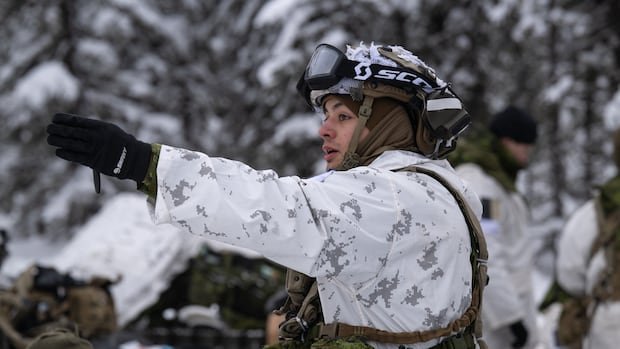

A set of internal documents from the Department of National Defence indicates that Canadian soldiers were not adequately prepared and sometimes lacked proper equipment for the severe conditions they encountered during a significant training exercise with U.S. forces in Alaska last winter. The assessment reports, acquired by CBC News, reveal that the military has significant room for improvement in enhancing its ability to protect the Arctic.
The training mission involved more than 400 members of the 3rd Battalion Royal Canadian Regiment (3RCR), integrated into a larger U.S. Army brigade during Exercise Global Response in February at the Joint Pacific Multinational Readiness Center near Fairbanks, Alaska. The Canadian government has pledged to maintain a nearly year-round presence in the Far North, with the evaluations indicating a necessity for troops to rely less on technology and prioritize fundamental skills to effectively engage and survive in challenging environments, as per defense experts.
Separate evaluations conducted by Canadian and American authorities highlighted numerous concerns regarding the readiness of troops and equipment to operate in extreme conditions where temperatures drop below -30°C. The Canadian evaluation criticized a recent initiative that allowed the regiment to purchase civilian equipment to supplement military cold-weather gear, leading to operational challenges. Despite claims by Lt.-Col. Aaron Corey, the commander of 3RCR, that troops underwent extensive winter training in preparation for the Alaska deployment, the evaluations pointed out shortcomings in basic winter survival skills within certain Canadian units.
Amidst frostbite incidents affecting about 30 soldiers, the battalion managed to achieve its training objectives during the exercise. Lessons learned emphasized the importance of adapting to the harsh weather conditions, slowing down operations, and prioritizing soldier well-being. The evaluations also highlighted issues faced by the medical team, including gaps in understanding tasks and inadequate training in Arctic medicine principles.
Both Canadian and U.S. assessments underscored common challenges faced by troops, such as equipment malfunctions due to extreme cold, communication disruptions, and deficiencies in basic preparations like snow clearing and fuel supply. Experts like retired colonel Pierre Leblanc emphasized the need for a back-to-basics approach in Arctic operations, citing the limitations of high-tech solutions in such environments.
While acknowledging recent efforts to increase winter training exercises, experts like Rob Huebert emphasized the historical expertise of the Canadian military in Arctic warfare and the need to relearn essential skills for effective operations in the region. Changes in mindset and a shift towards comprehensive preparedness were identified as crucial aspects for enhancing Canada’s defense capabilities in the Arctic.