

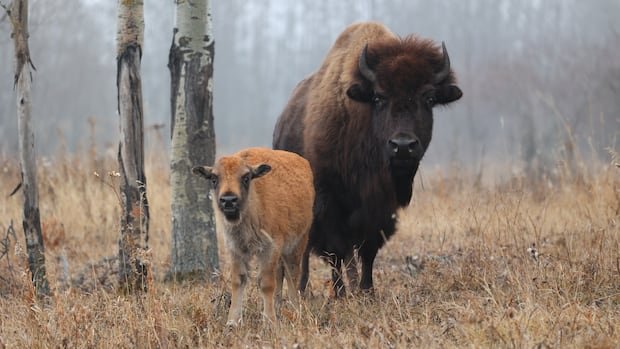

A long time ago, bison roamed North America in massive herds, their rust and auburn fur creating a breathtaking sight. Research into their DNA is shedding light on how the decline and slow return of bison herds have transformed the species. Published in the journal Science, the study included sequencing 160 bison genomes over a 20,000-year span. Led by Jonas Oppenheimer, the research involved nearly 40 scientists, many from Canada, working at the Paleogenomics Lab at the University of California, Santa Cruz, focusing on ancient DNA from fossil remains.
The aim of the study is to aid modern conservation efforts by understanding the genetic history of bison, helping the species thrive in the future. Today, bison populations are fragmented and managed in isolated herds, posing challenges to their resilience due to the lack of genetic diversity. Oppenheimer explained that historical bison populations were genetically similar across North America, contrasting with the distinct genetic profiles of present-day herds due to past human-induced bottlenecks.
By analyzing ancient and modern bison DNA, researchers mapped how the species’ biological diversity has evolved. They collected DNA samples from managed herds in Canada and the United States, as well as from wild herds in various locations. The study sequenced 115 ancient bison genomes and 45 modern ones, combined with existing data, creating a comprehensive genetic map. Chris Jass, a paleontologist, highlighted the importance of using ancient fossils to inform modern herd management practices.
The study also revealed that wood bison and plains bison are distinct subspecies, with differences in size and habitat preferences. Despite interbreeding in the past, the two subspecies diverged about 3,000 years ago due to environmental changes. To prevent further loss of genetic diversity, efforts are underway to reconnect isolated herds through genetic matchmaking. Wilson emphasized the need to maintain the distinctiveness of wood bison and plains bison for effective conservation.
The research provides valuable insights for conservationists to enhance genetic diversity and restore bison populations to their natural diversity. By leveraging ancient genomes, herd managers can promote gene flow across populations, ensuring the long-term health of bison herds. The findings underscore the importance of preserving genetic diversity and preventing inbreeding in bison populations.
For more information, you can visit the original article [here](https://www.cbc.ca/news/canada/edmonton/bison-dna-genome-9.7375668).