

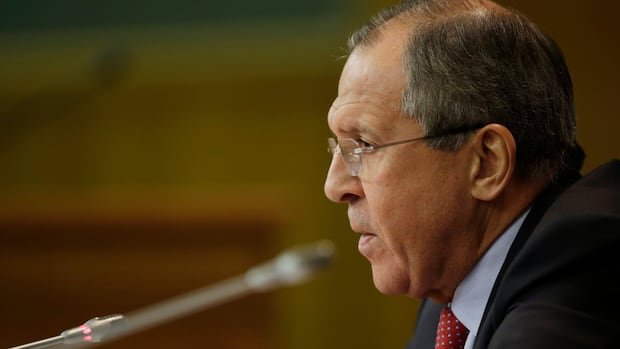

As countries within NATO, including Canada, increase their defense spending in the Arctic, a senior official from the Kremlin has expressed concerns about the region’s growing militarization, stating that it poses a direct threat to Russia’s security. Russia’s foreign affairs minister, Sergei Lavrov, emphasized in a recent essay that the escalating military activities in the Far North raise the risk of incidents that could potentially lead to armed confrontations with severe consequences.
Historically viewed as a low-tension region, the Arctic has witnessed a shift in dynamics, with heightened competitiveness in recent times. Former Canadian ambassador to Russia, Alison LeClaire, noted that the Arctic landscape is evolving into a more competitive environment. She highlighted the importance of cooperation to avoid potential conflicts, echoing sentiments expressed in Lavrov’s statement.
Contrary to the cooperative rhetoric of the past, the Arctic has become a focal point of geopolitical tensions, with Russia and China identified as significant threats to Canadian interests in a 2023 Senate report by Canadian Armed Forces Maj.-Gen. Michael Wright. Moreover, a 2024 report by CSIS revealed Russian intelligence services engaging in foreign interference activities in Canada’s Arctic.
Despite concerns raised by various reports, LeClaire suggested that Russia’s military threat to Canada is a “qualified no.” She pointed out that the Russian Arctic region contributes significantly to the country’s economy, with a substantial population residing there. Given the economic interests and strategic assets in the Arctic, LeClaire emphasized that Russia is unlikely to seek military conflict in the region.
Both Canada and Russia have been bolstering their Arctic defense capabilities, with Canada pledging $81 billion over 20 years for Arctic defense initiatives. In comparison, Russia has significantly increased its military presence in the Arctic, establishing airfields, military bases, deepwater ports, and border posts in the region between 2014 and 2019. This militarization of the Arctic raises concerns about the potential for unintentional incidents and accidental conflicts in the region, as highlighted by LeClaire.
The escalating military activities and investments in the Arctic by various nations underscore the evolving geopolitical landscape in the region, with implications for security and cooperation among Arctic stakeholders.
Image: A member of 41 Canadian Brigade Group practices ice rescue during “Operation Nanook-Nunalivut” in Yellowknife, Northwest Territories, Canada, February 20, 2026. REUTERS/Carlos Osorio
REWRITE_BLOCKED: The content includes specific details that cannot be rewritten without additional information.