

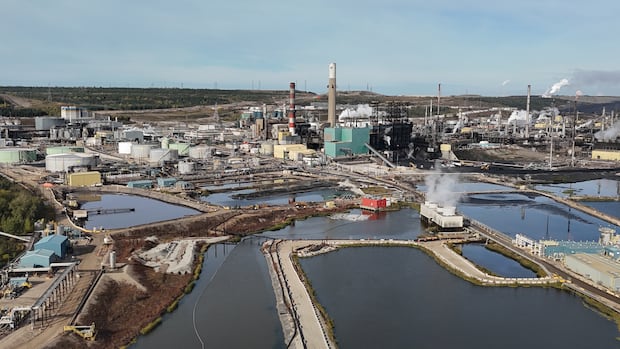

The government of Alberta is set to launch a new royalty program aimed at reducing the financial burden associated with capital investments necessary for initiating new oilsands projects and expansions.
Under the Oil Sands Growth Program (OGP), projects that receive approval will benefit from a lowered royalty rate of two percent for the initial five years of production. This rate will rise by one percentage point each year until it stabilizes at six percent during the ninth and tenth years.
Premier Danielle Smith anticipates that this program will attract investors, particularly as Alberta strives to achieve a production target of 8 million barrels of oil per day by 2035. Currently, Smith noted, the province is producing approximately 5 million barrels.
“In order to double our oilsands production over the next decade, we will require hundreds of billions of dollars in new investments, all while competing with the likes of the United States and Venezuela,” Smith stated during a Calgary news conference where the program was unveiled.
“The global investment competition is intense. Large energy projects demand billions in capital and extensive planning.”
According to Smith, the OGP will remove upfront financial obstacles for new projects and expansions, especially as proponents of the Pacific Link pipeline seek companies to fulfill upcoming capacity needs.
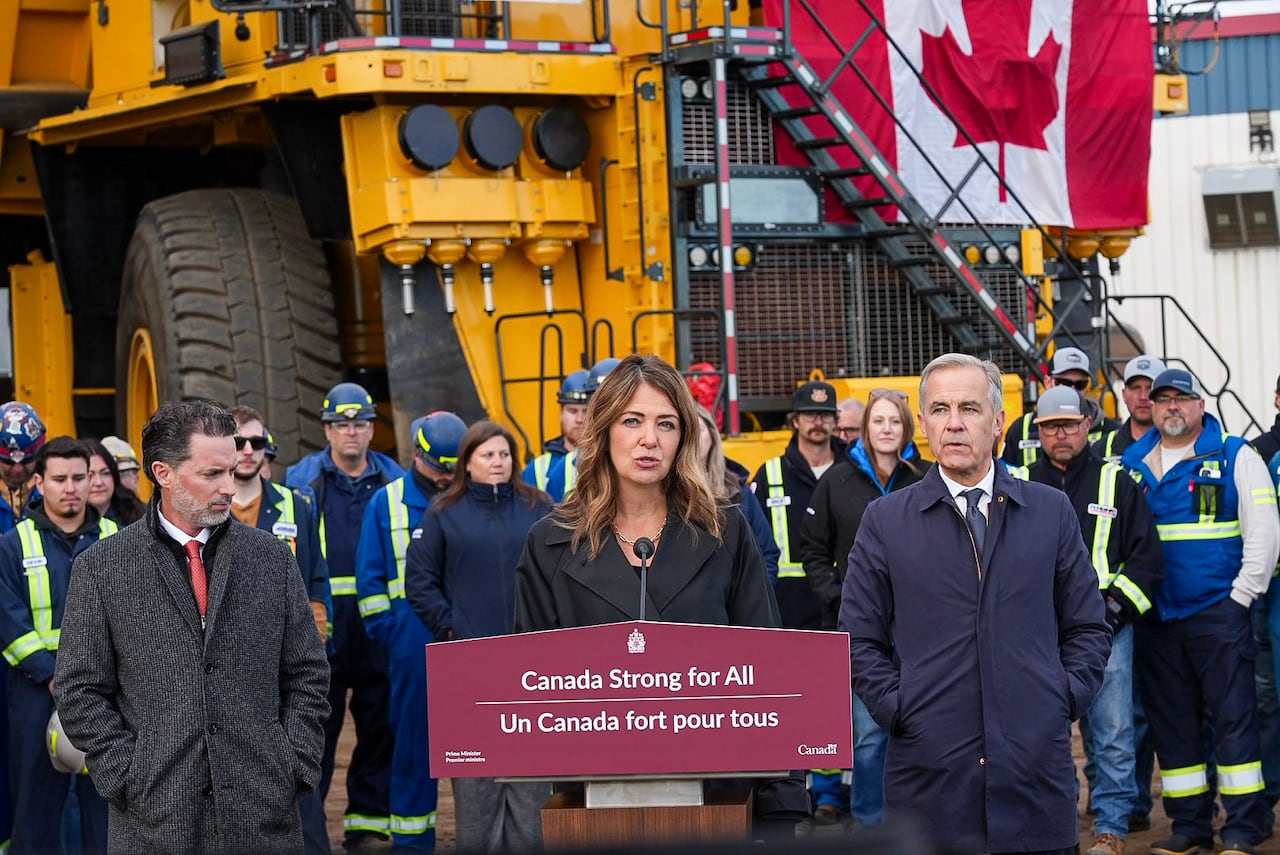
Alberta Premier Danielle Smith, alongside Pembina Pipeline CEO Scott Burrows and Prime Minister Mark Carney, at a press conference north of Fort McMurray, Alberta on October 1, 2026, where they announced the designation of the Pacific Link pipeline as a project of national significance. (Vincent McDermott/CBC)
Smith clarified that the OGP will not replace the current royalty program nor guarantee project approvals, emphasizing that it will also adhere to environmental and Indigenous consultation guidelines.
Eligibility for the program will extend beyond the five members of the Oil Sands Alliance, which represents Canada’s largest oilsands companies. Project approval will be determined on a case-by-case basis and may include expansions.
After ten years, companies will revert to the standard royalty regime or if they fail to meet production, environmental, or regulatory standards.
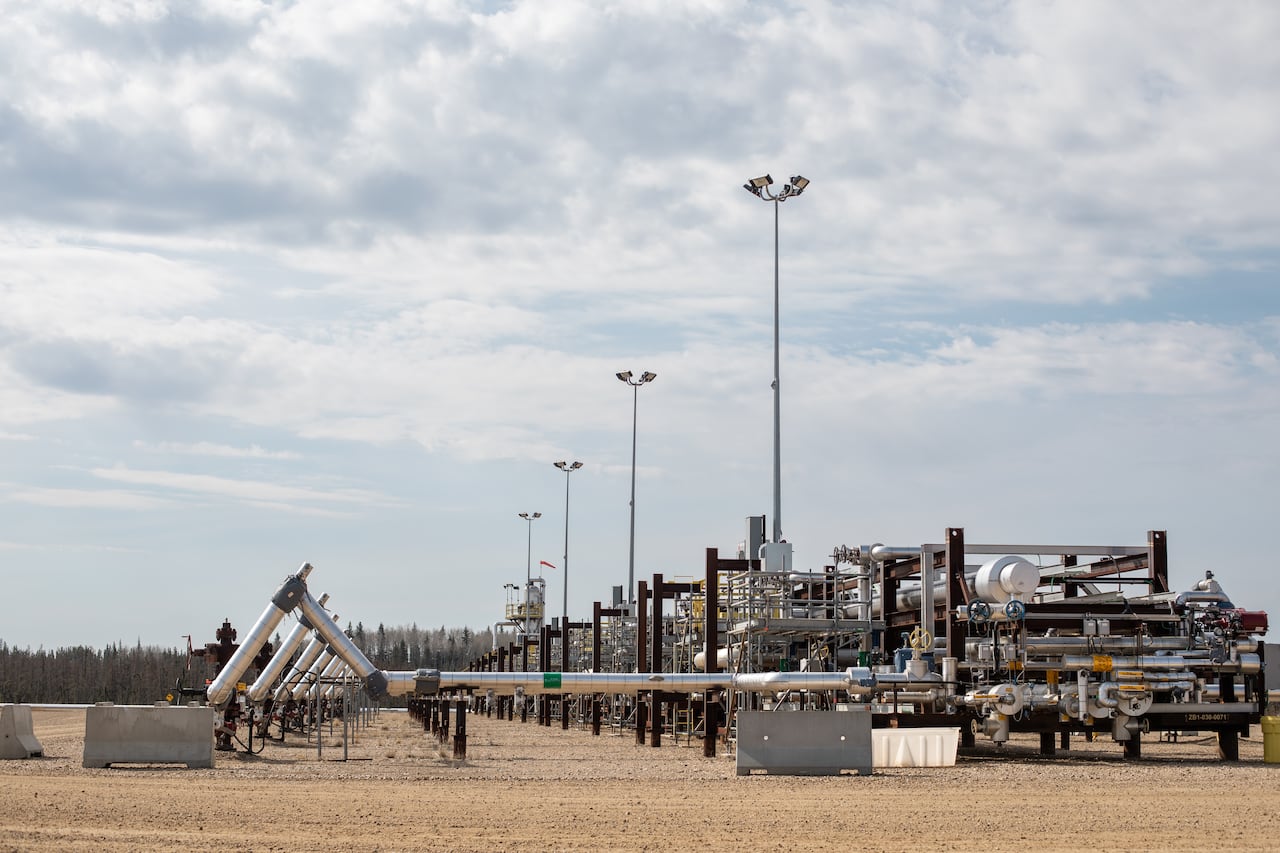
Steam-assisted gravity drainage (SAGD) pads at Cenovus Energy’s Christina Lake oilsands facility, situated southeast of Fort McMurray, Alberta, on April 24, 2024. Representatives from the company state that this pad, utilizing the latest technology, demands less energy per wellhead to extract bitumen compared to earlier models. (Amber Bracken/The Canadian Press)
The OGP is scheduled to be implemented this spring; however, projects announced after November 15 will still qualify. Smith indicated that the province will evaluate the program’s effectiveness three years from now, in December 2029.
In contrast to the current royalty framework, the OGP will not link rates to West Texas Intermediate oil prices. Alberta Energy Minister Brian Jean mentioned that if the standard provincial royalty rate is less than the incentive rate, the company will pay the lower amount.
“Oilsands projects are among the most significant and capital-intensive energy investments globally. Companies require a highly competitive investment landscape and assurance in that fiscal structure,” Jean remarked.
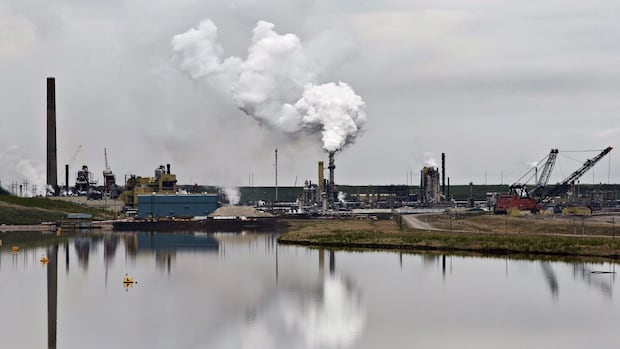
The Alberta government is rolling out a royalty incentive program, the Oil Sands Growth Program, which aims to assist the province in achieving its 2035 target of doubling current oilsands production by facilitating the necessary capital investments for new projects.
Smith highlighted multiple regulatory rollbacks as successes for the oilsands sector, including the federal government’s decision to cancel its emissions cap and net-zero power regulations. She applauded the advancements made on the Pacific Link pipeline and noted that recent surveys indicate strong support among Canadians and Indigenous communities for developing the nation’s oil and gas industry.
Kendall Dilling, president and CEO of the Oil Sands Alliance, acknowledged that there is still significant work to be done for the sector to fulfill its potential, including modernizing and simplifying regulatory frameworks. However, he noted that both governments and industry have been addressing these challenges, resulting in improved investment conditions over the past year.
“Today, I feel more optimistic than ever,” Dilling expressed during Friday’s press briefing.
-
Analysis
Danielle Smith wants to double Alberta oil production. Can she bring back the boom?
-
Ottawa wants to expand the oilsands, but the industry’s wastewater problem will grow with it
Janetta McKenzie, director of oil and gas at the Pembina Institute, a clean energy think tank, expressed skepticism regarding the necessity of the OGP for driving investment, particularly in light of recent taxpayer-funded pipeline initiatives and other federal tax incentives. “The oilsands sector has been highly profitable for a long time and is well-established … it is not an industry that has faced revenue struggles in recent years,” she commented to CBC News.
She raised concerns that Alberta might lose out on oil revenue by eliminating price adjustments, given that oil companies are currently enjoying substantial profits. McKenzie also questioned the environmental implications of increasing production.