

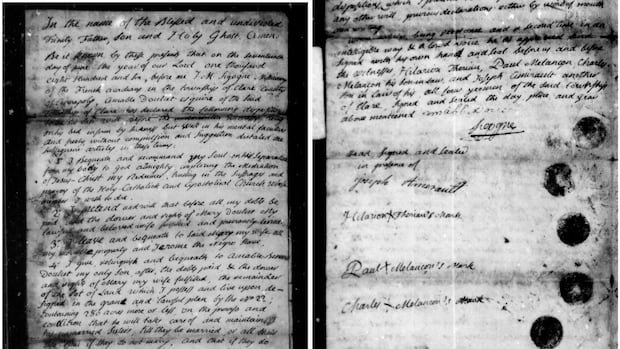

Hilarion Thériault, a 71-year-old Acadian, defied the norm by crafting a will during the 19th century, a rarity among his community due to historical property loss challenges. Following the Acadian expulsion and restrictions on land ownership for Roman Catholics until the 1780s, acquiring land titles remained a prolonged struggle for many.
Thériault, determined not to leave matters unresolved, sought to settle his debts, seek reparations for any injustices, and bring peace to his family through his will. Colby Gaudet, a post-doctoral researcher at Dalhousie University, delved into Thériault’s will and 23 others from Clare, N.S., shedding light on how families navigated the legal and religious customs surrounding death.
Gaudet highlighted the dual nature of Acadians’ actions, combining resistance with conformity to existing Anglophone property norms while asserting their Roman Catholic faith. The wills, overseen by predominantly Anglo-Protestant county judges due to language barriers, were written by a priest, Jean-Mandé Sigogne, acting as an intermediary between the Acadian families and the legal system.
These wills, often left by community leaders like Thériault, reflected the deep integration of Catholicism into daily life, despite societal stigmatization. Catholic details, such as references to saints and the Virgin Mary, were prominent in these wills, setting them apart from Protestant counterparts.
Moreover, the examination of these wills unveiled insights into the relationships between Acadians and Black individuals. For instance, Amable Doucet’s will, which bequeathed a Black slave named Jerome to his wife, and Étienne Thibodeau’s will, involving a Black neighbor as a witness, shed light on the complexities of racial dynamics in Clare during that era.