

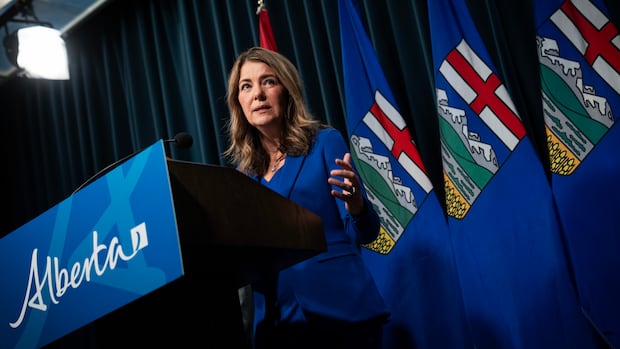

Alberta’s Premier Danielle Smith expressed her hope that federal negotiators will re-engage in discussions following the breakdown of trade negotiations in Washington, which resulted in a 50 percent tariff on Canadian exports.
On her radio show Your Province, Your Premier Saturday morning, Smith noted that approximately $1.5 billion of Alberta’s $188 billion trade with the United States is now at risk. She described the last-minute demands from American negotiators as “untenable” and “too painful” for Canada to accept.
“I hope they can return to the negotiating table to come up with a more equitable agreement,” she stated. “I am optimistic that positive discussions will start because this tariff conflict is very painful.”
Her comments came shortly after Prime Minister Mark Carney announced that Canada would impose retaliatory tariffs equivalent to the U.S. tariffs starting September 8. She expressed her desire for negotiations to resume and for an agreement to be reached before that deadline.
During a press conference in Ottawa, Carney revealed that American negotiators aimed to limit Canada’s ability to forge trade agreements with other nations. He also pointed out that the Canadian automotive sector would have been adversely affected by the proposed deal, and there were concerns regarding Canadian subsidies for French cultural initiatives.
“We cannot accept their proposal, and we will not concede to their demands,” Carney remarked, emphasizing that the United States “requested too much while offering too little.”
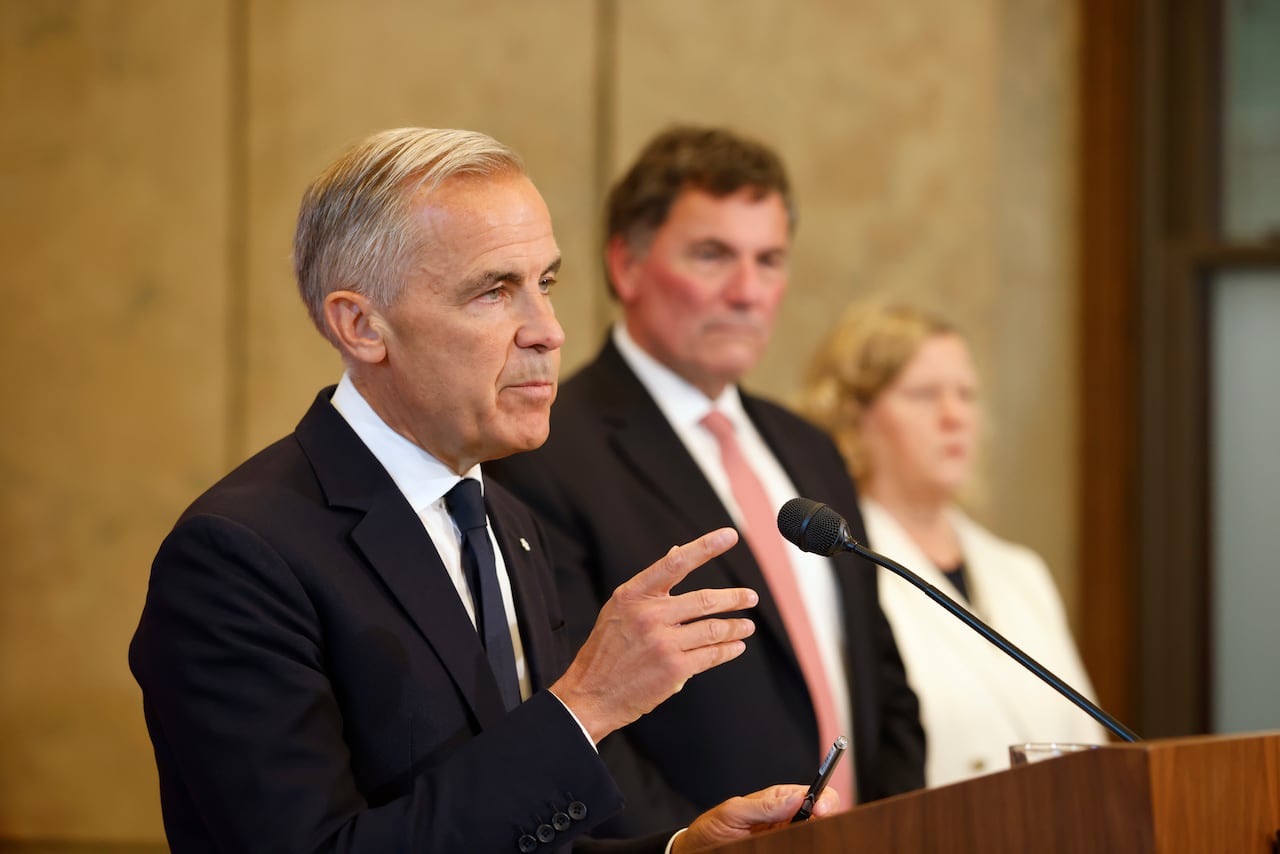
Canada-U.S. Trade Minister Dominic LeBlanc and chief trade negotiator Janice Charette listen as Prime Minister Mark Carney speaks about Canada’s response to new U.S. tariffs during a news conference on Parliament Hill in Ottawa on Saturday, Aug. 22, 2026. (Patrick Doyle/The Canadian Press)
Smith expressed her astonishment at the proposed trade restrictions, noting that Alberta has been working to increase exports to nations beyond the U.S.
However, she was cautious about imposing retaliatory tariffs on American products, stating that she is not in favor of prohibiting imports of U.S. alcohol. Alberta and Saskatchewan are the only provinces without such a ban.
Additionally, she expressed concern over the potential effects of a trade dispute on farmers and agricultural machinery, warning that Alberta’s furniture manufacturers and honey producers could be particularly vulnerable.
-
American tariffs on Canadian goods take effect after trade talks fall apart
-
Carney says he doesn’t ‘see the value’ in using energy as leverage in U.S. trade talks
“I understand that retaliating feels justified, but…when retaliation occurs, everyone purchasing products from the United States will face tariffs of up to 50 percent,” she explained.
Smith plans to convene her cabinet on Monday to assess the implications of the new trade measures, review federal assistance proposals, and determine the next course of action.
Significant Impacts on Small Businesses
Smith stated that Alberta’s primary exports of natural gas and oil are unlikely to be severely affected by the latest tariffs.
Kayode Southwood, a senior policy analyst for the Canadian Federation of Independent Business (CFIB), informed CBC News on Saturday that small businesses across Canada, including those in Alberta, will experience “immediate and significant” repercussions.
He noted that approximately 40 percent of small businesses in Alberta export to the U.S., while half import American products.
“This latest round of tariffs will have a far greater impact than previous measures,” he remarked. “Any retaliatory tariffs imposed by the Canadian government will significantly affect those Alberta enterprises.”
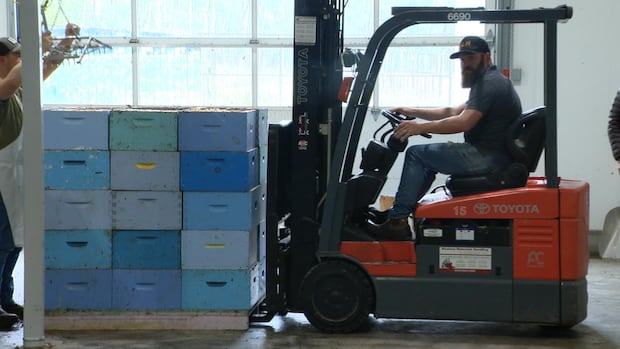
Premier Danielle Smith says she’s urging the federal government to restart negotiations with the United States after trade talks fell apart late Friday night, bringing the Trump administration’s 50 per cent tariffs on a wide range of Canadian exports into effect. As CBC’s Jo Horwood reports, small business owners in Alberta are figuring out how to survive this trade dispute, while politicians and local business leaders consider whether walking away from negotiations was the right decision.
Deborah Yedlin, president of the Calgary Chamber of Commerce, conveyed her support for Carney’s choice to halt negotiations, but cautioned that without a resolution, up to 100,000 jobs across Canada could be at risk.
She expressed hope that both parties will return to the negotiating table soon, while also viewing the trade impasse as a chance for Canada to reassess its interprovincial trade and broaden its international trade connections.
“We know that we have free trade agreements with 51 countries covering 60 percent of the global GDP, but yet 33 percent is what we’ve been exporting,” Yedlin stated.
Tag: rewrite-pending