

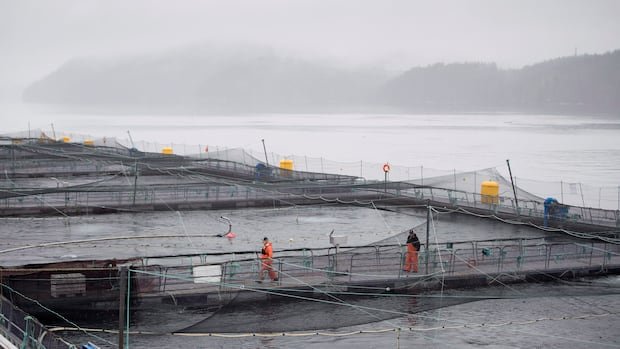

A recent study by the Pacific Salmon Foundation reveals that viral heart disease is more prevalent in open-net salmon farms in British Columbia than previously acknowledged. The study, published in the journal Aquaculture, identified heart and skeletal muscle inflammation (HSMI) caused by the piscine orthoreovirus (PRV) in five out of seven open-net pen salmon farms in the Broughton Archipelago.
Lead author Emiliano Di Cicco stated that the incidence of the disease is significantly higher than previously believed. Previous research in 2017 by Di Cicco and colleagues had already detected the disease in one out of four farms, indicating that it was not an isolated case.
The study found that nearly seven percent of the 749 examined salmon displayed symptoms of HSMI across the farms. While the role of PRV in causing HSMI was uncertain in the past, recent experiments have confirmed the link, according to Di Cicco.
Di Cicco urged the reclassification of PRV as a pathogenic virus by the Department of Fisheries and Oceans (DFO) in B.C. He highlighted the need for aligning diagnostic criteria for the disease with international standards, as current criteria may overlook cases due to their stringent nature.
DFO responded by stating that they would review the study findings for future considerations. They emphasized that detecting a virus in farmed fish does not automatically imply adverse effects on wild salmon populations. Furthermore, DFO defended their diagnostic criteria for HSMI, developed in collaboration with scientific experts to meet global standards.
The study was conducted in collaboration with First Nations groups, including the Mamalilikulla, ʼNa̱mǥis, and Ḵwiḵwa̱sut’inux̱w Ha̱xwa’mis. Indigenous leaders expressed their long-standing concerns about the impact of salmon farming on wild salmon populations and the environment, underscoring the importance of supporting sustainable practices for the benefit of all.