

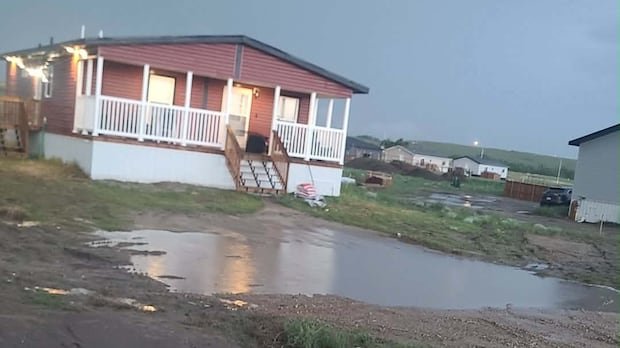

Vanessa Big Eagle, a band councilor overseeing the residences of the Pheasant Rump Nakota First Nation, encountered severe weather that caused damage to her own home. Reflecting on the extreme winds in May, she expressed astonishment at the level of destruction, noting that 23 out of the 54 homes in her community, located 160 kilometers southeast of Regina, were impacted. The roof of her own house bore the brunt of the damage, with a significant portion blown off by the winds.
Insurance claims have been initiated for the affected homes managed by the First Nation, with many residences still in need of repair. The extent of the damage has resulted in one family being displaced and accommodated in a hotel. Vanessa Big Eagle raised concerns about the recurring nature of such weather events, questioning whether budgeting for such occurrences should now be a standard practice.
Recent data reveals a surge in insured losses in Saskatchewan due to severe weather, which may trigger an increase in insurance premiums. Catastrophe Indices and Quantification Inc. reported that Saskatchewan experienced its highest dollar amount of insured losses from significant weather events in 2025, totaling $450 million, the most substantial figure since data collection began in 2008. Notably, the extreme winds in June led to the highest insured loss recorded in the province at $240 million, closely followed by the northern wildfires of the previous summer.
Laura Twidle, the president and CEO of Catastrophe Indices and Quantification Inc., highlighted the exceptional nature of the past two years in terms of insured losses. The financial impact of wildfires, particularly in 2025, accentuates the need for comprehensive insurance coverage.
Jason Thistlethwaite, a professor at the University of Waterloo, emphasized the potential repercussions for insurance policyholders, even those whose properties remain untouched. He underscored that insurers, as businesses, aim to offset losses through heightened premiums and stricter coverage. Thistlethwaite advocated for a shift towards proactive measures to prevent property damage, emphasizing the importance of reducing risks before disasters strike.
In response to the escalating demand for repairs following extreme weather events, companies like Leeway Mechanical Inc. and Fire & Flood have witnessed a surge in service requests. Duane Lee and Allison Thompson, owners of Leeway Mechanical Inc., noted a substantial increase in repair calls, ranging from addressing water damage in basements to repairing roofs. Similarly, Chris Kaban, the operational manager of Fire & Flood, highlighted the rise in calls, particularly for basement flooding, attributing the heightened demand to severe weather patterns.
The growing need for repairs has prompted an expansion in workforce, with Fire & Flood increasing its employee count from 85 to 150 over the past few years. Kaban acknowledged that the current weather conditions have necessitated a larger workforce, indicating that the frequency and intensity of storms have not been witnessed since the early ’90s.