

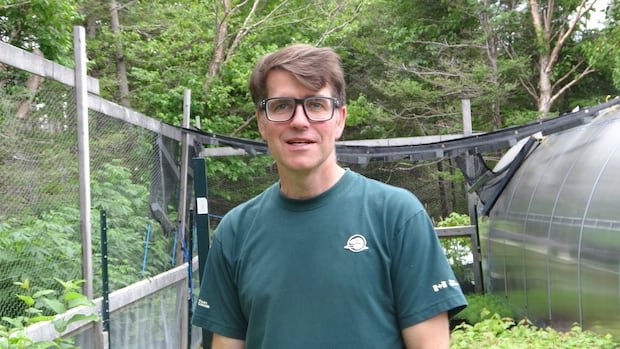

Crews in western Newfoundland’s expansive national park are undertaking a massive tree-planting initiative to aid in the recovery of forests affected by a previously abundant moose population. Darroch Whitaker, an ecosystems scientist with Parks Canada at Gros Morne National Park, reported that over 730,000 trees have been planted since 2023 in areas once dominated by moose grazing. The project aims to plant a total of 1.25 million trees across approximately four square kilometers within the next three years.
The tree planting efforts are not solely focused on restoring the decimated forests but also on creating resilient new forests capable of withstanding climate change-induced warmer temperatures. Whitaker emphasized the importance of selecting tree species that can endure future climate conditions, as the trees being planted today are expected to thrive for the next century.
Gros Morne National Park, renowned for its majestic fiords and boreal forests intersected by rivers and waterfalls, spans 1,805 square kilometers in western Newfoundland. The park was established in 1973 and stands as the second-largest national park in Atlantic Canada.
While moose are prevalent throughout Newfoundland, their population in Gros Morne Park reached unprecedented levels in the 1990s, with approximately 6,500 individuals roaming the area. However, due to their unchecked proliferation and feeding habits damaging the forest ecosystem, the moose population was reduced to around 2,000 animals through controlled hunting measures initiated in 2011.
The moose’s voracious appetite had led to the destruction of young trees, hindering natural forest regeneration processes. As a result, large portions of the park were left with barren patches known as “moose meadows.” To address this ecological imbalance, tree planters were deployed to reforest these areas in 2023 with two-year-old saplings, sourced largely from the Rocky Harbour tree nursery.
The tree species being planted, including black and white spruce, balsam fir, yellow birch, white pine, and wild cherry, are carefully selected to ensure their adaptability to anticipated climate shifts. By incorporating seeds from the park’s southern regions, where these “boutique trees” naturally thrive, the reforestation project aims to establish resilient forests capable of surviving future environmental challenges.
Whitaker stressed the critical role of proactive intervention in safeguarding the park’s ecosystem against climate change impacts, underscoring the significance of planting tree species suited to evolving climatic conditions.