

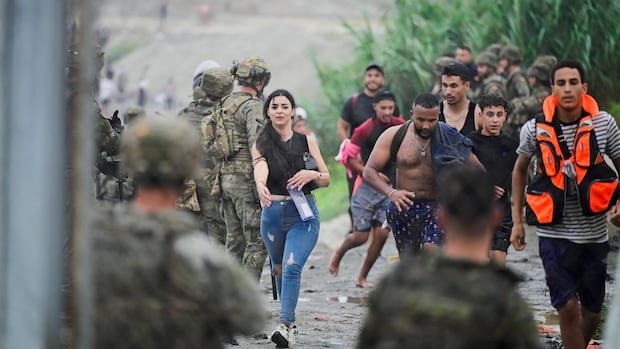

Spain and Morocco have bolstered the border fence of a Spanish enclave, effectively curbing mass crossings after tens of thousands of individuals entered Ceuta by sea and land within a single day. According to Juan Jesus Vivas, the leader of the Spanish enclave in North Africa, at least 57 people have lost their lives in the recent influx.
By 6 p.m. local time on Friday, approximately 48,300 migrants had voluntarily returned to Morocco, as reported by Spain’s Interior Ministry. The sudden surge of migrants into Ceuta, a small Spanish-held area protruding into the Mediterranean from Morocco, has caused uproar and discord in Europe. France announced heightened border checks with Spain, and Italy threatened to suspend Spain from the European Union’s internal open border scheme.
Moroccan authorities at the gates of Ceuta utilized water cannon trucks to deter individuals and employed batons and tear gas to push back crowds aiming to breach the border. The aftermath of clashes included the sight of a charred bus and seven cars in the vicinity. Despite a court ruling imposing restrictions on special “border rejection” rules enabling immediate expulsions from the enclave, Spanish authorities are striving to expel illegal entrants promptly.
Prime Minister Pedro Sanchez conveyed his disapproval of the mass crossings, labeling them a violation of Spain’s territorial sovereignty. He urged Morocco to intensify efforts in stemming the outflow of people. Ceuta and Melilla, another Spanish autonomous city in northern Morocco, constitute the European Union’s sole land borders with Africa and occasionally witness surges in migration attempts.
Territorial Policy Minister Angel Victor Torres suggested that a ruling by Spain’s Supreme Court earlier in the month, disallowing the summary return of migrants intercepted at sea en route to Ceuta or Melilla, may have contributed to the recent surge. Migrants often swim from the Moroccan towns of Fnideq or Belyounech to reach Ceuta, with some individuals resorting to alternative routes along the coast.
Migration remains a contentious topic in Europe, particularly in light of the recent surge. In response, French Interior Minister Laurent Nunez announced plans to quintuple police presence on the Spanish border and enhance aerial surveillance and train patrols. Amid the escalating situation, various European leaders have expressed their stance on the issue, emphasizing the importance of border security and immigration policies.
While the European Union normally upholds open borders within the Schengen Area, temporary checks can be implemented under exceptional circumstances. Politicians across Europe, including German Chancellor Friedrich Merz and Italy’s Prime Minister Giorgia Meloni, have underscored the need to safeguard borders and citizens’ safety, considering potential interventions to address the situation.
In the U.S., President Donald Trump characterized the events in Ceuta as an “invasion,” warning of similar scenarios if certain political outcomes are not realized. Despite the differing viewpoints on immigration, Spain’s government emphasizes the economic contributions of immigrants and has implemented measures to support their integration and status regularization.
The recent events in Ceuta have sparked debates and reactions across Europe, highlighting the complex and multifaceted nature of migration and border security concerns.