

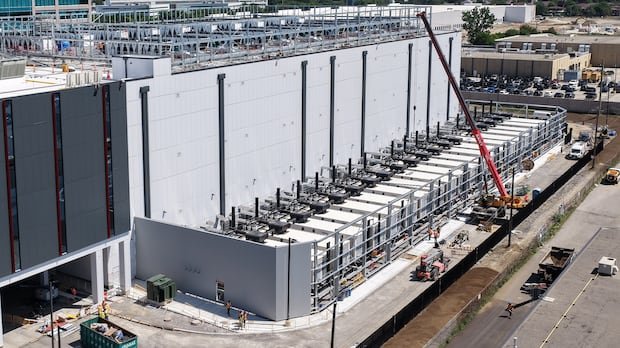

Ontario Premier Doug Ford unveiled the province’s new data center framework on Thursday, emphasizing the importance of keeping Canadians’ data within the country. The framework is built on three core pillars: economic development, data protection and sovereignty, and community investment, and public confidence.
During the announcement in Guelph, Ford highlighted that the new data center playbook aims to drive the economy forward, fostering billions in economic growth, increased tax revenues, and the creation of numerous job opportunities. The framework will require data centers to bear the full cost of their electricity usage, promoting the development of self-sufficient power generation projects while implementing a distinct rate class for large new data centers.
Ford reiterated that the province will not provide financial incentives to attract investments. The framework is positioned as a critical enabler of Ontario’s artificial intelligence (AI) strategy, projected to yield significant economic growth and the annual creation of 17,000 new jobs by 2035.
This announcement comes amidst discussions in various municipalities across the province regarding moratoriums on data centers. For instance, Oakville recently passed a one-year moratorium, while Mississauga is set to vote on a similar measure in September.
Green Party of Ontario leader Mike Schreiner and Ilham Abdulkadir from Wellington Water Watchers have expressed concerns about the environmental impact of data centers. They emphasized the need for stringent regulations, including the use of closed-loop systems to minimize water consumption.
Despite the new playbook, Schreiner believes it falls short of providing concrete protections. He called for stronger regulations to ensure that communities have control over the development of data centers, emphasizing the importance of safeguarding people’s interests over corporate benefits.
In response, Vic Fedeli, Ontario’s minister of economic development, assured that priority would be given to data centers utilizing closed-loop systems to conserve water. Ford echoed this sentiment, emphasizing the prioritization of data center builds that employ water-efficient systems.
The ongoing dialogue highlights the significance of balancing economic development with environmental and community concerns in the proliferation of data centers across Ontario. The province aims to address these issues through a proactive and sustainable approach, ensuring that future data center developments align with the best interests of Ontario residents and the environment.