

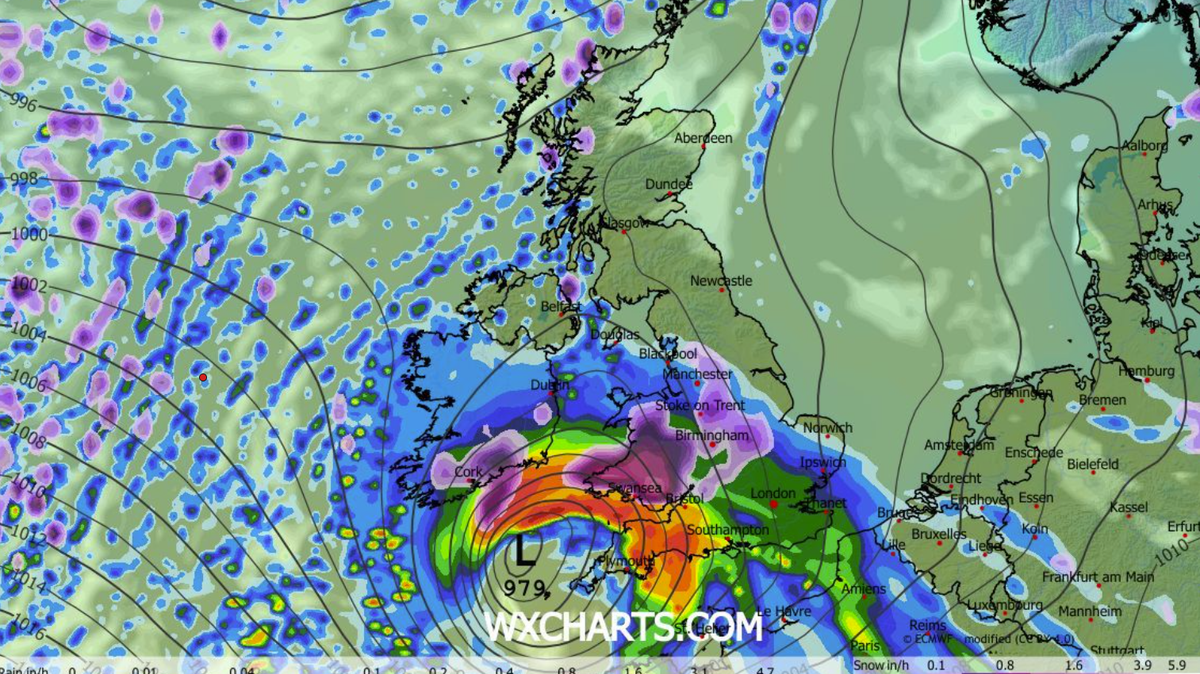

The UK is preparing for heavy snowfall as Storm Goretti approaches this week, with weather experts cautioning about potentially record-breaking snow levels in urban and rural areas.
The Met Office has issued amber alerts for Thursday, as rain is expected to transition into snow from the southwest, leading to hazardous travel conditions and significant disruptions.
Snow is forecasted to start Thursday evening, impacting higher elevations initially before spreading to lower altitudes overnight. Accumulations of 10 to 15 centimeters are anticipated widely, with up to 20 to 30 centimeters possible in elevated areas above 200 meters, notably in regions like Wales and the Peak District.
The likelihood of road congestion, stranded vehicles, and disruptions to rail and air services is high, with some rural communities potentially facing temporary isolation. Power outages and interruptions in mobile phone coverage are also within the realm of possibility.
Advanced weather models indicate a second snowfront approaching on Saturday, sweeping across a 600-mile expanse of the UK. Urban centers such as Dundee, Edinburgh, Newcastle, Manchester, Birmingham, and London are all bracing for snowfall, with the northwest potentially experiencing snowfall rates of up to four inches per hour.
Cumulative snow depths could hit 30 inches (78cm) in the far north of Scotland, while South Wales may see 28cm, the Midlands up to 18cm, and London around 5cm. Parts of southwestern England and Wales, along with select areas in Northern Ireland, are likely to experience minimal snowfall.
Named by the Met Office and Meteo France, Storm Goretti is projected to bring the strongest winds over northern France. Meteorologists emphasize the uncertainty of the storm’s precise path, which could impact where the heaviest snow accumulates, with updates to warnings a possibility.
Motorists are advised to avoid non-essential travel. For those needing to venture out, recommendations include using dipped headlights, gently accelerating with low revs, maintaining a steady pace, starting in second gear to reduce wheel slippage, and correcting skids if they occur. Downhill segments should be approached with low gears, minimal braking, and both hands firmly on the wheel.
Households are encouraged to prepare for potential power interruptions by stocking up on torches, spare batteries, mobile phone chargers, and other essentials. Individuals at risk of being snowed in are advised to stay indoors, regulate heating consistently, dress warmly, and prevent frozen pipes by opening kitchen and bathroom cabinet doors. Electrical heating devices should be turned off, and fires extinguished before bedtime, while pet owners should ensure their animals are warm and comfortable.
Residents are also urged to check on vulnerable neighbors, including the elderly, those with underlying health conditions, and individuals living alone, who may require assistance with food or medical supplies. Concerned individuals should contact NHS 111 for health-related issues, with additional support available from the British Red Cross.
Looking ahead, the Met Office predicts a changeable period from January 10–19, with the likelihood of further snowfall, especially in northern uplands, interspersed with frost, wintry showers, and occasional strong winds. Although a brief respite to drier conditions may occur, wintry hazards could persist throughout the month.
Areas under amber alerts include the East Midlands, Southwest England, Wales, the West Midlands, and parts of Yorkshire and the Humber. Residents are advised to monitor local forecasts closely and adhere to guidance from emergency services.