

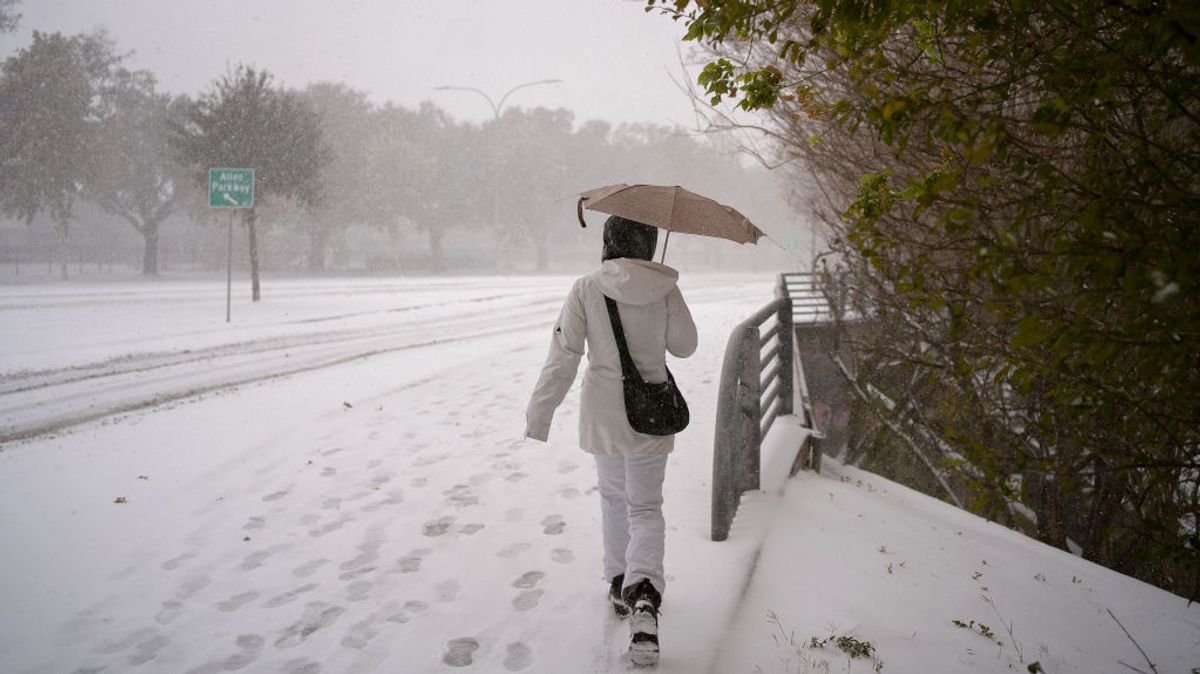

A new storm, described as “potentially catastrophic,” is expected to hit parts of the United States before the weekend, with concerns over “dangerously cold air” that could bring snow and ice to approximately 160 million individuals.
This approaching storm, set to arrive late this week and continue into the weekend, is projected to move through regions from Texas to the Carolinas, possibly leading to widespread power outages due to the threat of ice accumulation on trees and power lines. Meteorologists have cautioned that certain areas might receive over 12 inches (30cm) of snow, along with sleet and hazardous freezing rain.
An expert in meteorology stated that this event is anticipated to be a “broad, potentially catastrophic” occurrence spanning from Texas to the Carolinas. Ryan Maue, a former senior scientist at the National Oceanic and Atmospheric Administration, expressed uncertainty about how people will manage the situation.
The National Weather Service (NWS) also foresees the arrival of “life-threatening cold air” moving eastward from the High Plains and Rockies starting on Friday, bringing snow and ice to approximately 160 million people across 30 states. In some regions, temperatures could plummet significantly below freezing.
The most severe wind chills (-46C or -50F) are forecasted for the Northern Plains, although a large portion of the southeastern United States is also expected to experience sub-zero conditions. The NWS issued a warning about the life-threatening risks of hypothermia and frostbite due to these extreme wind chills.
Additionally, snow showers are currently affecting the southern Great Lakes region, which extends along the US-Canada border, as reported by the NWS.
Meteorologists have advised residents to prepare for snow accumulations exceeding 12 inches (1 foot) in states ranging from Colorado to West Virginia and upstate New York. Other states that may see similar snow depths include Kansas, Oklahoma, Arkansas, Missouri, Kentucky, and Indiana.
Further south, states could face freezing rain that might cause tree damage, potential power failures, and localized flooding.
Forecasters acknowledge the difficulty in pinpointing the precise areas that could be hit with ice. Keith Avery, CEO of the Newberry Electric Cooperative in South Carolina, emphasized the catastrophic impact that even half an inch or an inch of ice could have on the affected regions.