
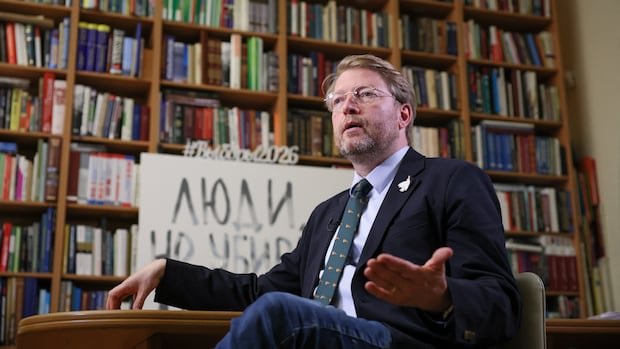

The head of Russia’s sole officially recognized anti-war party has affirmed his decision to remain in the country and continue advocating for change, despite escalating pressure from the authorities resulting in the party’s disqualification from the upcoming parliamentary elections. The Supreme Court’s ruling on Monday prohibited the post-Soviet liberal party Yabloko, translating to “apple” in Russian, from participating in the September election. Nikolai Rybakov, the party leader, emphasized that the court’s decision was influenced by the government’s apprehension that their message to end the ongoing conflict in Ukraine was resonating with the electorate.
Rybakov expressed that the overwhelming support from the public was more significant to them than the court ruling, citing the vocal backing received from hundreds of supporters outside the court premises, chanting “shame” audibly during the verdict announcement. Once a prominent liberal voice and government critic in parliament, Yabloko currently holds only a few regional seats and lacks representation in the State Duma, the parliament’s lower chamber, which is predominantly controlled by the Putin-backed United Russia party.
Although United Russia is expected to maintain its dominance in the September elections, Rybakov asserted that Yabloko would pose a stronger challenge if permitted to participate. The party is appealing the Supreme Court’s decision, which stemmed from allegations of undisclosed campaign support from Western entities and other accusations that Yabloko denies.
Rybakov, a 47-year-old veteran of the opposition, affirmed his commitment to staying in Russia despite stringent censorship laws and wartime regulations that have forced many dissidents and activists to flee or face prosecution for expressing anti-war sentiments. He underscored the importance of effecting change within Russia by remaining in the country, rejecting any plans to leave despite the challenges.
The level of public opposition to the war is challenging to gauge due to stringent state controls on dissent. However, public support for the actions of the Russian armed forces in Ukraine dropped to 66% in July, the lowest since February 2022, as reported by the Levada Center, a non-governmental pollster listed as a foreign agent by Moscow.
Rybakov highlighted that Yabloko’s concise manifesto advocating for peace and a flourishing democratic Russia has garnered a surge in new supporters, indicating a substantial segment of Russian society’s desire for an end to the conflict. The party has witnessed a groundswell of support on social media, with numerous videos showcasing individuals displaying apples, symbolizing their allegiance to Yabloko, or dancing to Russian tunes that reference apples as a nod to the party’s name.