
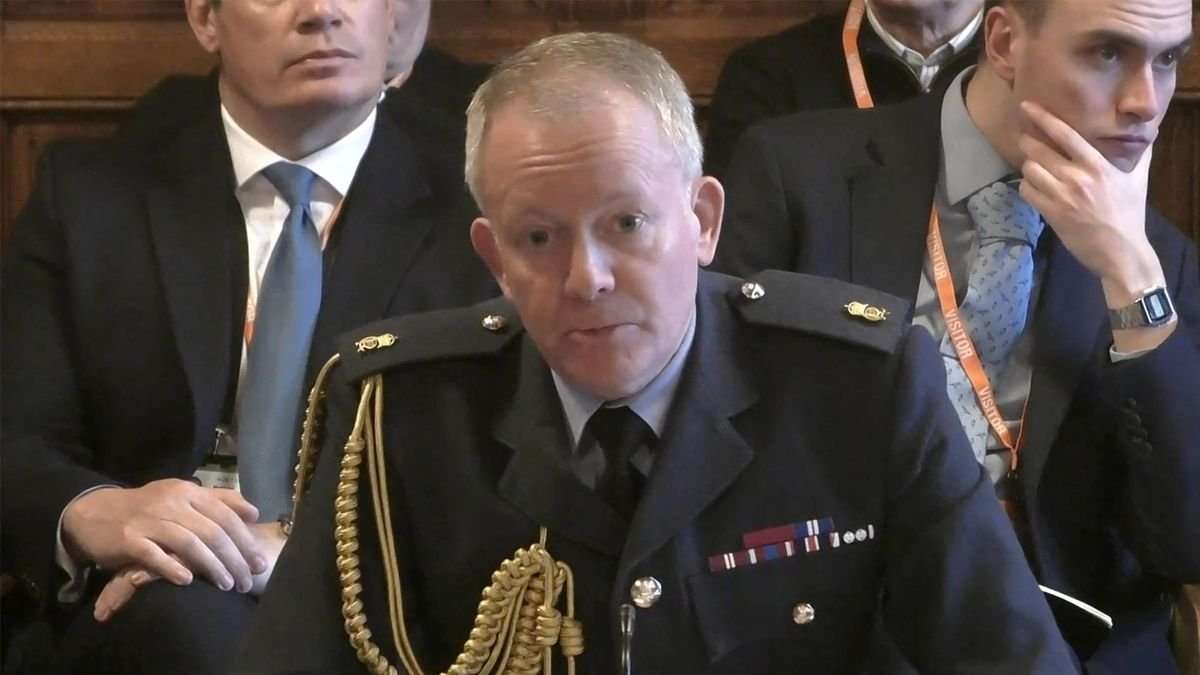

The leader of the British Armed Forces has acknowledged that the United Kingdom is currently not adequately prepared for a large-scale war due to constraints in defense budgets and the lingering effects of the Cold War “peace dividend.” Air Chief Marshal Sir Richard Knighton highlighted the limitations imposed on the UK defense budget, which hampers readiness to respond swiftly to evolving situations, such as potential troop deployments to Ukraine.
Despite the challenges, Sir Richard pointed out that Russia’s engagement in Ukraine, where they are sustaining significant losses, provides a window of opportunity for the UK to enhance its preparedness for future conflicts. Addressing the Defence Committee, he admitted that in the three decades following the Cold War, the UK has not been sufficiently prepared for full-scale conflicts, emphasizing the importance of being ready to deter adversaries by modernizing and transforming the armed forces.
While acknowledging the recent increase in defense spending as the largest sustained rise in recent memory, Sir Richard attributed budgetary shortfalls to the UK’s limited ability to swiftly adapt its defense capabilities. The current defense budget stands at £62.2 billion, with plans to increase it by £11 billion by 2027. Referring to a speculated £28 billion defense shortfall, he refrained from providing detailed information, focusing instead on advising government officials on rebuilding the armed forces with the available funds.
Air Chief Marshal Sir Richard Knighton, a veteran RAF officer who assumed his role in September last year, discussed the ongoing efforts to overhaul the UK’s defense strategy to counter emerging threats from countries like Russia and China. Despite facing challenges in recruitment and troop retention, the UK armed forces aim to achieve readiness for full-scale conflicts in the coming years.
Sir Richard highlighted the evolving threat landscape and the necessity for adjustments in military spending to meet the changing requirements. He cited preparations for potential troop deployments to Ukraine as an example of the complexities and uncertainties faced. When questioned about the government’s commitment to fully fund defense for future combat readiness, Sir Richard emphasized the need for realistic assessments and trade-offs in decision-making.
Regarding Russia’s current engagement in Ukraine, Sir Richard underscored the significance of maintaining readiness while being cautious about disclosing specific troop numbers that could jeopardize strategic plans. He stressed the importance of having sufficient resources early on to make a difference in military capabilities.