

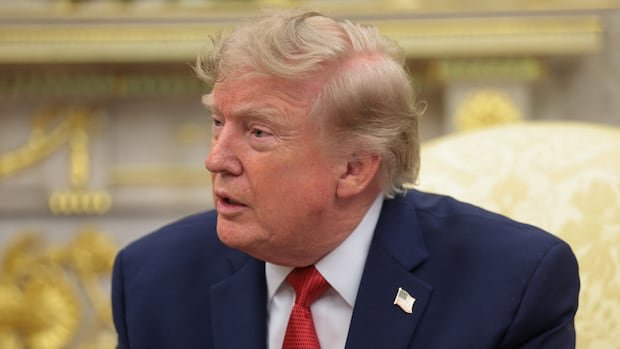

The President of the United States, Donald Trump, has once again issued a threat against Oman as Iran reveals ongoing collaboration with the Gulf state on a proposal to oversee maritime traffic in the Strait of Hormuz. The reopening of this crucial waterway has been a significant demand from the U.S.
Simultaneously, the 60-day negotiation period aimed at reaching a peace agreement between the U.S. and Iran was nearing its end with no signs of an extension, leaving both parties seemingly distant from a resolution.
In recent developments on Monday concerning the U.S. and Israel-Iran conflict, Iran has reported progress in discussions with Oman regarding a plan for vessels to pass through the Strait of Hormuz, located between the two nations. Efforts are underway to finalize the specifics for a joint statement.
According to Iranian Foreign Ministry spokesperson Esmail Baghaei in Tehran, an understanding has been achieved concerning the transit route map. While details remain undisclosed, preliminary information suggests that the agreement would allow ships to use designated entry and exit points near Iran and Oman, respectively, without incurring fees during a transitional period.
The United States has been pushing for a mutually acceptable arrangement to reopen the strait before lifting its blockade on Iranian ports. The strait, through which approximately one-fifth of the world’s oil trade passed before the conflict erupted, was effectively closed by Iran following attacks by Israel and the U.S. on February 28.
President Trump previously made threatening remarks towards Oman, stating to a Fox News reporter that the U.S. would take military action against Oman if it interfered in the situation. This is not the first instance of Trump issuing such warnings, having previously mentioned the possibility of military action against Oman during a cabinet meeting in May.
Despite the expiry of the 60-day deadline for peace talks, Trump suggested that the timeline was inconsequential and emphasized ongoing backchannel communications with the Islamic Revolutionary Guard Corps. The United Nations Secretary General, António Guterres, has called for both Iran and the U.S. to resume negotiations, emphasizing the need to de-escalate tensions.
In a separate development, Yemen’s Houthi rebels claimed responsibility for attacking a ship and four military boats in the Red Sea near Mokha, Yemen. The rebels allegedly launched ballistic missiles at the vessels, causing some to capsize and catch fire. They asserted that the targeted vessels belonged to Saudi Arabia, although this claim remains unverified.
Additionally, drone attacks targeted two officials in northern Iraq, with the regional counterterrorism service attributing the assaults to the border with Iran. The attacks, aimed at the office of Masrour Barzani, the Prime Minister of Iraq’s northern Kurdish region, and the residence of a senior intelligence official, resulted in no casualties. While no group immediately claimed responsibility, such direct attacks on regional government facilities are uncommon.
The ongoing conflict between the U.S., Israel, and Iran has witnessed a series of attacks on U.S. military and diplomatic sites in Iraq by Iranian-backed groups. Amid these hostilities, Iranian Foreign Minister Abbas Araghchi condemned the recent attacks in Iraq, warning against attempts to incite discord. Furthermore, U.S. forces stationed in Iraqi Kurdistan have commenced withdrawal operations ahead of the agreed deadline to conclude the U.S. military presence in Iraq by September 30.