

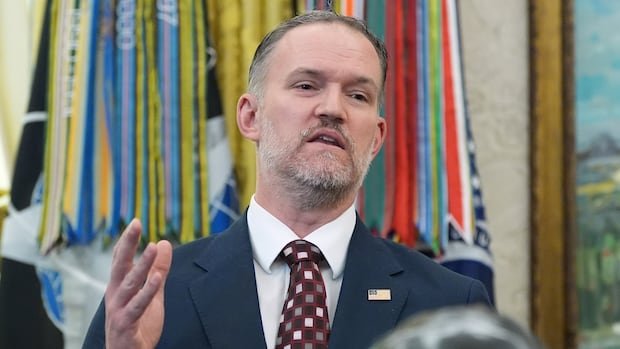

U.S. Trade Representative Jamieson Greer announced that both U.S. President Donald Trump and Prime Minister Mark Carney will receive various options following recent trade discussions between Canadian and U.S. trade authorities on Thursday. Greer mentioned that discussions and choices will be presented to the president and the prime minister as negotiations progress, providing insights into the Trump administration’s stance on the talks.
In an exclusive conversation with CBC News after the meetings, Greer characterized the discussions as positive and friendly. He highlighted plans for further communication with the president and anticipated that Canadian officials would engage with the prime minister in upcoming dialogues.
Canada-U.S. Trade Minister Dominic LeBlanc affirmed his commitment to fulfilling the expectations of Canadians after the session. He emphasized the continuation of necessary work without specifying a definite timeline for future meetings with Greer, indicating a willingness to engage in discussions as needed.
Additionally, it was revealed that LeBlanc is scheduled to update the Advisory Committee on Canada-U.S. Economic Relations, a forum facilitating strategic discussions on the economic ties between the two nations. The committee plays a crucial role in shaping Canada’s approach to its economic relationship with the U.S.
During the afternoon, both LeBlanc and chief trade negotiator Janice Charette met with Greer for the second time this week and the fourth time in three weeks. The intensified discussions between the Canadian and American officials followed Trump’s threat to impose significant tariffs on numerous Canadian goods, in addition to existing sectoral tariffs, set to take effect on August 19.
Post the recent meeting, Charette returned to the U.S. Trade Representative office to delve deeper into discussions with her counterpart, extending the dialogue into the evening. The discussions aimed to pave the way for a potential trade agreement and address the looming tariff deadline affecting Canadian goods.
Furthermore, it was reported that the American side proposed a new deal on Tuesday, seeking to reduce some sectoral tariffs, albeit falling short of Canadian expectations. The U.S. is also pushing for preferential access to Canadian critical minerals, encompassing security and energy considerations.
Sources indicated that LeBlanc and Greer are working towards presenting Trump with a potential trade deal outline as early as the upcoming week. However, Canadian officials have underscored that there would be limited public support in Canada for ongoing talks if the August 19 tariffs are implemented due to various trade disputes, including retaliatory measures and alleged discriminatory practices by the U.S.
To address these concerns, the Canadian side is reportedly willing to make concessions, including ending booze bans, revisiting automotive tariffs, and adjusting dairy policies. The willingness to negotiate and find common ground is evident as both sides navigate complex trade negotiations.
Ontario Premier Doug Ford expressed openness to reintroducing U.S. alcohol products in the province if a fair agreement is reached, emphasizing the importance of protecting Ontario’s key sectors. Ford’s stance aligns with the broader sentiment that tariffs negatively impact both countries, urging for a balanced and mutually beneficial trade relationship.
Overall, the ongoing discussions reflect the intricate dynamics at play as Canada and the U.S. navigate trade negotiations amidst evolving economic landscapes and geopolitical considerations.