

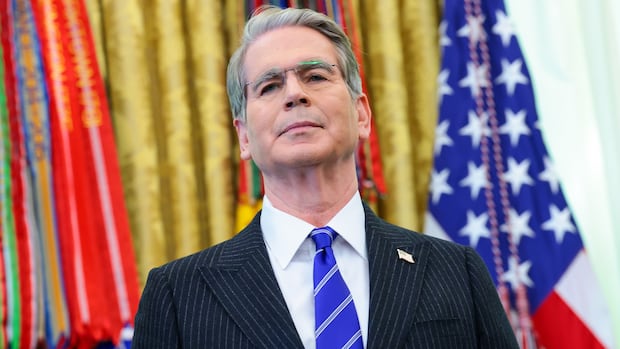

On Friday, U.S. Treasury Secretary Scott Bessent expressed his annoyance regarding the U.S. Commerce Department’s slow action in imposing restrictions on Nvidia chip exports to a firm allegedly run by a Chinese spy.
Bessent stated on CNBC that his office, along with the U.S. State and Defense Departments and the U.S. trade representative, had been advocating for months to include Singapore’s Megaspeed International on an export control list, but the final decision rested with the Commerce Department.
“Commerce has the authority, and you will need to inquire about their internal procedures,” Bessent remarked. “My deputy has been pressing on this for several months.”
Bessent’s remarks marked a rare public criticism directed at a fellow cabinet official, specifically U.S. Commerce Secretary Howard Lutnick, whose department manages the U.S. government’s regulations on the export of sensitive and advanced technology.
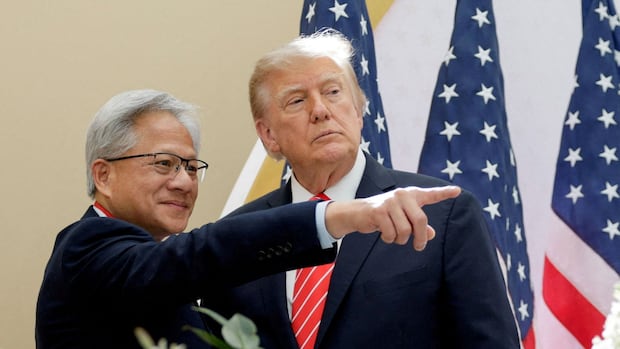
Both Democrats and Republicans are demanding clarity regarding the Trump administration’s seemingly close connections to the former Nvidia CEO Jensen Huang. U.S. Secretary of Commerce Howard Lutnick is under particular scrutiny. Huang’s resignation following extramarital affairs has shaken the tech sector and financial markets.
These remarks coincide with Nvidia’s association with Megaspeed, a key factor in the resignation of Nvidia CEO Jensen Huang. Reports from the New York Times suggest that Huang allegedly had an affair with Megaspeed CEO Alice Huang, who is suspected by U.S. intelligence of being a Chinese spy; China has denied these spying claims.
Lutnick has faced mounting criticism due to his reportedly close ties with Jensen Huang. The former Nvidia CEO also maintains a close relationship with U.S. President Donald Trump and visited the White House on September 29 to discuss artificial intelligence safety.
-
What the Jensen Huang scandal means for Trump and his administration
-
The Nvidia scandal has wiped away $1T in value. What that means for your investments
According to the Times, Lutnick has been hesitant to impose stricter limits on the export of Nvidia’s advanced chips to China. Chinese companies have reportedly procured Nvidia’s chips via firms like Megaspeed, which has bought over $4 billion US worth of Nvidia’s advanced semiconductors.
The divide within Trump’s cabinet underscores the far-reaching consequences of the scandal surrounding Nvidia, one of the world’s most valuable publicly traded companies. Nvidia’s chips are integral to the development of artificial intelligence, powering AI models like those created by OpenAI and Anthropic.
U.S. interest in restricting chip sales
Since the Biden administration took office, the U.S. government has aimed to limit the sale of the most advanced AI chips to China to safeguard the lead of U.S. tech companies. However, China has occasionally retaliated, sparking debates on how aggressively the U.S. should enforce its restrictions.
The Commerce Department has not yet responded to requests for comments.
Bessent refrained from commenting on Friday regarding the Times report that he confronted Lutnick last week in the White House’s situation room about Megaspeed.
Additionally, Axios reported that Lutnick received a classified memo this spring warning about Jensen Huang’s ties to a suspected spy.
-
Nvidia CEO Jensen Huang resigns after affair raises national security concerns
-
How China gets around the U.S. ban on Nvidia chips
Last year, Megaspeed faced accusations of illicitly shipping advanced Nvidia chips to China, yet in December, the firm claimed there was “no evidence” of such activities.
The Bureau of Industry and Security within the Commerce Department initiated an investigation into Megaspeed International in 2024, which was subsequently transferred to the U.S. Justice Department.
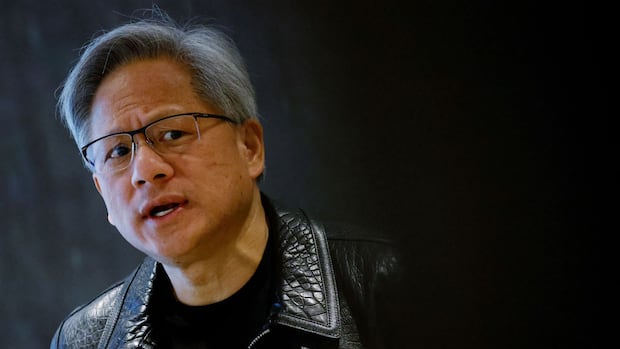
Chip manufacturer Nvidia has announced that Jensen Huang has stepped down as president and CEO of the company he helped establish. Nvidia stated that Colette Kress, the current executive vice-president and chief financial officer, will take the company forward.
A source familiar with the bureau’s inquiry denied any interference from Nvidia. This individual was not authorized to speak publicly and requested anonymity.
The national security division of the Justice Department is looking into whether Megaspeed breached export control laws, a probe that will also involve examining Alice Huang, according to a person with knowledge of the situation, The Associated Press reported on Wednesday.
On Thursday, Megaspeed asserted that it takes its responsibility regarding U.S. export control laws “extremely seriously” and is dedicated to engaging “constructively and transparently” with the U.S. government.
Many congressional members have indicated their intention to investigate Lutnick’s conduct and have called for him to provide testimony on Capitol Hill.
Democrats demand Lutnick preserve records
On Thursday, Democrat Senators Ron Wyden from Oregon and Richard Neal from Massachusetts sent a letter to Lutnick, insisting that he safeguard all records pertaining to Nvidia chip export decisions as an investigation unfolds. Wyden and Neal serve as the leading Democrats on the Senate finance and House ways and means committees, respectively.
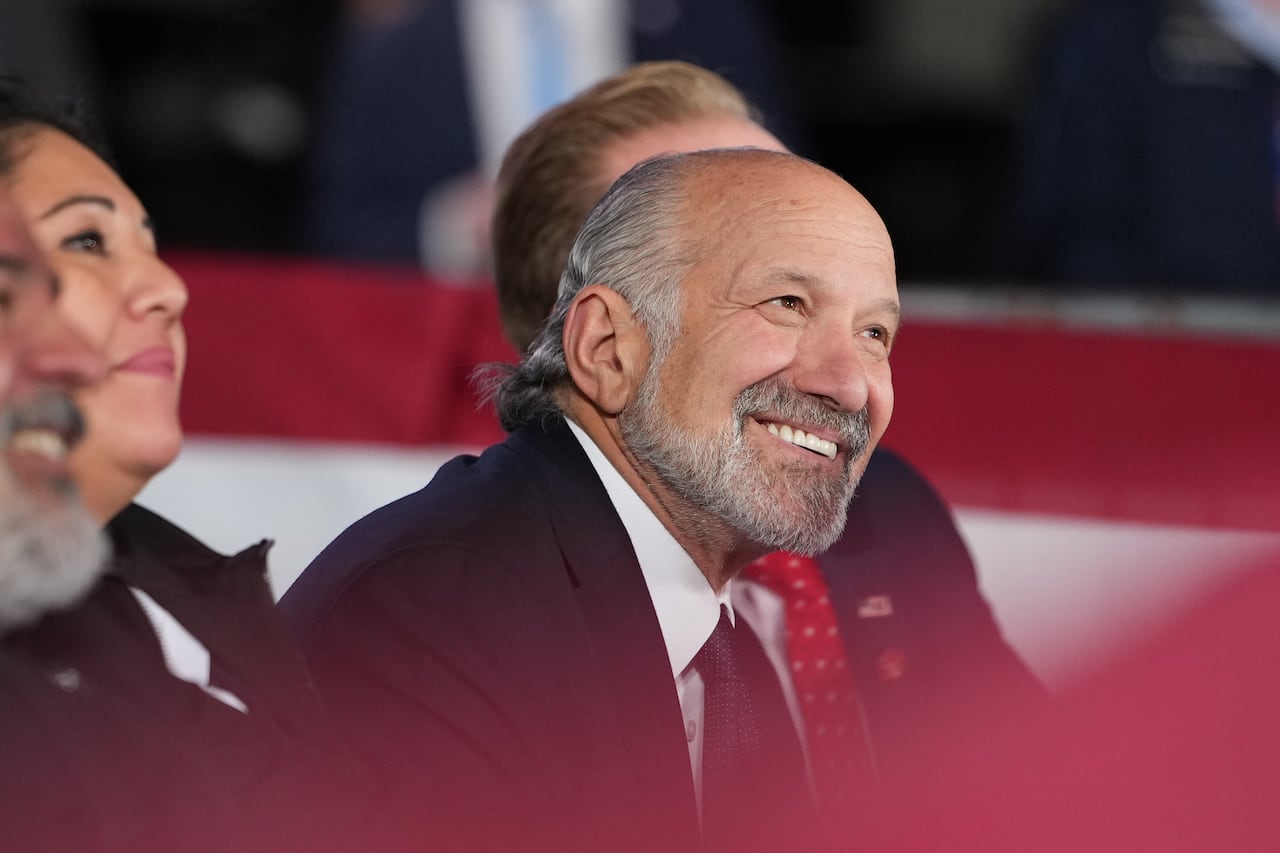
U.S. Commerce Secretary Howard Lutnick has received a letter from two Democrats demanding he preserve all records related to decisions about Nvidia chip exports, pending an investigation. (Alex Brandon/The Associated Press)
Trump’s authorization of advanced Nvidia chip exports to China “raises significant concerns about whether and to what degree political factors are inappropriately affecting policy decisions made by the Administration,” Wyden and Neal wrote.
Meanwhile, the chair of the U.S. House foreign relations committee is requesting that Nvidia’s general counsel and a senior official from the Commerce Department appear before Congress.
Rep. Brian Mast, a Florida Republican, sent a letter this week to Jeff Kessler, the undersecretary of commerce for industry and security, calling for a hearing on December 2 regarding computer chip smuggling and “reported interference by private entities in export control policies and enforcement investigations.”
Mast also seeks to have Nvidia’s chief counsel Tim Teter appear on the same day for a closed-door interview.
-
Nvidia and CEO Jensen Huang face lawsuit over handling of ties to alleged Chinese spy
-
Who is Alice Huang? Alleged Chinese spy, businesswoman involved with Nvidia CEO
Senator John Kennedy, a Republican from Louisiana and a member of the Senate banking committee, has urged Lutnick to hold a press conference to clarify his knowledge of the situation.
“The Commerce Department approved $4 billion worth of sales of advanced chips to the firm associated with the spy that Mr. Huang was involved with, and I want to know why,” Kennedy stated. “I want to understand why the Commerce Department made this decision in light of the export controls, and everything I have read suggests that it was a choice made by the secretary himself.”
Kennedy further asserted that Lutnick should testify before the Senate, emphasizing that he should be subpoenaed if necessary.